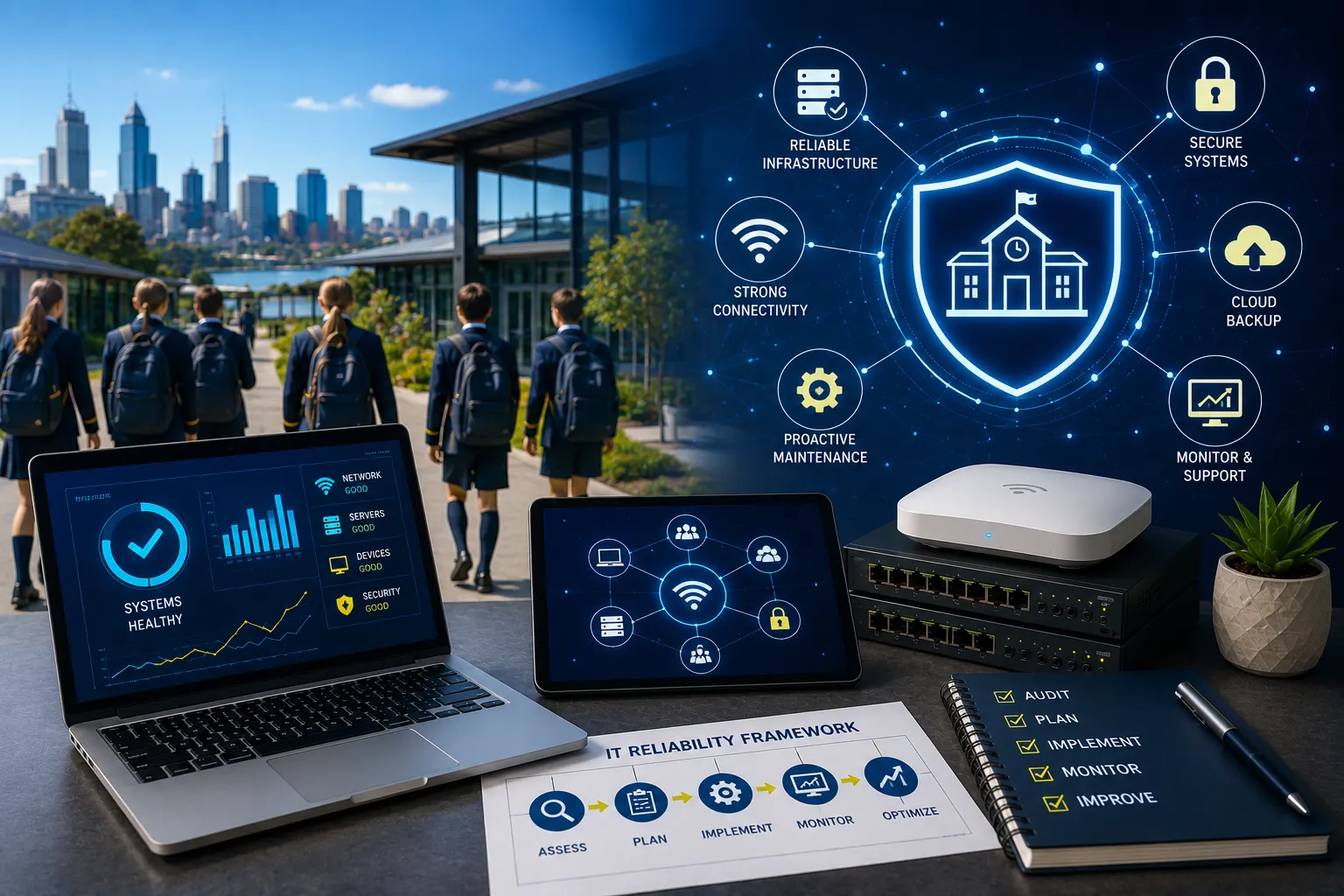


Every school eventually reaches the same moment: a batch of ageing laptops needs replacing, a server is due for an upgrade, or a new learning platform needs licensing across every campus. How that purchase gets made rushed or planned, isolated or connected to a wider strategy tends to determine whether it solves a problem or just delays the next one.
Technology purchasing in schools is often treated as a series of one-off decisions. A device breaks, a quote gets approved, a new tool gets adopted because a department asked for it. Individually, these decisions are reasonable. Collectively, without a plan behind them, they tend to produce exactly the kind of fragmented, hard-to-support environment that drives up long-term costs and support headaches.
Why Ad-Hoc Purchasing Creates Problems Later
When technology is bought reactively, a few patterns show up consistently: devices from different vendors with inconsistent lifespans, software licences that overlap or go unused, and infrastructure that wasn't sized for how the school actually grew. None of this is anyone's fault it's simply what happens when purchasing decisions aren't connected to each other.
The result is usually felt by whoever provides IT support for schools, whether that's an internal team or an external provider. A fragmented environment is harder to maintain, slower to troubleshoot, and more expensive to secure consistently across every device and system.
What Smarter Purchasing Looks Like
A more deliberate approach starts with understanding what's already in place before buying anything new current hardware age, software licensing, network capacity, and where the biggest gaps or risks sit. From there, purchases can be sequenced against an actual plan rather than approved individually as requests come in.
This is essentially what structured IT procurement services are designed to support: evaluating options against the school's real needs and budget cycle, rather than reacting to whichever vendor pitch or upcoming deadline is loudest at the time. For Sydney schools managing multiple campuses or growing enrolments, this kind of planning becomes even more valuable, since inconsistent purchasing compounds faster across larger environments.
Questions Worth Asking Before Any Purchase
A few questions can help filter genuinely useful purchases from reactive ones:
- Does this fit within a broader technology roadmap, or is it solving an isolated problem?
- Will it be compatible with what's already running, or create another system to manage separately?
- Who is responsible for supporting it once it's deployed?
- What's the expected lifespan, and is replacement already budgeted for?
Schools that consistently ask these questions before purchasing tend to end up with fewer surprises down the line both in terms of cost and in terms of what breaks unexpectedly.
Purchasing Is Part of a Bigger System
Technology purchasing doesn't exist in isolation. It connects directly to how well a school's systems are supported day to day, and how prepared the environment is to handle new tools, new security requirements, and growing student numbers. Schools that treat purchasing as one part of a broader IT strategy rather than a standalone task generally find their technology holds up better over time, with fewer emergency replacements and less duplicated spending.
Getting this right isn't about buying more, or buying the newest option available. It's about making sure every purchase fits into a system that's actually built to support it.























Sign in to leave a comment.