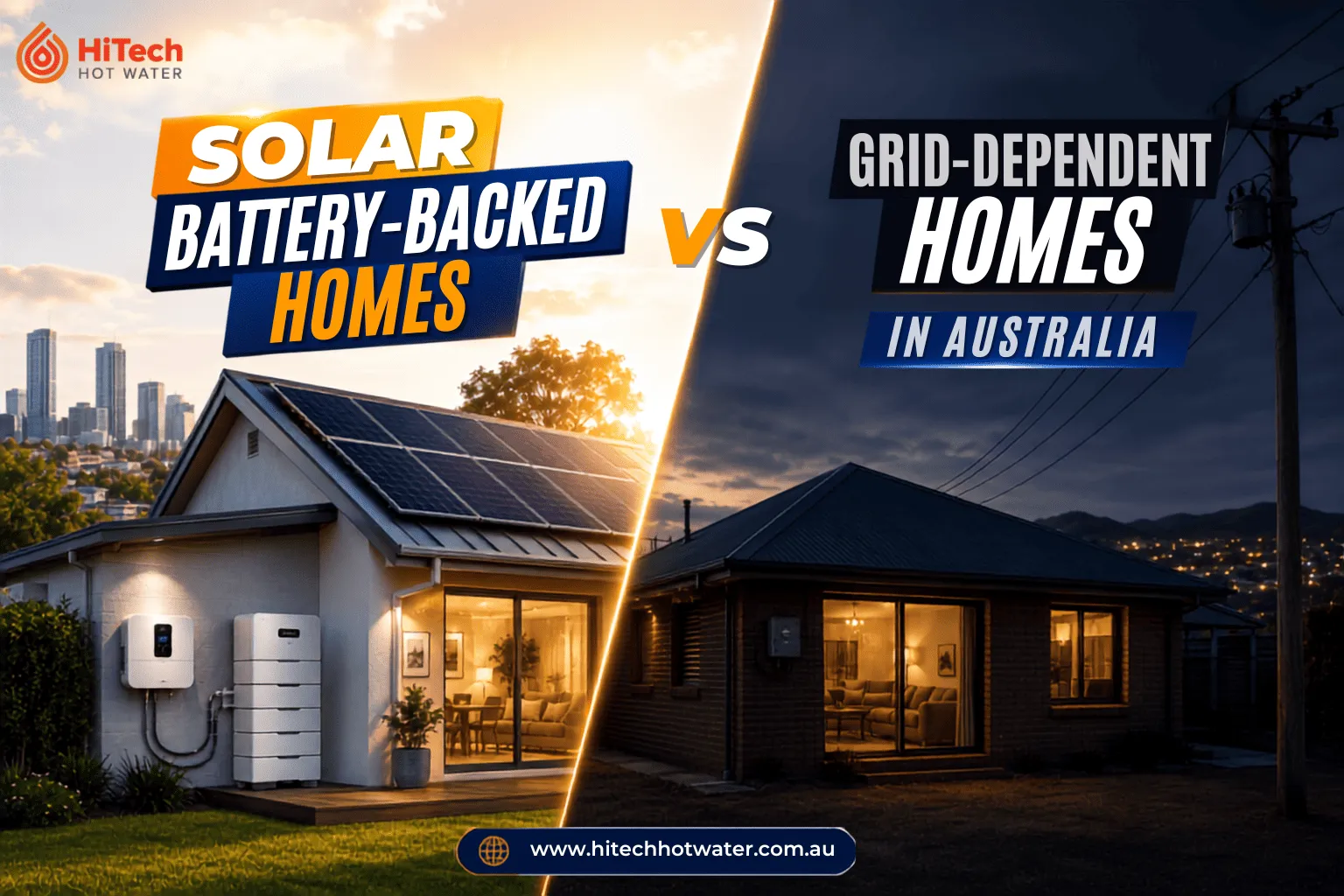

Australian households now have more choice in how they use electricity. Some continue relying mainly on the grid, while others use rooftop solar and home batteries to reduce the amount of power they buy.
Both setups can provide dependable electricity, but they differ in running costs, blackout protection, and household control over energy use.
How Does Grid-Dependent Homework?
A grid-dependent home receives electricity from the local network whenever lights, appliances, heating or cooling equipment are operating. The household pays for the energy consumed, along with daily supply charges.
This is convenient, but the household remains exposed to electricity price changes and has limited control over its energy source.
Even a home with rooftop solar can remain grid dependent. Solar panels may supply the property during daylight hours, but electricity is still purchased from the network when generation is low, particularly in the evening and overnight.
How Is a Battery-Backed Home Different?
A home with rooftop solar and a solar battery system can stores excess daytime generation instead of sending all of it to the grid. That energy can be used after sunset, during cloudy periods or when grid electricity costs more, reducing the amount purchased from a retailer.
Installing a battery does not normally take the property off the grid. Most Australian rooftop solar and battery systems remain connected to the network, which can supply electricity when the battery is empty or demand is too high.
Which Home Is Likely to Have Lower Bills?
Grid-dependent homes buy electricity whenever they are used. Evening cooking, air conditioning, heating and overnight appliances are therefore usually powered by the network.
Battery-backed homes can use stored solar energy during these periods. Actual savings depend on household consumption, when electricity is used, solar output, battery capacity, and the electricity tariff.
A battery can also be configured around time-of-use pricing, allowing stored energy to be used when grid rates are higher. However, savings may not always recover the full purchase cost within the product’s warranted life. Upfront cost expected savings and warranty coverage should all be considered.
What Happens During a Blackout?
Many homeowners assume every solar or battery system continues operating during a blackout. This is not always true.
Most standard grid-connected solar systems shut down when an outage is detected. This prevents electricity from entering the network while technicians may be working on power lines. A battery provides backup only when the system has been designed and configured for it.
Backup may cover the whole property or only essential circuits such as lighting, refrigeration, internet equipment, and water pumps. Some island able systems can also use available solar power to run the home and recharge the battery during daylight hours.
A fully grid-dependent home will generally lose power during a network outage unless another backup source is available.
Which Option Gives You More Control?
Battery-backed households can monitor when electricity is generated, stored, and consumed. Activities such as running the dishwasher, washing clothes, or heating water can be scheduled around available solar power.
Battery capacity, inverter output, and solar conditions still determine how much power is available. Running several high-demand appliances together may drain the battery quickly.
A grid-dependent home requires less day-to-day energy planning but offers fewer opportunities to reduce grid purchases using self-generated electricity.
Is a Battery Suitable for Every Home?
Not necessarily. A battery is generally more useful when a home produces enough surplus solar electricity to charge it and uses significant energy outside daylight hours. It may offer less value when the solar system produces less energy.
Before choosing a battery, consider evening electricity use, current solar exports, usable capacity, power output, backup needs, warranty and installation cost.
Eligible small-scale batteries connected to new or existing rooftop solar may receive support through the Australian Government’s Cheaper Home Batteries Program. Product, installer, and eligibility requirements should be checked before accepting a quote.
Which Setup Is Better?
A grid-dependent home may suit households that use relatively little electricity, want a simple setup or are not ready for the upfront cost of battery storage.
A battery-backed home may be better for households with high evening consumption, regular solar exports, time-of-use tariffs, or a need for properly configured blackout backup.
There is no universal answer. An assessment from HiTech Hot Water can review your bills, solar generation, household usage and backup requirements before recommending a suitable system.
For many Australian homeowners, grid-connected solar with battery storage provides a practical middle ground: lower grid dependence, better use of rooftop solar and network support whenever stored energy runs low.

























Sign in to leave a comment.