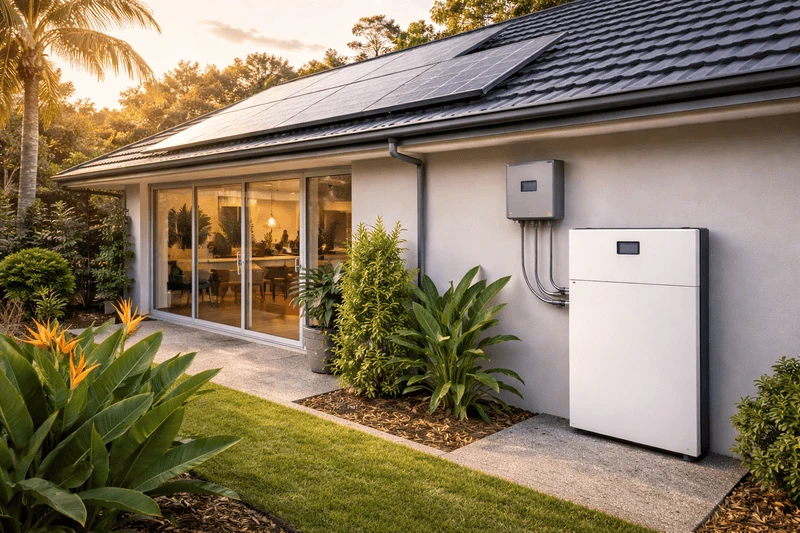

Solar power has become a familiar sight across Canberra rooftops, but panels alone no longer tell the full story of how households manage electricity. As energy prices fluctuate and grid reliability becomes a regular talking point, interest in solar battery Canberra solutions has grown steadily. For many homeowners, the question is no longer whether solar makes sense, but how to store and use that energy more effectively.
A solar battery changes the role of solar from a daytime-only system into a round-the-clock energy asset. Instead of exporting excess power back to the grid during the day and buying it back at night, households can retain more of what they generate and decide when and how it is used.
Why Canberra is well suited to battery storage
Canberra’s climate plays a quiet but important role in the battery conversation. With strong solar conditions, clear skies, and distinct seasonal demand shifts, the region creates ideal circumstances for combining solar panels with battery storage.
Winter evenings often bring higher electricity use just as solar generation drops off. A battery allows energy captured earlier in the day to be used later, smoothing the mismatch between production and consumption. In summer, batteries can also help manage peak demand when air conditioning use increases.
For households already producing surplus solar power, adding storage can turn unused generation into practical energy independence.
What a solar battery actually does
At its core, a solar battery stores excess electricity produced by rooftop solar panels. When the home is generating more power than it needs, that surplus is directed into the battery rather than being exported to the grid. Later, when solar production slows or stops, the battery supplies power back to the home.
This process reduces reliance on grid electricity during peak pricing periods. Over time, this can reshape household energy habits, encouraging greater awareness of when power is generated and when it is consumed.
While batteries vary in size, chemistry and performance, the principle remains the same: store now, use later.
Shifting from export to self-consumption
Traditional solar systems were designed around feed-in tariffs, exporting unused power back to the grid. As feed-in rates decline and electricity costs rise, self-consumption has become more attractive.
A solar battery Canberra setup prioritises keeping energy on-site. Instead of being paid a modest credit for exported power, households gain direct value by using stored energy when grid prices are highest.
This shift is less about maximising rebates and more about gaining control. Energy becomes something managed within the household rather than traded externally.
Battery storage and grid resilience
Grid outages are relatively uncommon in Canberra, but even brief disruptions can highlight the limits of grid dependence. Battery systems can be configured to provide backup power during outages, keeping essential circuits running.
This capability is particularly valuable for households with medical equipment, home offices, or refrigeration needs. While not all battery systems include blackout protection by default, it is an option many homeowners consider when planning their installation.
Over time, batteries also support broader grid stability by reducing peak demand, easing pressure on infrastructure during high-use periods.
Understanding battery sizing and usage patterns
Battery size is not about installing the largest unit available. The most effective systems are matched to household consumption patterns, solar generation levels and future energy goals.
A household that uses most of its power in the evenings may benefit from a different battery capacity than one with high daytime usage. Similarly, families planning to add electric vehicles or heat pumps often consider future expansion when selecting storage systems.
This is where professional system design matters. Understanding daily energy flows helps ensure the battery supports real-world behaviour rather than theoretical averages.
Many homeowners explore options to install a solar battery in Canberra once they begin tracking how much energy they produce versus how much they actually use.
The role of battery technology in long-term planning
Battery technology continues to evolve, but modern lithium-based systems are already designed for long service life and consistent performance. Most are built to handle thousands of charge cycles while maintaining usable capacity.
For households, this means storage is no longer an experimental add-on but a practical infrastructure upgrade. When combined with quality solar panels and inverters, batteries form part of a long-term energy strategy rather than a short-term cost-saving exercise.
The focus shifts from payback periods alone to reliability, flexibility and energy confidence.
Canberra’s policy landscape and incentives
Government incentives and rebates have historically driven solar adoption. While battery rebates have been more limited, interest continues to grow as policies evolve and energy resilience becomes a national discussion.
Rather than relying solely on incentives, many households assess batteries based on lifestyle fit. The ability to use solar energy after sunset, reduce peak grid reliance and prepare for future energy changes often outweighs short-term rebates.
Policy settings may change, but the underlying value of storage remains tied to how energy is used day to day.
Battery systems and electric vehicles
Electric vehicles add another layer to the solar battery discussion. Charging an EV from stored solar energy increases self-consumption even further, turning daytime generation into transport energy.
For Canberra households considering EVs, battery storage supports flexible charging schedules and reduces grid dependency. While vehicle-to-home technology is still emerging, batteries already offer a practical bridge between solar generation and transport electrification.
As EV adoption grows, integrated energy systems are likely to become more common.
Installation quality and system integration
A battery is only as effective as its integration with the rest of the electrical system. Proper installation ensures safe operation, efficient charging and seamless interaction with solar panels and inverters.
System design must account for existing electrical infrastructure, roof orientation, inverter compatibility and household load requirements. This is why many homeowners seek guidance through Battery Storage Systems – Select Electrical when evaluating storage options that suit Canberra conditions.
Professional design and installation reduce the risk of underperformance and ensure the system delivers its intended benefits over time.
Looking beyond short-term savings
While cost is always part of the decision, the appeal of solar battery Canberra solutions extends beyond immediate financial returns. Batteries offer predictability in an energy landscape that is becoming less predictable.
Households gain confidence knowing they can rely on stored energy during peak pricing, outages or future changes to tariffs. This sense of control often proves just as valuable as measurable savings.
As energy systems become more decentralised, batteries position homes to adapt rather than react.
A changing relationship with energy
Installing a solar battery often changes how households think about electricity. Energy use becomes visible and intentional rather than automatic. People become more aware of when appliances run, how much power they consume and how storage supports daily routines.
This awareness encourages smarter energy habits, even without conscious effort. Over time, the home becomes an active participant in energy management rather than a passive consumer.
Why battery storage is becoming mainstream
What was once considered optional is increasingly seen as a natural extension of solar. As panel installations mature and household energy needs evolve, batteries complete the system.
For Canberra homes, storage supports year-round comfort, energy independence and future readiness. It aligns with broader shifts toward electrification, resilience and local energy control.
Rather than chasing trends, solar batteries respond to practical needs that are already present.
Solar battery Canberra as part of a bigger picture
Battery storage is not about abandoning the grid or achieving total independence overnight. It is about balance. Storing what you generate, using it when it matters most and reducing unnecessary reliance on external supply.
As more households adopt storage, energy systems become more distributed, resilient and adaptable. For individual homes, this translates into confidence, flexibility and long-term value.
In that context, solar battery Canberra solutions are less about technology for its own sake and more about aligning energy use with how people actually live now and into the future.






























Sign in to leave a comment.