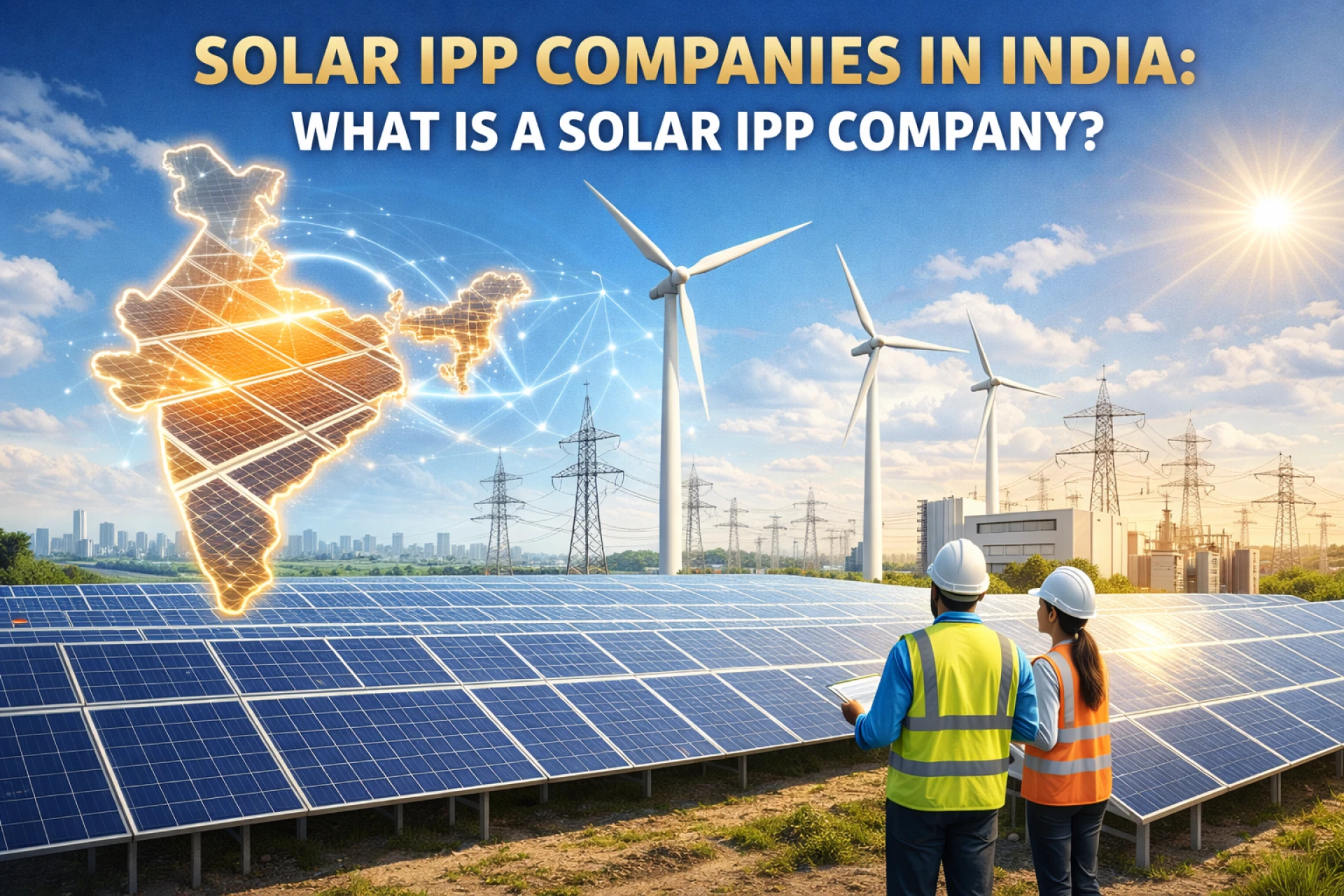

Solar IPP companies in India are quietly changing how electricity reaches industries, cities and even remote towns. I first noticed this shift during a visit to a solar park in Gujarat a few years ago. Standing near row of panel stretching across dry land project engineer told me that the entire plant was owned by an Independent Power Producer, selling electricity directly to the grid rather than using it internally. The scale surprised me. Thousand of panels. One clear purpose generate and sell clean power.
You might hear the term often in energy discussions.
A solar IPP company build and operates solar power plant and sell the electricity to utilities, government or businesses through long-term agreements. Instead of consuming the power themselves these companies focus purely on generating and supplying it.
What Is a Solar IPP?
An Independent Power Producer (IPP) is a company that generates electricity but does not own the traditional power distribution network. Solar IPPs build large solar farm and then sell the generated electricity through Power Purchase Agreements (PPAs).
These agreements usually last 15 to 25 years, giving both the producer and the buyer predictable pricing.
I remember visiting a university campus that sourced part of its electricity from an IPP solar project located almost 300 kilometers away. The energy manager explained it simply: “We don’t see the panels, but we know the power is coming from them.” That moment made the idea very real for me.
How Solar IPP Companies Work
The process is fairly straightforward but requires careful planning.
First, the company identifies land with good sunlight exposure. Then they build a solar power plant often hundred of megawatts in capacity. After that, electricity flows into the grid and reaches distribution companies or large commercial buyer.
Many developers in India now operate in this model. Firms like KPI Green Energy are part of the growing group of companies developing large solar projects and contributing to the country renewable energy capacity.
Growth of Solar IPP Companies in India
India has seen rapid expansion in the solar sector during the past decade. The country crossed 70 GW of installed solar capacity recently and IPP developer play a major role in that growth.
During a road trip through Rajasthan, I once passed a massive solar installation near Jodhpur. From the highway, it looked like a dark blue lake spread across the desert. A local driver told me that the electricity from that plant powers thousands of homes through state utilities. Experiences like that make the scale of IPP project easier to imagine.
Why Businesses and Governments Work With Solar IPPs
There are practical reason.
Lower infrastructure burden:
Utilities and companies don’t need to build their own plant.
Stable electricity prices:
Long-term PPAs protect buyers from sudden tariff increases.
Cleaner energy supply:
Solar power help reduce dependence on coal-based electricity.
One manufacturing manager I spoke with said their company preferred purchasing renewable power through an IPP instead of building their own plant because it allowed them to focus on production while still shifting toward green energy.
The Future of Solar IPP Companies
The demand for clean electricity is rising quickly across India. Industries want greener operations. Governments want lower emissions. And investors are putting money into renewable project.
Because of this, solar IPP companies including developers like KPI Green Energy are expected to keep expanding large-scale projects across states such as Gujarat, Rajasthan and Karnataka.
Next time you pass a huge solar farm beside a highway, remember something simple. Those panels might not belong to the local utility. They could be part of an IPP project quietly sending sunlight powered electricity across the grid to homes and businesses hundreds of kilometers away.
























Sign in to leave a comment.