

Planning to install solar panels for home but not sure where to start?
You’re probably wondering about the cost, subsidy benefits, number of panels required, and whether solar will actually reduce your electricity bill. These are common questions—and the good news is, solar has become more affordable and practical than ever in 2026.
This guide will walk you through everything you need to know before switching to solar power for your home.
What Is the Cost of Solar Panels for Home in India?
The cost of installing solar panels for home depends on several components, not just the panels themselves.
A typical home solar system includes solar panels, an inverter, optional battery storage, mounting structure, wiring, net metering setup, and installation charges. Out of all these, solar panels, inverter, and battery contribute the most to the overall cost.
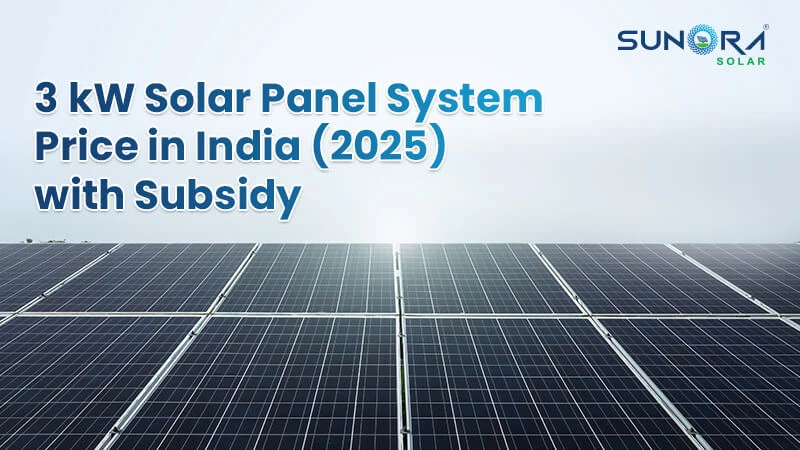
In India, the average price starts from around ₹60,000 for a small 1 kW system and can go up to ₹3,00,000 or more for larger systems like 5 kW.
For example, a 1 kW system is suitable for basic usage like lights and fans in a small home, while a 3 kW system works well for a 2–3 BHK house. If you have higher electricity usage with appliances like AC and refrigerator, a 5 kW system is a better fit.
Keep in mind that prices vary based on panel quality, installation complexity, and your location.
Government Subsidy on Solar Panels for Home
To encourage solar adoption, the Indian government offers financial support through the PM Surya Ghar Muft Bijli Yojana.
Under this scheme, homeowners can get a subsidy of up to ₹78,000 on rooftop solar systems. The exact subsidy amount depends on the system size. Smaller systems receive lower subsidies, while systems above 3 kW are eligible for the maximum benefit.
In addition to subsidy, you also get access to net metering, which allows you to send excess electricity back to the grid and reduce your power bill. Many banks also provide solar loans at lower interest rates, making installation more affordable.
Some states like Gujarat, Delhi, and Karnataka offer extra benefits, which further improve your savings.
How to Apply for Solar Subsidy in India
Applying for a subsidy for solar panels for home is a simple online process.
First, you need to register on the official government portal and submit your rooftop solar application. After that, your local DISCOM will inspect your site and suggest the suitable system size.
Once approved, you can select a certified solar vendor to install the system. After installation, you apply for net metering and schedule a final inspection.
When everything is approved, you upload the required documents, and the subsidy amount is transferred directly to your bank account—usually within a few weeks.
Step-by-Step Process to Install Solar Panels for Home
Installing a solar system involves a few important steps, but most of the work is handled by professionals.
The process starts with understanding your electricity usage. By checking your past 6 to 12 months of bills, you can estimate your average consumption and decide the right system size.
Next comes the rooftop inspection. Experts analyze your roof direction, shadow-free space, and structural strength to ensure maximum efficiency.
Once the assessment is done, a proper system design is created. This includes panel placement, expected energy generation, cost breakdown, and savings estimation.
After finalizing the plan, the installation begins. The team installs solar panels, inverter, mounting structure, and wiring. If required, a battery is also added.
Then comes net metering, where your system is connected to the grid. This allows you to export unused electricity and reduce your bill.
Finally, DISCOM conducts a safety inspection. Once approved, your system is activated, and you can start generating solar power at home.
Do You Need a Battery for Home Solar?
Not every home solar system requires a battery.
If you install an on-grid system, you don’t need a battery, but your system will shut down during power cuts. On the other hand, off-grid and hybrid systems include battery storage, which provides backup during outages.
If your area faces frequent power cuts, choosing a hybrid system with a battery is a smarter option.
How Many Solar Panels Are Required for a Home?
The number of solar panels depends on your electricity consumption and the wattage of each panel.
For example, if you install a 3 kW system using high-efficiency 400W panels, you will need around 7 to 10 panels.
Using advanced technologies like TOPCon or bifacial panels can reduce the number of panels required while increasing energy output.
Which Are the Best Solar Panels for Home?
In 2026, high-efficiency solar technologies are becoming the preferred choice for homeowners.
TOPCon and bifacial solar panels are considered among the best options because they offer higher efficiency, better performance in low-light conditions, and improved energy generation.
Although these panels are slightly more expensive, the long-term savings and government subsidy make them a worthwhile investment.
Will Solar Panels Work During Power Cuts?
This depends on the type of system you install.
On-grid systems automatically shut down during power outages for safety reasons. However, if you have a hybrid or off-grid system with battery storage, your home will continue to receive electricity even during a blackout.
Final Thoughts
Switching to solar panels for home is one of the smartest financial and environmental decisions you can make today.
With installation costs becoming more affordable and subsidies reducing the initial investment, solar power is now accessible to most homeowners in India.
It not only helps you save up to 90% on electricity bills but also provides reliable power for more than 25 years.
If you choose the right system size and work with an experienced installer, solar can completely transform how your home consumes energy.
FAQs
How much do solar panels for home cost in India?
The cost usually ranges between ₹60,000 to ₹80,000 per kW, depending on quality and system type.
Can I run an AC on solar power?
Yes, a properly sized system like 3 kW or 5 kW can easily support AC usage.
What is the payback period for a home solar system?
Most systems recover their cost within 4 to 6 years.
Is maintenance required for solar panels?
Very minimal—just regular cleaning and occasional servicing.



























Sign in to leave a comment.