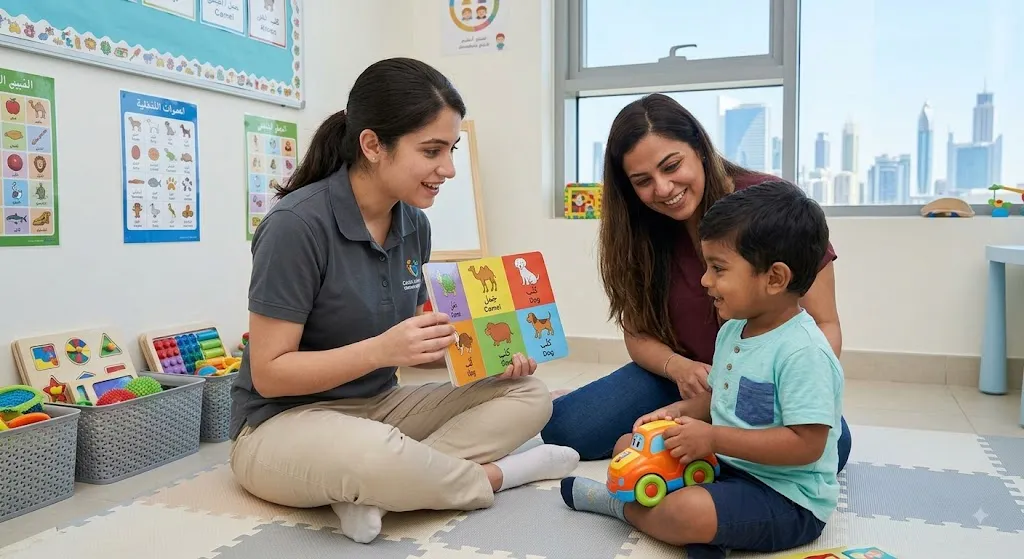

At two years old, children are developing communication skills quickly. They may be learning new words, combining words, following simple instructions, and using gestures to express what they want. Development varies from child to child, but persistent communication concerns can make parents wonder whether professional support is needed.
A speech and language assessment can provide a clearer picture of a child's strengths and areas that may need additional support.
What speech skills should a 2-year-old have?
By around age two, many children can communicate using words and simple phrases, understand familiar instructions, and use gestures or words to express needs. However, developmental milestones are not identical for every child. A professional assessment can help determine whether a child's communication skills are progressing appropriately.
Parents may notice that their two-year-old:
- Uses a growing vocabulary
- Combines some words into short phrases
- Understands familiar words and instructions
- Points or gestures to communicate
- Names familiar people or objects
- Attempts to imitate sounds or words
- Shows interest in communicating with others
These are general developmental patterns, not a checklist for diagnosing a communication disorder. Children develop at different rates, and other factors such as hearing, development, environment, and individual temperament can influence communication.
When should a 2-year-old have a speech assessment?
Parents may consider an assessment when a child's speech or language development seems significantly delayed, communication is difficult, or the child becomes frustrated when trying to express themselves. Professional guidance can be useful even when parents are simply uncertain about whether development is on track.
Possible signs that deserve attention include:
- Very limited use of words.
- Little attempt to communicate with others.
- Difficulty understanding simple instructions.
- Rarely using gestures such as pointing.
- Difficulty imitating sounds or words.
- Losing communication skills that were previously present.
- Frequent frustration because of communication difficulties.
- Limited interaction or difficulty engaging socially.
A child does not need to have all these signs before an assessment is considered. If a parent has a persistent concern, discussing it with a qualified professional can provide reassurance or identify whether further evaluation would be beneficial.
How does speech therapy work for young children?
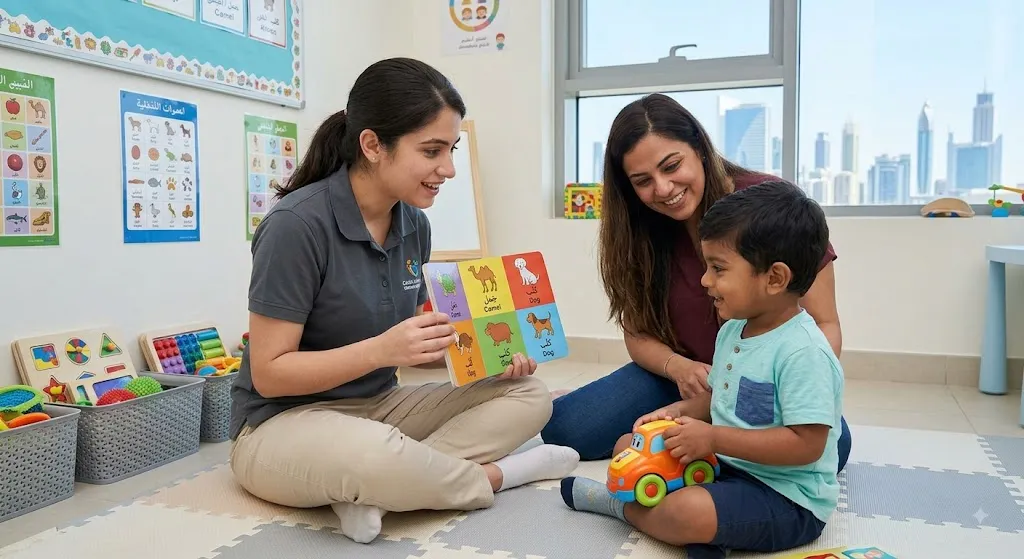
Speech therapy for toddlers is usually individualized and designed around the child's developmental level. A speech and language professional first assesses communication abilities, then creates goals based on the child's specific needs. Therapy may use play, books, pictures, sounds, gestures, and everyday activities to encourage communication.
Depending on the assessment, therapy may focus on:
- Building vocabulary
- Encouraging word combinations
- Improving understanding of language
- Developing clearer speech
- Encouraging gestures and functional communication
- Increasing opportunities for interaction
- Supporting social communication
For a two-year-old, therapy should generally feel engaging and age-appropriate rather than like a traditional classroom lesson.
Parents may also receive activities and strategies to use at home. Everyday routines such as mealtimes, bath time, reading, and play can provide opportunities for children to practice communication naturally.
Can toddlers benefit from early intervention?
Early intervention can be helpful when a child has identified communication or developmental difficulties. It gives families an opportunity to understand the child's needs and begin appropriate support rather than waiting to see whether difficulties resolve on their own.
Early support may help with:
- Communication skills
- Understanding language
- Expressing needs
- Social interaction
- Parent-child communication
- Participation in everyday activities
The benefits vary from child to child. An assessment is important because intervention should be based on the child's actual communication profile.
How do you find appropriate speech support in the UAE?
Parents looking for speech therapy for 2 year old uae should consider the professional's qualifications, experience with toddlers, assessment methods, and whether the clinic can consider broader developmental needs.
It is useful to ask questions such as:
- Does the professional work with children around two years old?
- How is communication assessed?
- What happens during the first appointment?
- How are therapy goals established?
- Are parents involved in sessions?
- How is progress monitored?
- Can the clinic coordinate with other child-development professionals if necessary?
A multidisciplinary environment can be particularly useful when communication concerns occur alongside developmental, behavioral, sensory, learning, or motor difficulties.
Occupational therapy, for example, may address areas such as participation, sensory processing, motor skills, and everyday functioning when these are relevant to a child's overall development. Speech and occupational therapy are different specialties, but some children may benefit from coordinated developmental support.
What happens during a speech and language assessment?
A toddler's assessment usually involves observing how the child communicates in a comfortable environment. The professional may look at speech sounds, vocabulary, understanding, gestures, interaction, play, and other communication behaviors.
Parents may be asked about:
- Pregnancy and birth history
- Developmental milestones
- Hearing history
- Words the child currently uses
- How the child communicates needs
- Understanding of instructions
- Social interaction
- Previous evaluations or concerns
The assessment may involve play-based activities rather than formal testing that feels demanding for a young child.
The goal is to understand both strengths and difficulties. Parents can then receive recommendations about whether therapy, monitoring, home strategies, or further assessment may be appropriate.
Why is parent involvement important?
Parents spend the most time communicating with their child, so they play an important role in supporting language development. A therapist can provide strategies that fit naturally into everyday routines, making it easier for parents to reinforce communication skills between sessions.
Parents can encourage communication by:
- Talking about what the child is doing.
- Reading picture books together.
- Giving the child time to respond.
- Naming familiar objects repeatedly.
- Expanding on the child's words.
- Offering simple choices.
- Following the child's interests during play.
- Celebrating communication attempts rather than focusing only on perfect pronunciation.
The goal is to create frequent, positive opportunities for communication without putting unnecessary pressure on the child.
What should parents expect from therapy?
The number and frequency of sessions depend on the child's needs and treatment goals. Some children may need targeted support for a specific communication difficulty, while others may benefit from broader developmental intervention.
Parents should expect the professional to explain:
- What the assessment found
- Which skills need support
- Recommended therapy goals
- How parents can help at home
- How progress will be monitored
- Whether additional evaluation is recommended
Progress is not always immediate. Communication develops gradually, and children can respond differently to intervention.
FAQs
Is it normal for a 2-year-old to have limited speech?
Children develop communication skills at different rates, but significantly limited speech or difficulty communicating can be worth discussing with a qualified professional. An assessment can help determine whether the child's development is progressing appropriately.
Does a 2-year-old need speech therapy if they understand everything?
Not necessarily. Understanding language is one part of communication. A professional can assess both receptive and expressive language, along with speech, gestures, interaction, and other relevant developmental skills.
Can parents support speech development at home?
Yes. Talking, reading, playing, naming objects, giving children time to respond, and expanding on their words can create useful opportunities for communication. If a therapist provides specific strategies, parents can incorporate those techniques into daily routines.




























Sign in to leave a comment.