
What This Article Covers
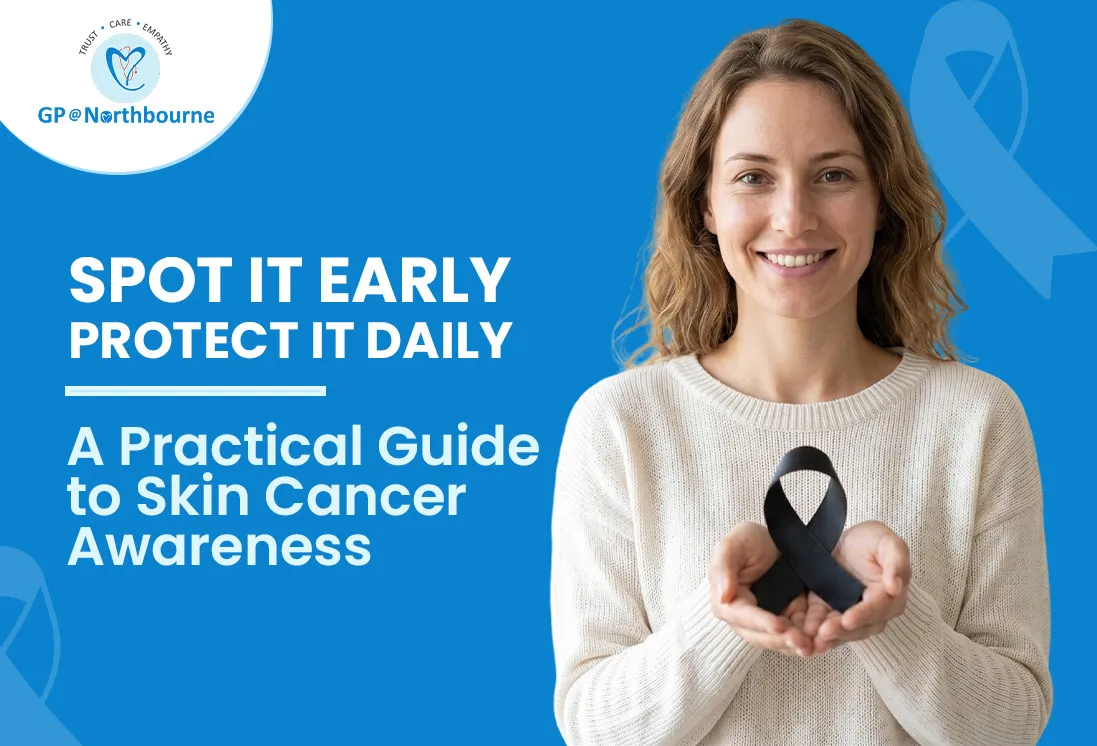
A practical guide to skin cancer awareness in Australia, including early signs of skin cancer, daily sun protection habits like Slip, Slop, Slap, and when to see a GP.
Autumns in Canberra paint the landscape in rich, vibrant colours. As the air cools and the sun softens, it’s easy to believe the sun is no longer a threat, and sun protection often slips out of routine. But this is exactly when skin cancer awareness matters the most. Even on a mild April morning, UV levels in Canberra are often high enough to damage your skin. In Australia, frequent UV exposure is one of the main causes of skin cancer, making it essential to stay alert to the early signs of skin cancer all year round. In this practical guide to skin cancer, we’ll explore its symptoms, how to detect it early, and the need for proper sun protection.
Understanding Skin Cancer — It’s More Common Than You Think
Skin cancer is often caused by cumulative sun exposure over time. Not just a single severe sunburn, but years of constant, unprotected, everyday exposure for simple things like walking, driving, and running errands can also lead to skin cancer.
Skin cancer is mainly of three types:
Basal Cell Carcinoma — It is the most common and tends to grow slowly.
Squamous Cell Carcinoma — It can spread if left untreated.
Melanoma — It is less common but more serious because it can spread quickly.
But no matter the type of cancer, one thing to remember is that skin cancer rarely appears suddenly. It develops quietly, often as subtle changes that are easy to miss.
Early Signs of Skin Cancer: The Changes People Miss
So, how to detect skin cancer early on? Common skin cancer warning signs range from a new or changing spot, a sore that doesn’t heal, or an area that’s bleeding, crusting, or becoming itchy. It might be a pearly bump, a mole, a red patch, a scaly area, or a spot you’ve had for years that suddenly looks slightly different. Since these changes don’t look or feel urgent, people tend to forget they could be early signs of skin cancer. However, such ignorance isn’t bliss. Rather, it could lead to many issues. When it comes to your skin, noticing change early is what makes the biggest difference. And when it comes to moles, even small changes are worth a closer look.
Changes in Moles: What to Watch For
Everyone has moles, and most are harmless. However, if your mole starts changing, it can be an early sign of melanoma. Not sure how to spot the difference? You can use the ABCDE rule to check for Melanoma, focusing on asymmetry, border, colour, diameter, and any evolving changes. Still confused? Check out our ABCDE guide and learn how to spot early signs of melanoma.
Skin Cancer Prevention: Why “Slip, Slop, Slap” Still Matters in Autumn
While the autumn sun may not have enough heat, it still has UV radiation that is high enough to cause harm. That’s why daily sun protection and skin cancer awareness matter. So what you can do is use one of the simplest, most effective, and familiar ways to reduce your risk of skin cancer. The “Slip, Slop, Slap” approach:
● Slip on protective clothing
● Slop on SPF 30+ sunscreen
● Slap on a hat
Nowadays, it also includes:
● Seek shade
● Slide on sunglasses
However, it isn’t just a summer habit, but something you should do year-round. And if you notice a new mole, a spot that stands out, a sore or scaly patch that looks weird, or a change you can’t quite explain, it’s better to visit your local GP and get it checked.
A Simple Habit That Protects You
Looking after your skin doesn’t require drastic changes. It starts with skin cancer awareness and small, consistent habits like protecting your skin before you step outside and taking a moment, now and then, to notice what’s changed. Being aware of the early signs of skin cancer can make all the difference. And if something doesn’t feel right, a quick check at your local GP, like GP Northbourne, can offer reassurance. Because in the end, it’s the habits we stick to that protect us the most.
Frequently Asked Questions
Q1. What are the early signs of skin cancer?
A: Early signs of skin cancer include a new or changing spot, a sore that doesn’t heal, or a lesion that bleeds, crusts, or becomes itchy.
Q2. How can I protect my skin from skin cancer in Australia?
A: Follow the Slip, Slop, Slap approach, which means wear protective clothing, apply SPF 30+ sunscreen, and use a hat. Sun protection is important year-round, not just in summer.
Q3. Is sun protection necessary in autumn and winter?
A: Yes. UV radiation can still be high even when the weather feels cool. Sun protection is recommended whenever UV levels are 3 or above.
Q4. How do I check for melanoma at home?
QA: Use the ABCDE rule to assess moles for asymmetry, irregular borders, colour changes, diameter, and evolving features. Visit a GP if anything changes.
Q5. When should I see a GP for a skin check?
A: You should see a GP if you notice a new or changing spot, a mole that looks different from others, or a sore that doesn’t heal.
Q6. Are all skin spots cancerous?
A: No, most spots are harmless. However, any unusual or changing spots should be checked by a GP for reassurance and early detection if needed.






























Sign in to leave a comment.