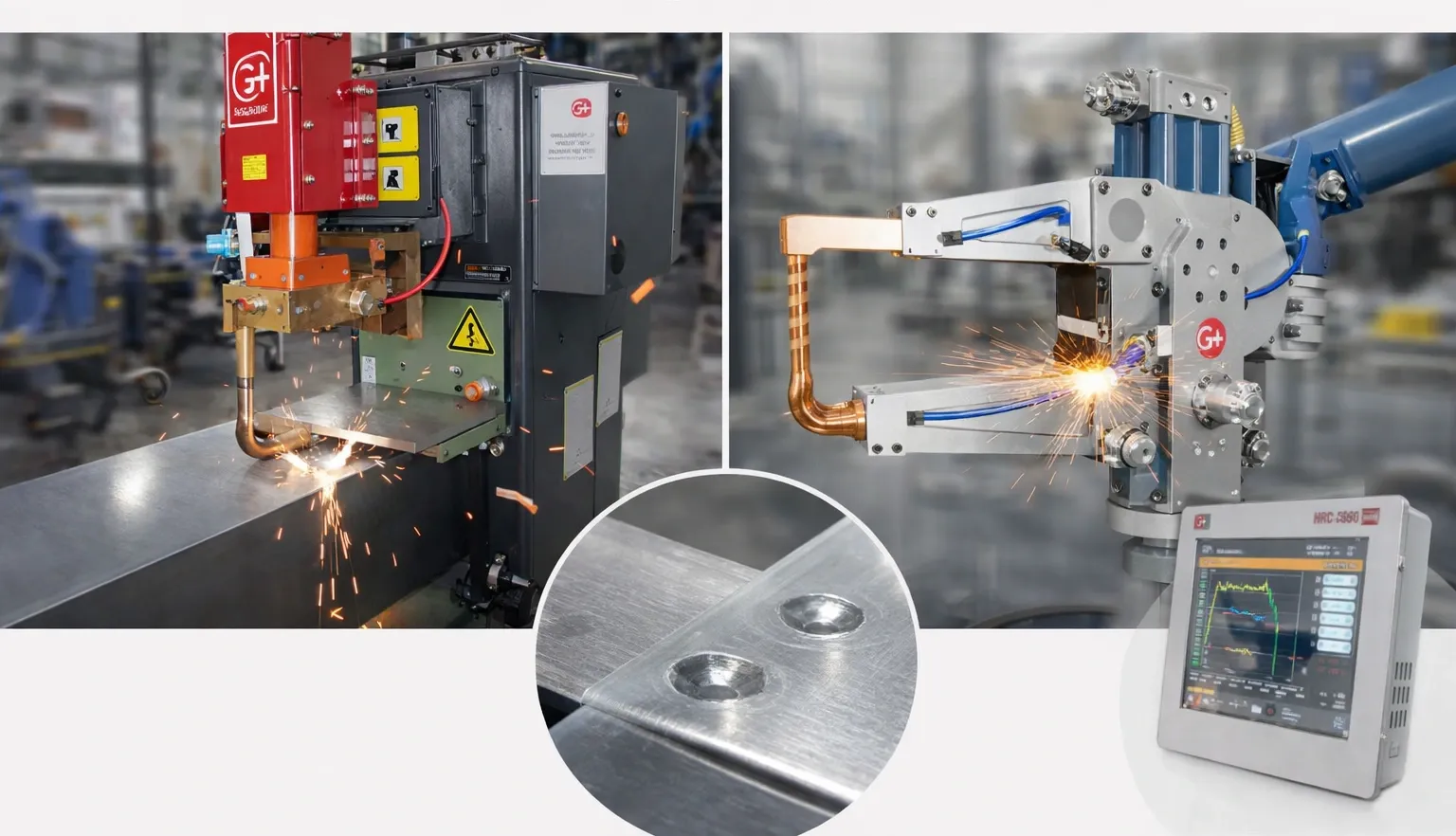

In modern manufacturing, efficiency, repeatability, and precision are non-negotiable. Among the many joining technologies used in mass production, the spot resistance welder (resistance spot welding system) remains one of the most widely adopted solutions for sheet metal assembly. From automotive body-in-white structures to electrical enclosures and appliance fabrication, this process is a backbone of high-speed industrial production.
At Heron Welder , we specialize in advanced resistance welding systems designed for OEMs, Tier suppliers, and automated production lines helping manufacturers achieve consistent weld quality, lower cycle times, and optimized production cost.
What is a Spot Resistance Welder?
A spot resistance welder is a machine that joins two or more overlapping metal sheets by applying pressure and electrical current through copper electrodes. The heat generated at the contact point melts the metal locally, forming a solid-state weld nugget once cooled.
The process is known as Resistance Spot Welding (RSW), and it is widely used because it does not require filler material, shielding gas, or complex post-processing.
The fundamental working principle is based on Joule heating, where electrical resistance generates heat at the interface of the metal sheets.
Q=I2RtQ = I^2 R tQ=I2Rt
Where:
- Q = Heat generated
- I = Welding current
- R = Electrical resistance at contact point
- t = Time of current flow
As research shows, welding current has the most significant impact on heat generation, making precise control essential for weld quality control in industrial applications.
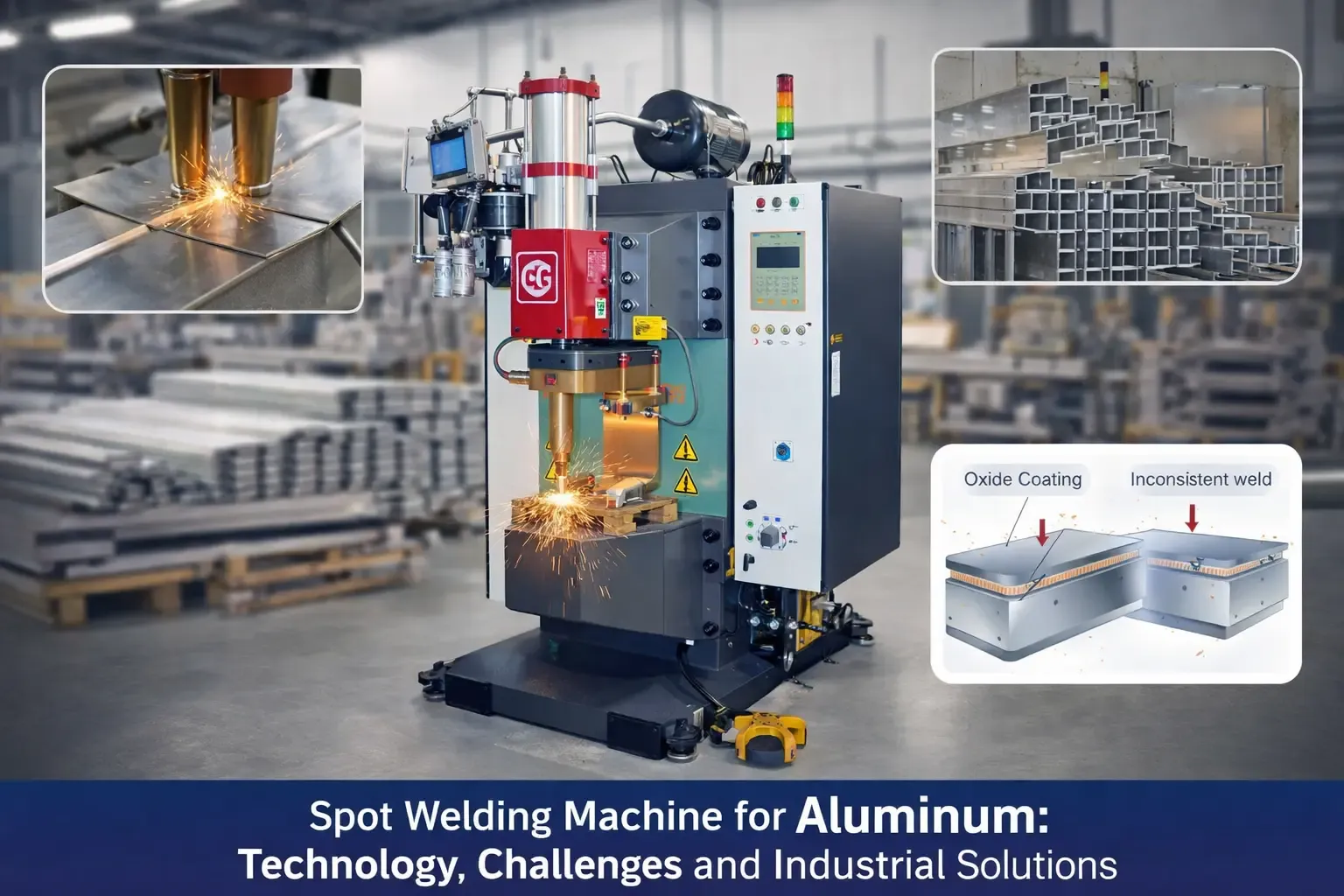
How a Spot Resistance Welder Works (Step-by-Step)
The resistance spot welding cycle is simple in concept but highly controlled in execution:
1. Clamping the Workpieces
Two or more metal sheets are stacked and placed between copper alloy electrodes. Pressure is applied to ensure tight contact.
2. Current Application
A high electrical current passes through the electrodes and flows through the metal interface.
3. Heat Generation
Resistance at the contact point generates intense localized heat, causing the metal to reach a plastic or molten state.
4. Weld Nugget Formation
A small molten zone (weld nugget) forms between the sheets.
5. Cooling Under Pressure
Current stops while pressure remains, allowing the nugget to solidify into a strong joint.
This process happens in milliseconds, making it ideal for automated production environments.
Key Components of a Spot Resistance Welder
A modern industrial system typically includes:
- Welding transformer (AC or MFDC inverter)
- Copper alloy electrodes
- Pneumatic or servo force system
- Welding controller (for current/time/pressure control)
- Cooling system (water-cooled electrodes)
- Machine frame or robotic welding arm
Advanced systems from manufacturers like Heron Welder integrate intelligent controllers for real-time monitoring, ensuring consistent weld quality across production cycles.
Industrial Applications of Spot Resistance Welding
Spot resistance welders are essential in high-volume manufacturing industries:
Automotive Industry
- Car body panels
- Door frames and chassis structures
- Battery trays for EVs
Electrical & Electronics
- Control cabinets
- Metal housings
- Conductive assemblies
Home Appliances
- Washing machines
- Refrigerators
- Air conditioning units
Industrial Fabrication
- Sheet metal enclosures
- HVAC duct systems
- Metal furniture structures
Its ability to perform thousands of welds per hour makes it ideal for automation-heavy industries.
Advantages of Spot Resistance Welders
Manufacturers prefer this technology for several strategic reasons:
1. High Production Speed
Each weld takes only a fraction of a second, ideal for mass production lines.
2. Automation Compatibility
Easily integrated into robotic arms and CNC-controlled systems.
3. Clean and Filler-Free Process
No consumables like filler wire or shielding gas are required.
4. Cost Efficiency
Low operational cost compared to MIG/TIG welding in sheet metal applications.
5. Consistent Weld Quality
With precise control systems, weld repeatability is extremely high.
Spot Resistance Welder vs Other Welding Methods
Compared to MIG or TIG welding, resistance spot welding offers:
- Faster cycle time
- Less operator dependency
- Minimal heat distortion
- Better suited for thin sheet metals
However, it is limited to overlapping sheet joints and is not suitable for thick structural welding.
Best Practices for Industrial Use
To ensure optimal performance of a spot resistance welder:
- Maintain correct electrode alignment
- Monitor electrode wear regularly
- Optimize current, pressure, and time settings
- Ensure proper surface cleaning of metal sheets
- Use water cooling for high-duty cycles
- Perform periodic weld quality testing
In automated environments, real-time monitoring systems further enhance quality control and reduce defects.
Heron Welder’s Role in Advanced Resistance Welding Solutions
Heron Welder is a global manufacturer specializing in:
- Resistance spot welding machines
- Projection and seam welding systems
- MFDC inverter welding solutions
- Capacitor discharge welding systems
- Automated welding production lines
- Clinching and FSPR riveting solutions
Our systems are designed for high-precision industrial manufacturing, supporting OEMs and Tier suppliers in achieving scalable, reliable, and cost-efficient production.
Whether it’s automotive body-in-white welding or heavy-duty industrial sheet metal assembly, Heron delivers engineered solutions tailored for modern manufacturing challenges.
FAQs about Spot Resistance Welder
1. What materials can be welded using a spot resistance welder?
Most commonly low-carbon steel, stainless steel, aluminum, and galvanized sheet metals.
2. Is spot welding strong enough for structural applications?
Yes, in multi-point configurations, especially in automotive and appliance manufacturing.
3. What is the typical weld time in spot welding?
Usually between 0.1 to 1 second depending on material thickness.
4. Can spot resistance welding be automated?
Yes, it is widely used in robotic welding systems in automotive production lines.
5. What is the main limitation of spot welding?
It is mainly suitable for overlapping sheet metal joints and not for thick or complex joint geometries.
Conclusion
The spot resistance welder remains a critical technology in modern industrial manufacturing due to its speed, efficiency, and compatibility with automation. As production demands increase, manufacturers require more intelligent, reliable, and scalable welding systems.
At Heron Welder, we engineer advanced resistance welding solutions that help factories improve productivity, reduce costs, and achieve consistent weld quality in high-volume environments.
Looking to upgrade your production line or develop a customized welding solution?
Contact Heron Welder today to request a quote or consult with our engineering team for tailored resistance welding and automation systems.


























Sign in to leave a comment.