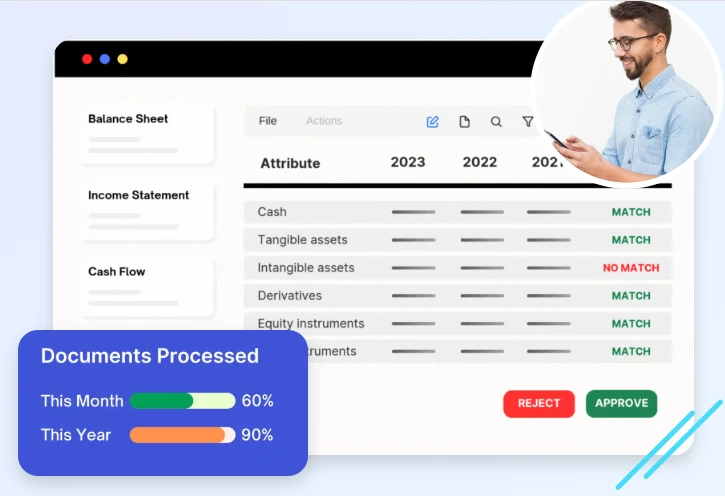

Is your financial data trapped in silos, slowing down decision-making?
Speed, accuracy, and connectivity define operational efficiency in today's fast-paced financial landscape. This blog explores how seamless system integration enhances spreading finance, allowing institutions to extract, normalize, and analyze financial data more efficiently. From automation to reconciliation, we’ll examine the benefits of integrated platforms and how they simplify workflows across commercial lending, investment analysis, and portfolio management.
Why Integration Matters in Spreading Finance
Even the most advanced financial tools can fall short if they don’t connect with existing systems. Integration is the bridge that links financial spreading platforms to data warehouses, loan origination systems, risk engines, and reporting dashboards.
In spreading finance, seamless integration eliminates repetitive tasks such as rekeying figures or importing/exporting spreadsheets. It supports continuous data flow between departments and improves stakeholders' transparency. This connectivity results in faster decisions, fewer discrepancies, and a more resilient financial operation.
Key Advantages of Seamless Data Flow
One of the primary benefits of integrated systems is improved data consistency. With centralized access, financial teams can no longer reconcile figures between applications. This accuracy is critical in spreading finance, where even minor errors can distort risk models or skew portfolio insights.
Moreover, system integration accelerates processing times. As financial documents enter the system, data can be extracted and mapped in real-time, feeding directly into analytics or decision platforms. This shift from reactive to proactive analysis strengthens the institution’s ability to respond to market changes and client needs.
Integrated platforms also support collaboration between departments, allowing shared access to data and unified reporting. This transparency reduces bottlenecks and ensures that all teams, from credit analysts to compliance officers, work from the same verified information.
Built for High-Volume Document Handling
Modern spreading platforms are designed to manage thousands of documents daily. These files come in various formats and languages, whether sourced from lenders, clients, or public disclosures. A robust spreading finance solution integrated with internal systems can automatically identify, sort, and extract the required data from these files.
This automation is especially valuable in commercial lending environments where underwriters assess financials at scale. With integrated systems, they gain quicker access to normalized data, supporting faster credit decisions without sacrificing depth or accuracy.
Automated Reconciliation Across Statements
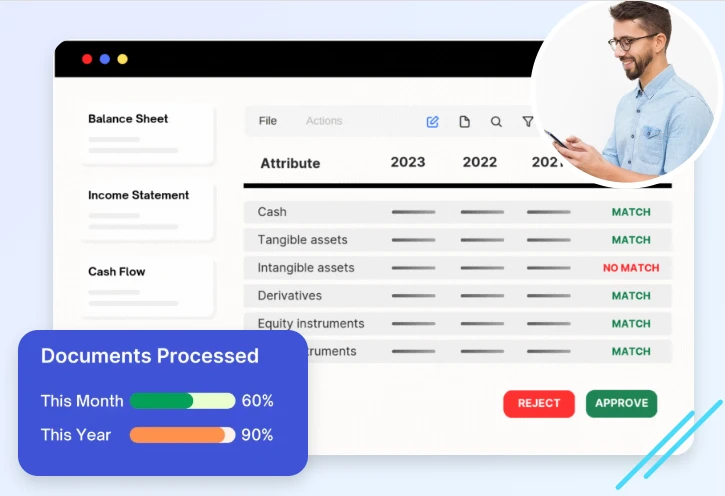
Accuracy doesn’t end with data entry. For spreading finance to be reliable, figures must be reconciled across income statements, balance sheets, and supporting notes. Integrated solutions can perform automated checks to ensure consistency, reducing the need for manual cross-verification.
This feature improves the integrity of credit assessments and audit trails. It also saves analysts time that would otherwise be spent tracing discrepancies or adjusting document mismatches.
Enhancing Portfolio Visibility and Risk Evaluation
Integrated platforms provide a comprehensive view of financial performance across clients or investment targets. Institutions can track key metrics, detect early warning signals, and flag anomalies with consistent spreading finance processes.
Real-time access to calculated ratios—such as debt-to-equity, current ratio, or EBITDA margins—enables timely insights into creditworthiness and operational efficiency. This level of visibility strengthens internal controls and supports data-driven strategies.
Global-Ready with Multi-Language Support
In a global economy, financial institutions often review statements in multiple languages. Manual translation and formatting delay progress. A modern spreading finance platform with integrated multi-language capabilities processes foreign-language documents as efficiently as domestic ones.
This reduces dependency on localized teams and supports centralized oversight. For global credit teams and multinational lenders, the ability to process financials regardless of origin is a competitive advantage.
Streamlining Compliance and Audit Processes
Compliance demands are growing, and audit readiness is non-negotiable. Seamless integration supports spreading finance by maintaining complete logs of extracted data, transformation rules, and output summaries. This documentation meets internal and regulatory standards with minimal manual input.
Integrated systems also facilitate version control and user access logs, essential for demonstrating compliance in regulated industries. These tools improve audit efficiency and reduce risks related to oversight or outdated information.
Scalable Infrastructure for Growing Institutions
As financial institutions expand, so does their document load. A scalable solution for spreading finance adapts to increased demand without requiring extensive IT overhauls. Integrated platforms allow for smoother onboarding of new data sources and rapid infrastructure scaling.
This adaptability ensures institutions can grow their portfolios or services without sacrificing operational stability. Scalability also supports strategic shifts, such as entering new markets or launching new financial products.
Faster Onboarding and Implementation Timelines
Time to value is a key metric in software deployment. Integrated systems for spreading finance typically offer faster onboarding processes thanks to API-ready design and configurable templates. Institutions don’t need months to go live.
Pre-configured settings, adaptable data models, and easy training modules help financial organizations transition quickly from legacy workflows. This acceleration minimizes operational disruption while delivering results faster.
Conclusion
Efficient spreading finance depends on more than just speed—it requires connectivity, accuracy, and scalability. By adopting integrated solutions, financial institutions can streamline data collection, enhance analysis, and support faster, more informed decisions.
System integration removes barriers between platforms and people, allowing seamless movement of critical financial data. The result is not just workflow improvement, but operational resilience in an increasingly complex financial world.
With the right technology, spreading finance becomes more than a task—it becomes a strategic asset for future-ready organizations.





















Sign in to leave a comment.