

Winter weather can have a lasting impact on commercial buildings across Boston, Cambridge, Massachusetts, and the broader New England region. While snow and ice disappear as temperatures rise, the effects they leave behind often remain hidden within exterior building systems. Moisture intrusion, freeze–thaw cycles, salt exposure, and fluctuating temperatures gradually weaken façades, masonry, windows, and other structural components.
For property owners and facility managers, spring building maintenance in New England is the ideal time to evaluate winter-related damage before it develops into larger and more expensive repair projects. A proactive maintenance strategy restores building performance, improves safety, and extends the life of critical exterior systems.
Why Winter Leaves Hidden Damage Behind
New England experiences some of the most demanding winter conditions in the United States. Buildings are exposed to snow accumulation, freezing rain, high winds, road salt, and repeated freeze–thaw cycles that continuously stress exterior materials.
When moisture enters small openings in masonry, concrete, or façade systems, it freezes and expands. As temperatures rise, the ice melts and allows additional water to penetrate even deeper into the structure. Over several months, this repeated process weakens building materials without creating immediate visible warning signs.
Road salt also contributes to deterioration by collecting on windows, walls, parking structures, and other exterior surfaces. Combined with moisture, these contaminants accelerate wear and reduce the effectiveness of protective building systems.
By the end of winter, many commercial properties require careful inspection to identify issues before spring rainfall and warmer temperatures increase moisture penetration.
Why Spring Building Maintenance In New England Matters
Spring offers stable weather conditions that make exterior inspections safer and more effective. It is also the best opportunity to evaluate how winter conditions have affected the building envelope before the busy construction and maintenance season begins.
Scheduling spring building maintenance in New England allows property owners to:
- Detect hidden structural concerns
- Remove winter contaminants from exterior surfaces
- Restore damaged masonry and façade systems
- Identify moisture intrusion before it spreads
- Improve building appearance
- Prepare maintenance budgets before repairs become more extensive
Taking action early often reduces long-term maintenance costs while helping commercial properties remain safe and operational throughout the year.
Key Exterior Systems That Require Attention
A comprehensive maintenance program should evaluate every exterior component that may have been affected during winter.
Façade Systems
Building façades serve as the first line of defense against changing weather conditions. Throughout winter, freeze–thaw cycles, moisture, and wind place continuous pressure on these systems.
Small cracks, deteriorated sealants, loose materials, and hidden structural movement may develop long before they become visible from ground level.
Façade inspection services across New England provide a detailed assessment of exterior walls, expansion joints, sealants, and structural connections. Early inspections allow maintenance teams to identify developing issues before they require major restoration work.
Regular façade evaluations also help property owners plan maintenance projects more efficiently while reducing the likelihood of emergency repairs.
Masonry Systems
Brick, mortar, and concrete naturally absorb moisture over time. During winter, repeated freezing and thawing gradually weaken these materials, causing cracks, deteriorated mortar joints, and surface spalling.
If left unaddressed, these conditions allow additional water to enter the structure, increasing the risk of long-term deterioration.
Professional masonry repair restores structural integrity while protecting commercial buildings from future weather-related damage.
Commercial Window Washing
Windows often accumulate road salt, airborne pollutants, and winter debris during the colder months. Besides affecting appearance, these contaminants reduce natural light and make it more difficult to identify damaged seals or glass.
Professional window washing removes winter residue while improving visibility and supporting a clean, professional appearance for office buildings, healthcare facilities, educational campuses, retail centers, and other commercial properties.
Waterproofing Systems
Waterproofing systems protect commercial buildings from moisture infiltration throughout the year. Winter conditions can weaken sealants and protective barriers, allowing water to enter vulnerable areas of the building envelope.
Spring inspections help verify that waterproofing systems remain effective and identify areas requiring repair before seasonal rain increases moisture exposure.
Pressure Washing
Professional pressure washing removes road salt, dirt, algae, and winter contaminants that collect on exterior walls, sidewalks, loading areas, and parking structures.
Clean building surfaces not only improve curb appeal but also allow maintenance professionals to identify cracks, deterioration, and other structural concerns more accurately during inspections.
In addition, removing corrosive materials left behind after winter helps protect exterior finishes and contributes to the long-term performance of commercial building materials.
Dryer Vent Cleaning and Parking Garage Maintenance
Spring is also an ideal time to perform maintenance on other important building systems.
Dryer vent cleaning removes accumulated lint, improves airflow, enhances equipment efficiency, and supports fire safety within multifamily residential buildings.
Parking garages require special attention after months of exposure to snow, ice, and deicing salts. Seasonal cleaning and inspections help preserve concrete surfaces, improve drainage, and reduce long-term deterioration caused by corrosive winter materials.
Safety Standards That Support Exterior Maintenance
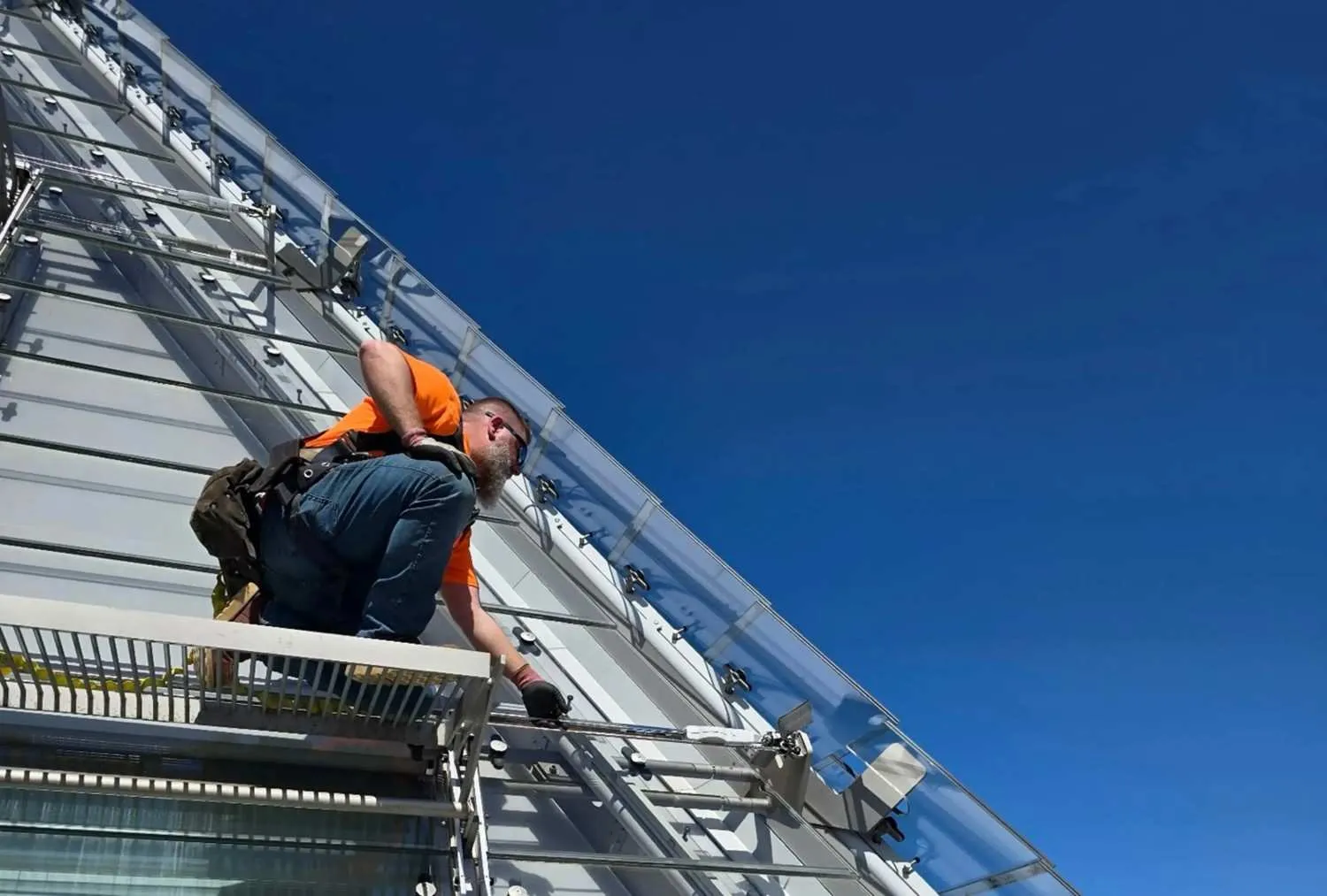
Spring maintenance often involves work at elevated heights and in areas that are difficult to reach safely. Commercial buildings in Boston, Cambridge, and throughout New England require specialized access methods to inspect and maintain upper façades, rooflines, and structural features.
Professional maintenance providers follow strict safety procedures before any work begins. These practices typically include:
- SPRAT and IRATA certified rope access technicians
- Boom lift certifications for aerial work platforms
- Roof anchor inspections before exterior work
- Site-specific safety analysis
- Full personal protective equipment (PPE) compliance
- Controlled work zones to protect occupants and pedestrians
Following recognized safety standards allows exterior maintenance to be completed efficiently while reducing risk for technicians, tenants, and visitors.
Why High-Access Equipment for Tall Buildings Matters
Many maintenance issues develop at elevations that cannot be inspected from ground level. Roof parapets, upper façades, expansion joints, and architectural details often receive the greatest exposure to winter weather.
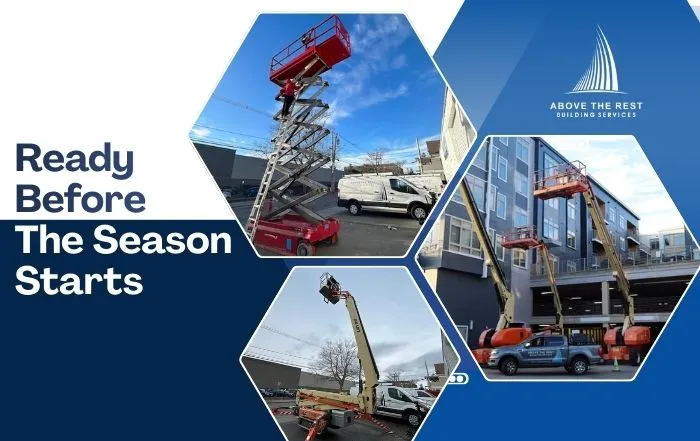
Using high-access equipment for tall buildings enables technicians to safely inspect, clean, and repair these difficult-to-reach areas. Aerial lifts, rope access systems, and other specialized equipment provide access without compromising safety or interrupting normal building operations.
This approach also allows maintenance teams to identify hidden deterioration before it expands into larger structural concerns.
Preparing Equipment for the Busy Spring Season
Spring is one of the busiest periods for commercial exterior maintenance across New England. Before projects begin, experienced maintenance companies ensure their equipment is fully prepared for increased demand.
Preparation generally includes:
- Servicing boom lifts and aerial platforms
- Inspecting rope access equipment
- Verifying fall protection systems
- Maintaining fleet vehicles
- Testing safety equipment before deployment
Well-maintained equipment allows projects to begin on schedule while improving efficiency and supporting safe working conditions throughout the maintenance season.
Coordinating Maintenance with Daily Building Operations
Commercial properties remain active while exterior maintenance is underway. Office buildings, healthcare facilities, educational campuses, retail centers, and industrial properties must continue serving occupants without unnecessary disruption.
Successful maintenance projects depend on close coordination between contractors and property management teams. Planning work around business hours, maintaining safe pedestrian access, establishing controlled work zones, and communicating project schedules all contribute to a smooth maintenance process.
This level of coordination allows essential repairs to move forward while supporting uninterrupted building operations.
Why Early Spring Planning Delivers Long-Term Value
Waiting until visible deterioration appears can significantly increase repair costs. Small cracks, damaged sealants, and hidden moisture intrusion continue to worsen as buildings remain exposed to changing weather conditions.
Scheduling spring building maintenance in New England early in the season allows property owners to:
- Identify developing structural issues before they expand
- Preserve the condition of façades and masonry
- Improve the performance of waterproofing systems
- Remove corrosive winter residue
- Extend the lifespan of exterior building materials
- Plan maintenance budgets more effectively
Preventive maintenance protects both the physical condition of the property and the long-term value of the investment.
Frequently Asked Questions
When should commercial buildings be inspected after winter?
The best time is during spring building maintenance in New England, when winter weather has ended and exterior systems can be thoroughly evaluated for hidden damage.
Why is pressure washing important after winter?
Road salt, dirt, and other contaminants collect on exterior surfaces throughout winter. Professional pressure washing removes these materials, improves appearance, and allows technicians to inspect building surfaces more accurately.
What does Façade inspection services across New England include?
These inspections evaluate exterior walls, masonry, sealants, expansion joints, and other façade components to identify cracks, movement, moisture intrusion, and signs of deterioration before they become major repair issues.
Why is high-access equipment for tall buildings necessary?
Many areas requiring inspection or repair are located at significant heights. High-access equipment for tall buildings enables technicians to safely access upper façades, rooflines, and other elevated areas while maintaining industry safety standards.
Prepare Your Building for a Successful Spring Season
Winter may be over, but its impact on commercial buildings continues long after temperatures begin to rise. Investing in spring building maintenance in New England allows property owners to identify hidden issues, restore exterior systems, and reduce the likelihood of costly repairs in the future.
Professional services such as Façade inspection services across New England, masonry repair, waterproofing, pressure washing, dryer vent cleaning, parking garage maintenance, and the use of high-access equipment for tall buildings work together to protect commercial properties from seasonal deterioration.
Partner with Above The Rest Building Services
Above The Rest Building Services provides comprehensive exterior building maintenance for commercial properties throughout Boston, Cambridge, Massachusetts, and Greater New England. Our experienced team delivers façade inspections, masonry repair, waterproofing, commercial window washing, pressure washing, dryer vent cleaning, parking garage maintenance, and specialized high-access solutions using certified technicians and industry-approved safety practices.
If your building has completed another New England winter, now is the right time to schedule spring building maintenance in New England. Early inspections and proactive maintenance help protect your investment, improve building performance, and prepare your property for the busy months ahead.
pressure washing Boston, pressure washing Cambridge, pressure washing Massachusetts, pressure washing New England, Façade inspection services across New England, commercial window washing Boston, commercial window washing Cambridge, commercial window washing Massachusetts, commercial window washing New England, waterproofing Boston, dryer vent cleaning Boston
























Sign in to leave a comment.