
Introduction
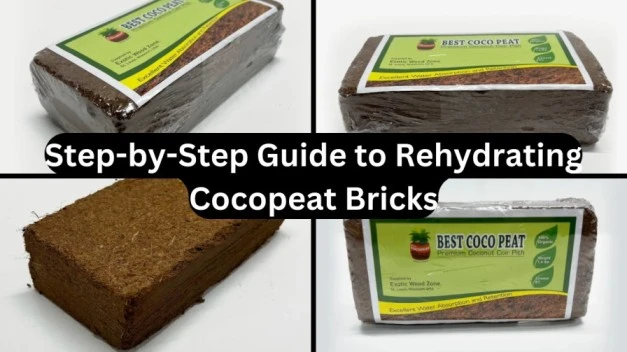
The air hung heavy with the scent of damp earth and anticipation. My hands, calloused from hours spent tending to my little patch of green, hovered over the brick. It wasn't much to look at, a compressed, dark brown slab, but it held the potential for life, a verdant oasis waiting to bloom. It was a cocopeat brick, the cornerstone of my gardening journey.
I'd been a city dweller for years, my life confined to concrete and steel. Then, a seed was planted - a longing for nature, for the rhythm of growth, for the simple joy of nurturing life. I started small, a couple of herbs on the window sill, and then, an impulsive purchase - a tiny balcony garden kit. That's how I ended up with this brick, a compressed bundle of coconut fibers, a vessel of possibility.
But the brick, as it was, was inert, a dry, lifeless mass. To bring it to life, I needed to rehydrate it, awaken the dormant potential within.
Here's how I did it:
Step 1: Preparation
First, I found a large bucket, deep enough to submerge the brick. The bucket was my stage, the vessel where the transformation would begin. Next, I gathered clean water. Not just any water would do, it needed to be room temperature, gentle, nurturing. I wouldn't want to shock the brick with cold or hot water, not when it was about to embark on its journey of rebirth.
Step 2: Immersion
With a deep breath, I carefully placed the brick in the bucket, letting it sink into the water. As it absorbed the moisture, I watched the brick swell, its edges softening, its rigid form slowly loosening. It was like a magic trick, a dry, lifeless object coming alive, inch by inch, absorbing the life-giving liquid.
I let it soak for about 30 minutes, a quiet ceremony of transformation. During that time, the brick seemed to drink in the water, its fibers expanding, taking on the texture of a porous sponge. The once-compressed form of the brick was now a pulpy mass, ready for its next stage.
Step 3: The Squeeze
After the allotted time, I gently lifted the brick from the bucket, its surface heavy with moisture. The fibers had plumped, expanding, ready to become the foundation of my little garden. To remove excess water, I squeezed the brick, gently yet firmly, allowing the water to drain through my fingers. The excess water collected in the bucket, a testament to the brick’s incredible absorbency.
Step 4: The Final Touch
Now, the brick, now plump and full of life, sat ready in my hand.
I knew this was a crucial step, as it would determine the brick’s ultimate texture and moisture levels. I squeezed it, feeling the fibers give way under my fingertips, until I felt a pleasant dampness, a moist, loamy quality, perfect for nurturing fragile seedlings.
Step 5: The Transformation
The brick, now soft and pliable, was no longer a compressed, lifeless mass. It had become a fertile medium, ready to receive life.
I carefully placed it into the provided pot, smoothing its surface to ensure a uniform foundation for my plants. Then, with a touch of joy, I planted my seeds, burying them carefully in the damp coco peat coir.
It wasn't just a brick anymore. It was the starting point of a journey, a promise of life, a testament to the power of transformation. It held within it the potential for fresh, vibrant greens, delicate blossoms, and the fragrant scent of herbs.
Conclusion
I watered my tiny garden, feeling the cocopeat drink in the life-giving liquid, knowing that the dormant seeds, nurtured by this transformed brick, would soon awaken, reaching for the sun, their life force fueled by the miracle of rehydration. It was a moment of immense satisfaction, knowing that this seemingly simple act of rehydrating a cocopeat brick was the key to unlocking the potential for life, right there on my balcony, in the heart of the city.
























Sign in to leave a comment.