

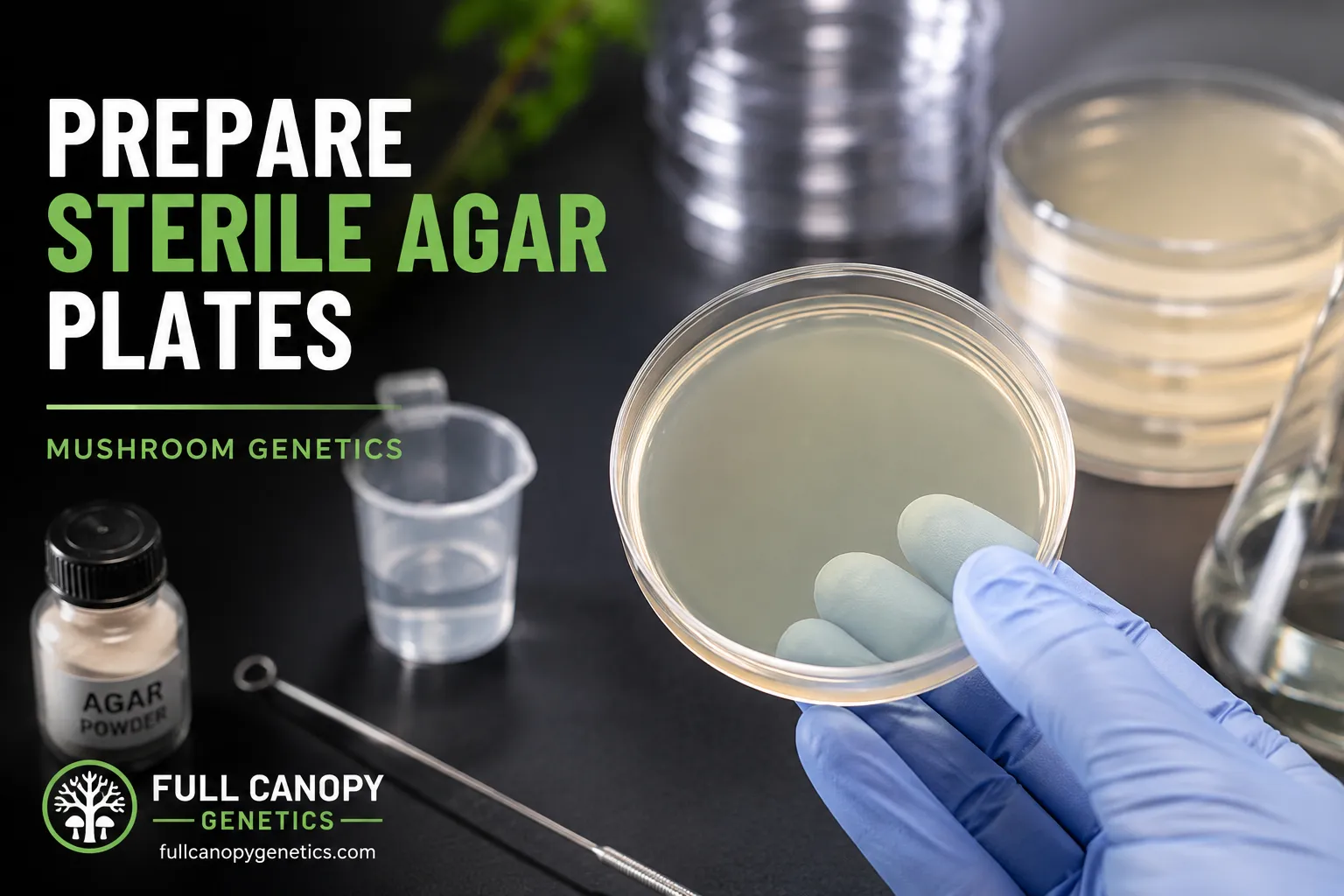
Agar plates provide a clean, nutrient-rich surface for growing mushroom mycelium and are widely used for culture isolation, cloning, and strain maintenance. A well-prepared plate gives mycelium room to establish itself while making contamination easier to spot. The key to successful plate preparation is not simply mixing agar and nutrients; cleanliness, correct sterilization, careful pouring, and proper storage all matter.
For mushroom cultivation, agar is especially useful because it allows growers to observe mycelial growth before transferring a culture to another substrate. Educational mushroom-cultivation resources describe agar plates as an important step in establishing clean mother cultures before spawn preparation.
Understanding Agar Plates
Agar is a seaweed-derived gelling material that turns a liquid nutrient medium into a firm surface. The agar itself primarily provides structure, while nutrients in the selected medium support fungal growth. Once solidified, the surface provides a convenient place to observe mycelium as it expands.
Why Sterility Matters
Sterility is one of the most important considerations when preparing a cultivation plate. Mushroom mycelium must compete with bacteria, molds, and other microorganisms if they enter the medium. Contaminants can grow rapidly and make it difficult to determine whether the desired culture is healthy.
For this reason, the medium and containers need appropriate sterilization, while the pouring process should take place under clean or aseptic conditions. University laboratory guidance similarly emphasizes sterilizing prepared media and minimizing exposure during pouring.
Choosing the Right Agar Medium
Different mushroom species can perform differently depending on the nutrients provided by the culture medium. Potato dextrose agar (PDA) is one commonly used option for mushroom culture. University of Florida guidance, for example, describes PDA as an agar-based medium suitable for growing oyster mushroom mother cultures.
When selecting a medium, consider the mushroom species, the purpose of the culture, and the consistency of the recipe. A simple, repeatable formulation is generally more useful than constantly changing ingredients.
Preparing the Medium
A basic workflow involves measuring the selected nutrients and agar, adding them to the appropriate volume of water, and mixing thoroughly. If a prepared commercial medium is being used, follow its manufacturer's instructions rather than combining ingredients based on a generic recipe.
The mixture should be heated sufficiently for the agar to dissolve completely. Incomplete dissolution can leave particles or produce an uneven surface. Laboratory instructions also emphasize using an appropriately sized container because heated media can foam or boil over.
Preparing Your Work Area
Before sterilization, prepare the workspace where the plates will eventually be poured. The goal is to reduce unnecessary exposure of sterile materials to airborne particles and contaminated surfaces.
Clean the work surface thoroughly and organize the required materials before beginning. Sterile Petri dishes, the prepared medium, appropriate heat-resistant equipment, and a suitable disinfectant should be readily available.
Organizing Mushroom Growing Supplies
Good organization makes the process easier and reduces unnecessary handling. Mushroom Growing Supplies should be arranged so that sterile items remain protected until they are needed. Petri dishes should remain closed or wrapped until the pouring stage, while tools and containers should be clean and suitable for the intended procedure.
A common laboratory approach is to use disposable sterile Petri dishes, although suitable glass containers can also be sterilized and used for culture work.
Sterilizing the Agar Medium
After the medium has been prepared and mixed, it needs to be sterilized before it is poured into plates. The exact sterilization procedure depends on the equipment and formulation being used.
Autoclaves are commonly used in laboratory environments, while pressure cookers may be used for certain small-scale cultivation applications when appropriate safety procedures are followed. The University of Florida's mushroom-culture guidance notes that pressure cookers can be used as an alternative for sterilizing PDA and stresses following equipment instructions.
Handling the Sterilized Medium
Sterilized agar should be allowed to cool sufficiently before pouring. It needs to remain liquid during this stage but should not be handled while dangerously hot. Penn State's mushroom culture procedures similarly describe allowing sterilized PDYA to cool before plates are poured.
Use appropriate heat protection when handling the container. Avoid tightly sealing containers during heating unless the equipment and procedure specifically require it, since heated liquids can build pressure or boil over.
Pouring the Agar Into Petri Dishes
Once the medium has cooled to a suitable pouring temperature, move to the prepared clean workspace. Open each Petri dish only as much as necessary, pour the appropriate amount of medium, and close the lid promptly.
The objective is to create an even surface without introducing unnecessary contamination. University of Utah laboratory guidance notes that approximately 25 mL is commonly used for a 100 mm plate, although the appropriate volume depends on the plate size and intended application.
Avoiding Bubbles and Uneven Surfaces
Bubbles can interfere with observing mycelial growth, while excessive movement can create an uneven surface. Pour steadily and avoid shaking the plate unnecessarily.
Allow the agar to solidify completely before moving the plates. If condensation develops, allowing the plates to cool and solidify appropriately can help reduce moisture-related problems.
Inspecting Plates Before Use
A sterile-looking plate should not automatically be assumed to be contamination-free. Before introducing a mushroom culture, inspect the agar for unusual discoloration, unexpected growth, excessive moisture, cracks, or other abnormalities.
The Importance of a Control Plate
Keeping one uninoculated plate as a control can help identify problems with the preparation process. If unexpected growth appears on the control plate, the issue may have occurred during preparation, sterilization, pouring, or storage rather than during inoculation.
This simple quality-control practice can save time because contaminated batches can be identified before valuable cultures are transferred.
Selecting Mushroom Supply for Culture Work
The quality and consistency of your Mushroom Supply can influence how efficiently you organize the cultivation process. For agar work, choose materials appropriate for sterile culture preparation and store ingredients according to their individual requirements.
It is also useful to keep records of the medium formulation, preparation date, mushroom species or strain, and observations. Consistent records make it easier to reproduce successful batches and identify the source of problems when contamination occurs.
Storing Prepared Agar Plates
Prepared plates should be protected from dust, excessive moisture, temperature extremes, and unnecessary handling. Keep them sealed or appropriately wrapped according to the type of container being used.
Labeling and Organization
Every plate should be clearly labeled before it enters storage or cultivation. Useful information can include the medium type, preparation date, culture identification, and any relevant batch number.
Good labeling becomes particularly important when working with several strains. It prevents mix-ups and creates a useful record of culture history.
Common Problems and How to Prevent Them
Several issues can affect agar plates. Plates may fail to solidify if the formulation is incorrect, while contamination may result from inadequate sterilization or excessive exposure during pouring. Excessive condensation can also make the surface unnecessarily wet.
Learning From Contamination
If contamination appears, do not simply transfer material from the affected plate. Examine the plate to determine whether the problem is likely to have originated from the medium, container, workspace, equipment, or handling process.
Penn State and other educational mushroom-culture resources emphasize maintaining clean cultures and discarding contaminated plates rather than allowing contamination to become part of the culture line.
Building a Reliable Agar Workflow
Successful agar preparation becomes easier when every batch follows a consistent routine. Measure ingredients carefully, sterilize the medium using an appropriate validated process, minimize exposure during pouring, allow plates to solidify properly, and inspect them before inoculation.
For cultivators working regularly with multiple strains, keeping a written preparation log can be especially valuable. Record the medium used, batch date, observations, and results so that successful procedures can be repeated.
Choosing Mushroom Supplies Wisely
Reliable Mushroom Supplies can support a more organized culture workflow, but equipment alone cannot replace good sterile technique. The most important factors are consistency, cleanliness, appropriate sterilization, and careful handling.
A well-prepared agar plate should provide a stable surface where healthy mycelium can be observed clearly. Once a clean culture has been established, it can serve as the foundation for subsequent culture maintenance and appropriate spawn-production steps.
Final Thoughts
Preparing a sterile agar plate is a foundational skill for mushroom cultivation. The process combines suitable nutrition, agar, sterilization, clean handling, careful pouring, and proper storage. Each stage contributes to the final quality of the culture.
The biggest lesson is that consistency matters. A carefully prepared plate makes healthy mycelial growth easier to observe and contamination easier to identify. By developing a repeatable preparation routine and maintaining good records, cultivators can create a dependable foundation for culture work and future mushroom-growing projects.

























Sign in to leave a comment.