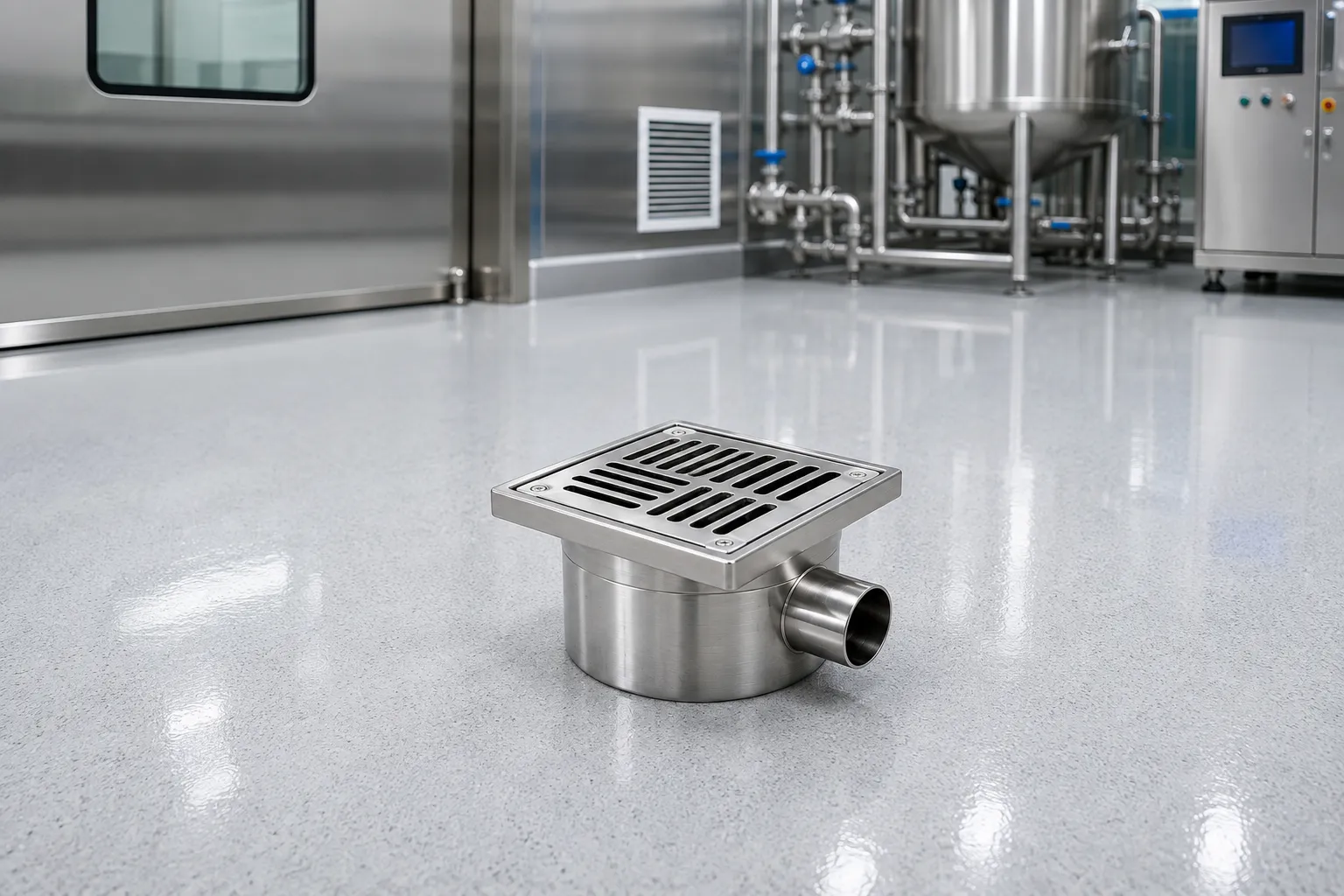

If you have ever walked through a pharma plant or a food processing unit, you must have noticed something on the floor almost everywhere small steel drains fitted into the flooring. These are floor drain traps, and they actually do a much bigger job than people think. They stop bad smell from coming back up, they keep pests out of the pipeline, and they make sure dirty water doesn't mix with clean areas. But here's the thing not every floor drain trap is the same. There are two main types used in industries, sterile and non-sterile floor drain traps, and picking the wrong one for the wrong area can create hygiene problems instead of solving them.
What is a Sterile Floor Drain Trap
A sterile floor drain trap is made for places where even a tiny bit of contamination is not acceptable. Think about cleanrooms, injectable manufacturing sections, or sterile filling zones in a pharma company. These areas need drains that can be cleaned again and again, using strong chemicals and steam, without wearing out or catching rust. That's why most sterile floor drain traps are built using SS316L grade steel, since this grade handles repeated washing and sanitization really well. The design is usually smooth on the inside, with no rough edges or hidden gaps where bacteria could settle. Most pharma companies specifically ask for this type when setting up a new sterile zone, simply because a regular drain won't pass a GMP audit in that kind of space.
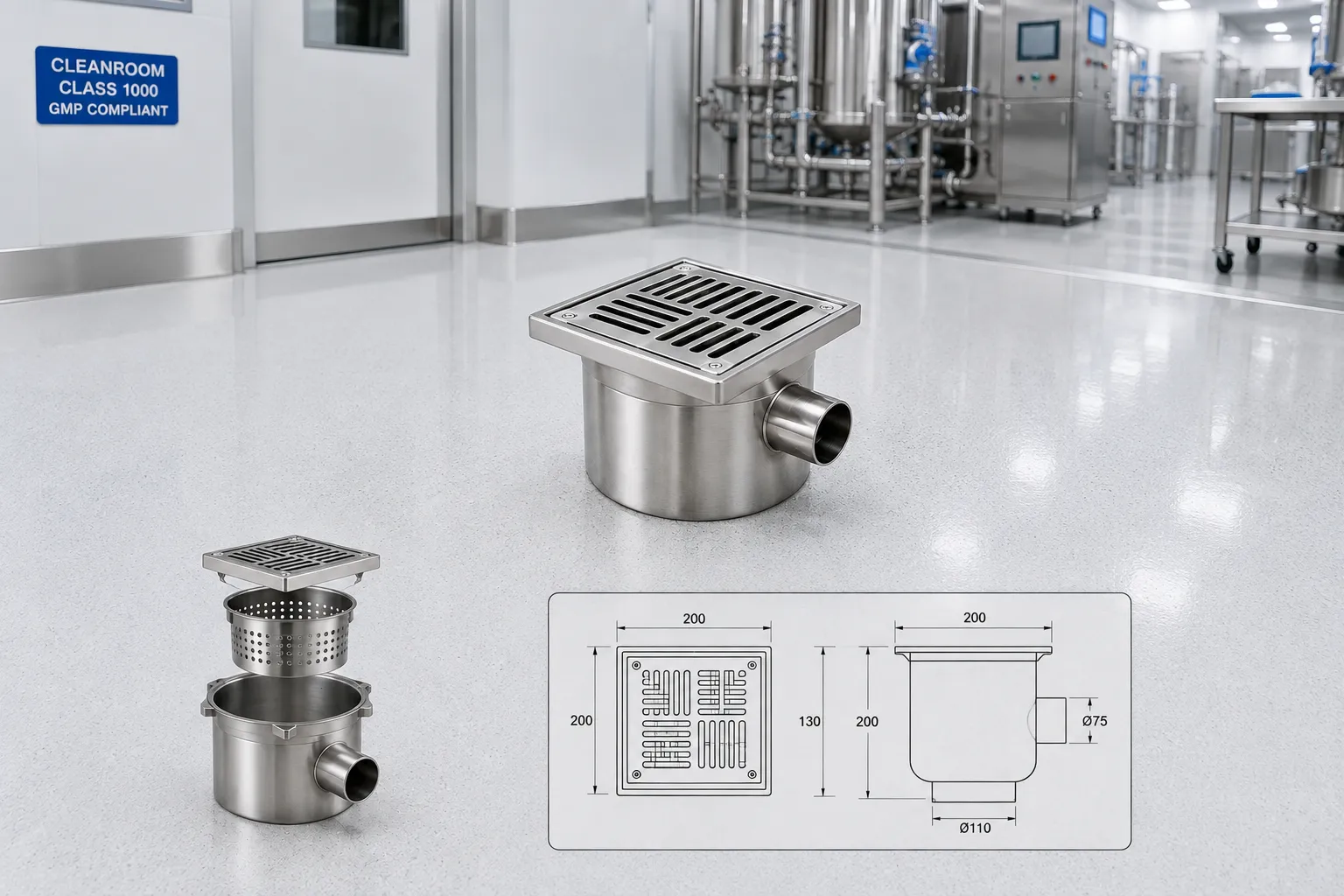
What is a Non-Sterile Floor Drain Trap
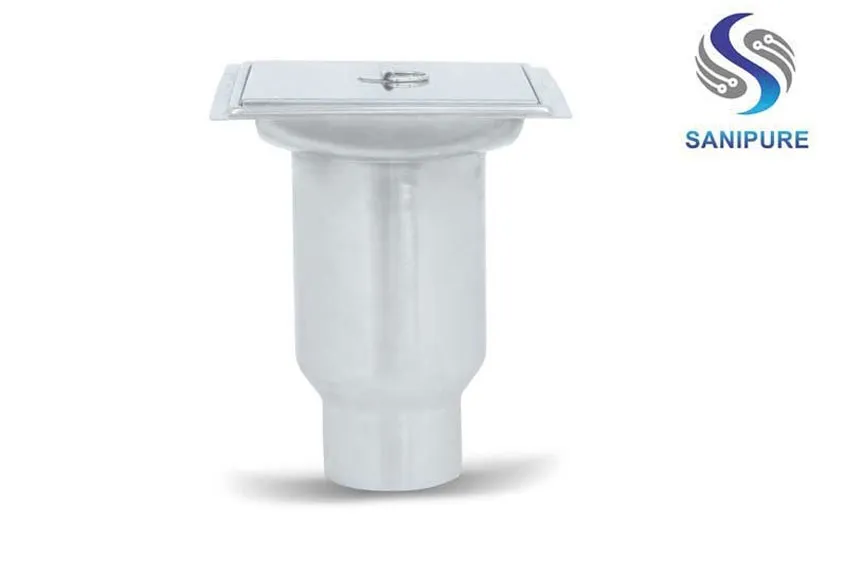
Now compare this to a non-sterile floor drain trap. This type is used in general areas like washrooms, corridors, packing sections, warehouses, or general processing zones, where hygiene still matters but not at cleanroom level. These drains are also made of good quality stainless steel, usually SS304, and they still do their basic job well stopping odor and blocking pests from the pipeline. The difference is that the finishing and internal design are a little less strict, because these areas don't demand cleanroom-level cleanliness. A non-sterile floor drain trap is more about everyday reliability than extreme sanitization.
The Real Difference Between The Two
The biggest difference isn't just the name, it's where and how each one is used. A sterile floor drain trap has a tighter seal, a smoother polish, and it's built to handle constant sanitization with strong chemicals. A non-sterile drain trap is more about basic hygiene and long life — keeping the floor dry, stopping smell, and working without trouble for years. If a non-sterile drain gets installed in a sterile zone by mistake, it can actually fail an audit, or worse, become a source of contamination. And if an expensive sterile drain gets installed in an ordinary washroom, that's just extra cost with no real benefit.
Why Companies Get Confused While Choosing
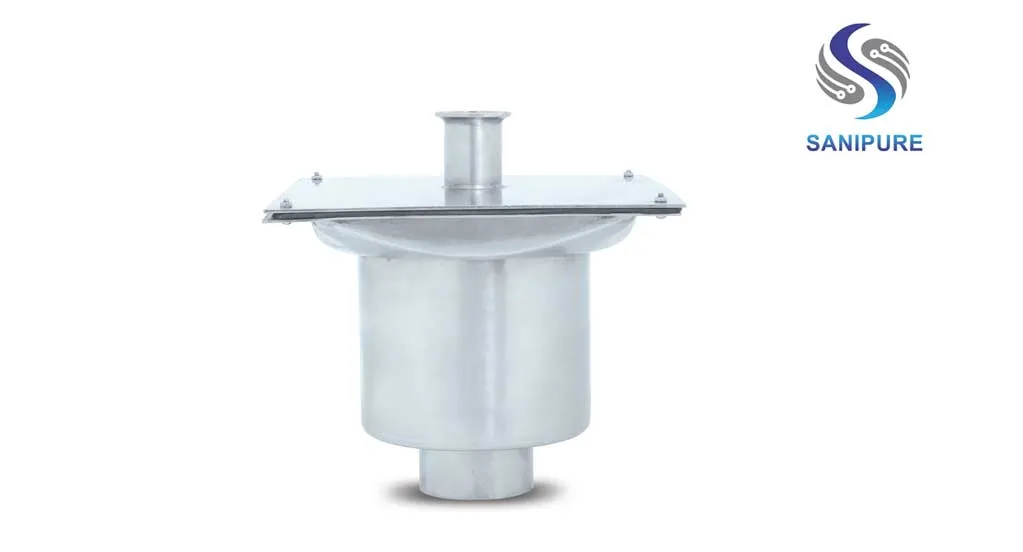
A lot of plant owners get confused here because on the outside, both drains almost look the same round or square, shiny, and made of steel. The real difference is inside the sealing mechanism, the steel grade, and how the drain is designed to trap water and stop smell. This is why it always helps to talk to someone who actually manufactures pharmaceutical drain traps and understands GMP requirements, instead of just buying whatever is available locally. A good manufacturer will ask which area the drain is going into, what cleaning chemicals are used there, and what kind of water flow to expect, before suggesting the right product for that spot.
Why GMP Compliance Matters Here
If your company is in the pharma or food industry, GMP compliance isn't something you can skip, it's a basic requirement. Auditors specifically check drainage systems because a poorly designed or dirty drain is one of the easiest ways contamination spreads inside a plant. A proper GMP drain trap is designed keeping exactly this in mind easy to open, easy to clean, and built so that no water or waste sits inside for long. It's a small fitting, but it can genuinely decide whether your plant passes or fails an inspection, so it's not something to take lightly.
How To Pick The Right One For Your Plant
Before choosing, just ask yourself one simple question is this particular area sterile or not? If it's a cleanroom, sterile filling zone, or any space with strict microbial control, go with a sterile floor drain trap. If it's a general area like a corridor, washroom, or packing zone, a non-sterile floor drain trap will work perfectly fine and save you some money too. It also helps to check the steel grade, the sealing type, and whether the manufacturer can customize the size to fit your plant's layout, instead of forcing a standard size everywhere.
Conclusion
At the end of the day, both sterile and non-sterile floor drain traps are doing the same basic job keeping your floor dry and your plant hygienic. But using the right one in the right place is what actually matters. A small mistake in choosing the wrong drain trap can turn into a bigger hygiene or compliance issue later, and by then it's a costly fix. So take a little time, understand what your plant actually needs, and choose accordingly. And if you're setting up a new pharma, food, or dairy unit and aren't fully sure which drain trap suits which area, it's always better to talk to an experienced manufacturer who can guide you through it properly.























Sign in to leave a comment.