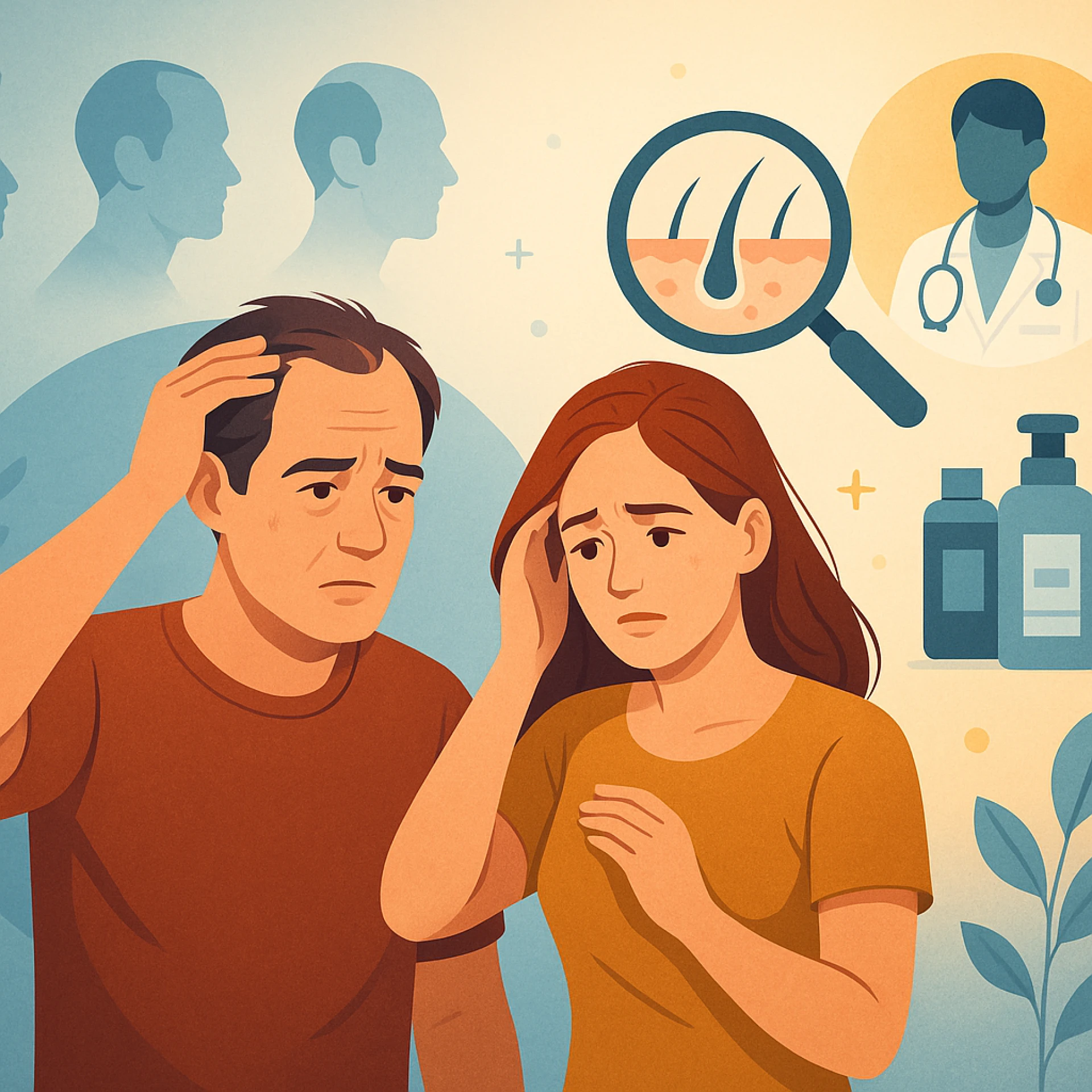

Hair loss can affect your look, confidence and even emotional health. It is not just about hair loss. Daily hair loss is common, but excessive and continuous loss may indicate Alopecia. The early attention can create a big difference, but many people ignore it until bald spots or hair thinning occur. Loss of hair can be due to many factors, including medical issues, poor diet, hormonal changes and stress. The good news is that you can slow it down and get a proper diagnosis, which would help to get strong and healthy hair.
Causes Of Hair Loss
Hair loss can occur at any stage of life. This might occur due to hair loss brought on by an interruption in the regular cycle of hair growth. Excessive hair loss can be caused by several internal and external events that disturb the cycle. While some of these factors are reversible, others need to be slowed down with the right medical interventions. Some of the main causes of hair loss are:
1. Hormonal Disturbance
Hormones are important for our body. They can sometimes disturb the hair growth cycle and cause hair loss. Common causes include hormonal changes due to pregnancy, thyroid issues or menopause. Alopecia Areta, an autoimmune disorder in which the immune system inadvertently targets hair follicles, which stops hair production. This can be the result of sometimes irreversible hair loss if the medication is delayed.
2. Genetical Composition
Androgenic alopecia, called male or female pattern baldness, is a common inherited disorder that causes hair loss. Men often notice a recurrent hairline or bald spots, but females have thin hair and much hair loss. The hormone DHT is the reason, as it gradually causes hair follicles to shrink. This kind of hair loss typically runs in families since DHT sensitivity is inherited.
3. Mental and Physical Stress
Hair thinning occurs when your body has a physical or mental shock from childbirth, an accident, surgery, rehabilitation from a sickness, an emotional event such as losing a loved one or job, heartbreak, an excessive workload, or stress from an exam. Stress causes hair loss because the body begins to store nutrients for essential functions while compromising non-essential ones like hair development.
4. Unbalanced Diet and Lifestyle
Hair loss can be caused due to lack of zinc, iron, proteins, and other essential minerals. Hair loss results from bad habits such as smoking, staying up late, and not exercising, which lower blood flow to the hair roots. The hair gets weaker, and prone to breaking easily as a result of poor diet and lifestyle.
5. Medications and Radiations
Hair loss is one of the side effects of several treatments. Hair loss is caused by medications for stress, gout, acne, arthritis, blood pressure, chemotherapy, and other conditions. Hair loss brought on by drugs and radiation is known as anagen effluvium as it disturbs the growth stage.
6. Incorrect Hair Care and Frequent Styling
Traction Alopecia is caused by using harsh chemicals, applying too much heat, or wearing tight hairstyles. This type of hair loss can be irreversible and occurs when hair is constantly tugged. Teenagers and adults who practice bad hair care habits are most likely to experience it. Long-term protection of your hair can be achieved by styling it more smoothly.
How Dermatologists Diagnose Hair Loss?
A dermatologist examines the patient's medical history to diagnose hair loss by posing questions and obtaining pertinent information that may provide hints as to the source of the loss. The patient's scalp is then carefully examined by a dermatologist for signs of inflammation, scarring, redness, or pain. In order to determine the pattern and degree of hair loss as well as whether there is hair breaking, the scalp skin is extensively examined.
Dermatologists perform the following diagnostic procedures on patients who experience hair loss:
● Pull test and tug test- A dermatologist gently tugs on 40–50 hair strands, section by section, during a pull test. The patient is experiencing active hair loss if more than six hair strands fall out. Information on the degree of hair loss is provided by this test.
Using both hands, one at the hair tip and one close to the hair root, a dermatologist holds the hair strands section by section in a tug test to determine whether they break from the middle when pulled. This test tells you how fragile or brittle your hair is.
● Card test- A dermatologist makes a cut in the scalp and presses a felt-covered card on it. The color of the felt card should contrast with the color of the natural, existing hair, particularly little and broken hair, so that it can be counted and checked for any anomalies. With this test, the health of the hair shaft is assessed, and the number of freshly growing hair strands is counted.
● Trichometric analysis- In this test, a dermatologist uses a folliscope to take photos of the scalp and hair, which are then shown on a computer monitor screen. The diameter/thickness of each hair strand and hair coverage are among the features of the scalp and hair that are examined in these photos.
● Light microscopy- A dermatologist examines hair roots and looks for anomalies in the hair shaft using a light microscope.
● Fungal culture- To check for fungal growth, a dermatologist may swab or scrape the skin on the scalp or remove a tiny sample of skin or hair.
● Punch Biopsy- To get the right diagnosis, dermatologists use a punching tool to make holes in the skull and take a small sample of tissue. This is then evaluated in a laboratory to determine the cause of hair loss.
● Blood test- An expert may request a blood test if they believe that hair loss is caused by deficiency of nutrients or hormonal disturbance .
Conclusion
Although hair loss can be concerning, you do not have to accept it as a lifelong condition. The first stage is to determine the reason. This is where professional assistance is needed. In order to understand the issue, dermatologist in Kanpur use the best diagnostic methods which include pull tests, scalp exams, and even laboratory studies. Both your hair and your confidence can be restored with the right medication, lifestyle alterations, and personalized therapies. Rather than attempting unknown fixes, put your trust in experts who would use their research and expertise.
It's time to get professional assistance if you or a loved one is experiencing bald patches, thinning hair, or extreme hair loss. To effectively address hair loss, Paras Yash Kothari Hospital provides advanced dermatology care, therapies, and compassionate care. Get in touch with Paras Yash Kothari Hospital right now!































Sign in to leave a comment.