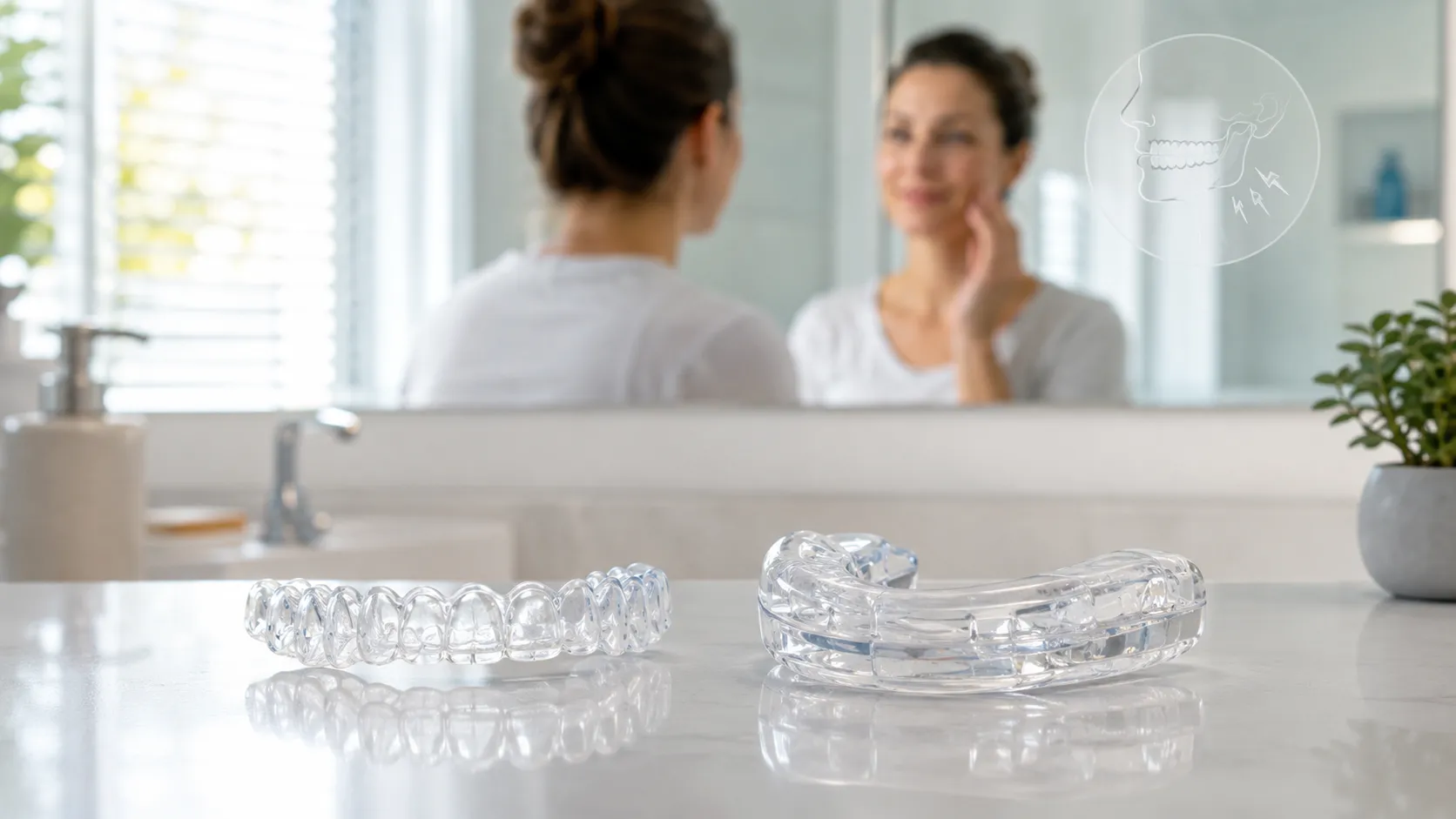

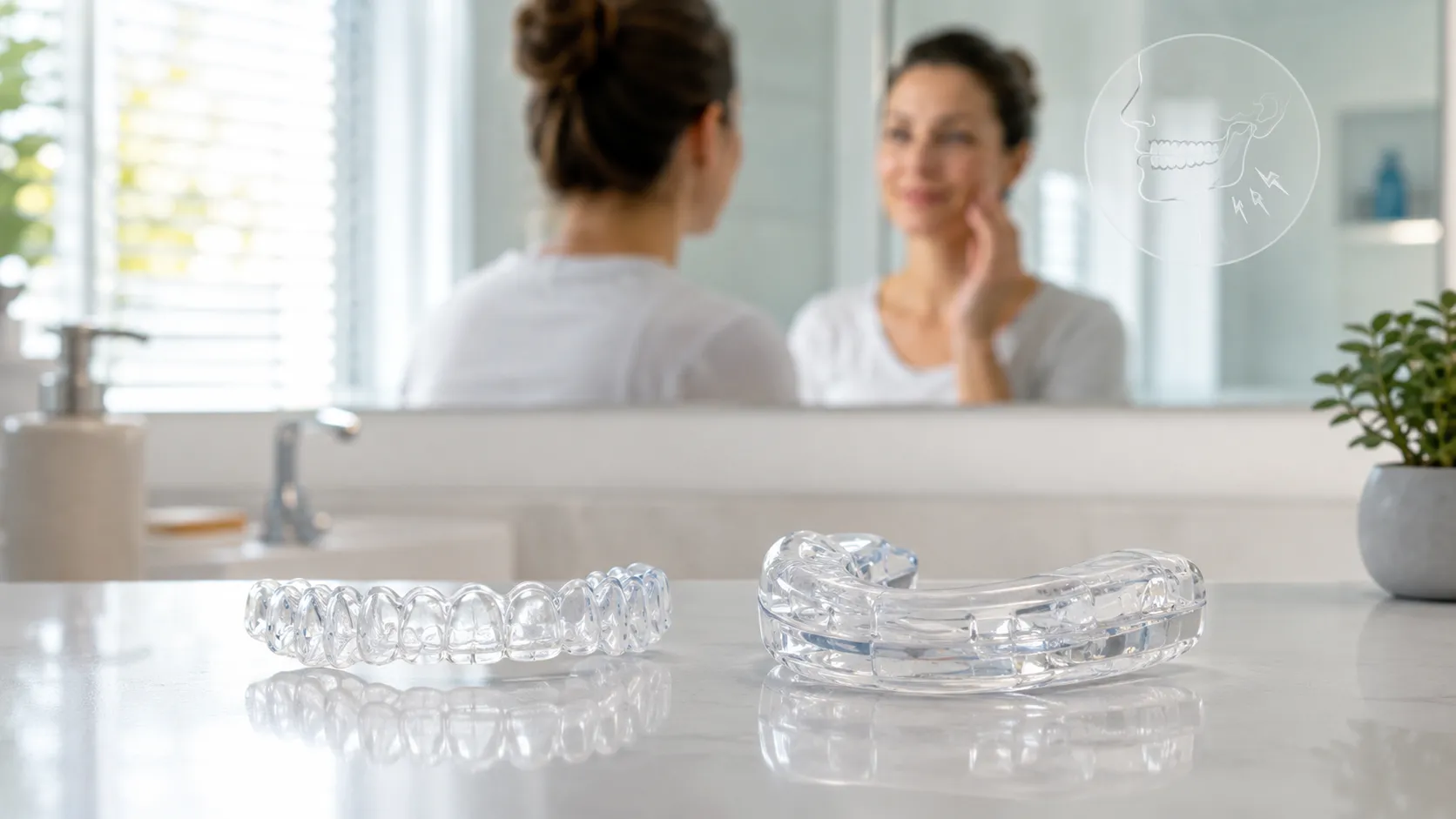
Many adults interested in clear aligners also have another concern: teeth grinding. You may have noticed worn edges, jaw tension, morning headaches, chipped teeth or a partner telling you that you grind or clench at night. If you are thinking about straightening your teeth, it is natural to wonder whether bruxism will get in the way.
The good news is that teeth grinding does not automatically rule out clear aligner treatment. Many adults with bruxism can still be suitable candidates. However, grinding does matter. It can affect how your teeth, bite, jaw muscles and restorations respond during treatment, so it needs to be assessed carefully before you begin.
What is bruxism?
Bruxism is the habit of grinding or clenching the teeth. It can happen during the day, often during concentration or stress, or at night while you sleep. Sleep bruxism can be especially difficult to control because you may not realise it is happening.
Some people grind loudly. Others mainly clench, which can be silent but still place heavy pressure on the teeth and jaw. Over time, bruxism may contribute to tooth wear, cracks, sensitivity, broken fillings, jaw soreness, headaches and muscle fatigue.
For adults considering clear aligners, the main concern is not simply the grinding itself. It is what the grinding may reveal about your bite, muscles, enamel, restorations and overall oral health.
Why grinding matters before clear aligners
Clear aligners work by applying controlled pressure to move teeth gradually. If you also grind or clench, your teeth may be exposed to extra forces outside the planned aligner movements. This does not always prevent treatment, but it may influence how your dentist plans and monitors your case.
Grinding can also wear down aligners faster. Some patients notice small cracks, rough patches or thinning in their trays if they clench heavily. Aligners are designed to move teeth, not to function as long-term night guards. While they may provide a temporary layer between the teeth, they are not always strong enough to protect against significant bruxism.
Another issue is tooth wear. If teeth are already shortened, flattened or chipped, straightening them may be only one part of a bigger plan. Your dentist may need to consider whether worn teeth require restoration, whether the bite needs balancing, or whether protection is needed after alignment is complete.
How dentists assess tooth wear
Before starting clear aligners, your dentist will usually assess more than just whether your teeth are crooked. They will look at the condition of your enamel, the shape of your biting surfaces, gum health, jaw function and how your upper and lower teeth meet.
Signs of bruxism may include flattened tooth edges, small cracks, chipped enamel, sensitive teeth, gum recession, enlarged jaw muscles, cheek biting, tongue scalloping or tenderness around the jaw joints. Your dentist may also ask whether you wake with headaches, feel jaw stiffness in the morning, notice clicking or locking, or have broken fillings or crowns in the past.
Photographs, digital scans and X-rays may help show the extent of wear and whether teeth have enough healthy structure for movement. In some cases, your dentist may monitor symptoms before beginning aligners, especially if pain, jaw joint issues or active damage is present.
This assessment helps answer an important question: are the teeth simply crowded or misaligned, or is there also a pattern of heavy bite forces that needs to be managed?
Can clear aligners help with grinding?
Clear aligners can improve tooth position, and in some cases, better alignment may make cleaning easier and improve how teeth meet. However, clear aligners should not be seen as a guaranteed treatment for bruxism.
Grinding can be influenced by stress, sleep quality, airway issues, medications, lifestyle factors and jaw muscle activity. Because of this, straightening teeth may not stop the habit. Some people continue to grind after orthodontic treatment, even if their smile looks straighter and their bite feels more even.
The aim is usually to manage risk. Your dentist may recommend clear aligners as part of a broader plan that includes monitoring wear, protecting teeth, managing restorations and reviewing jaw symptoms.
Will you need a night splint?
A night splint may be recommended before, during or after clear aligner treatment, depending on your situation.
Before treatment, a splint may be useful if grinding is causing active damage, pain or frequent breakages. It may help protect teeth while your dentist assesses whether symptoms settle or whether other factors need to be investigated.
During clear aligner treatment, a separate night splint is not always possible because aligners need to be worn at night to move teeth effectively. In this phase, your dentist may monitor aligner wear closely and adjust your plan if trays are cracking or symptoms worsen. You should not switch between aligners and a splint without professional advice, as this can interfere with tooth movement.
After treatment, a protective retainer or night splint may be important. Once the teeth are straightened, they need retention to hold their new position. If you grind heavily, your dentist may design a retainer or splint that helps protect both your alignment and your teeth. This final stage is essential because untreated grinding can damage enamel, restorations and even the result you have worked to achieve.
What adults should know before starting
If you grind your teeth, the most important step is to be open about it during your consultation. Mention headaches, jaw pain, tooth sensitivity, broken fillings, worn teeth or any history of night guard use. These details help your dentist plan safely.
You should also understand that aligner success depends on consistency. Clear aligners must usually be worn for most of the day and night. If grinding damages trays, loses fit or causes discomfort, you may need extra reviews.
For many adults, clear aligners are still a realistic option. The key is not ignoring bruxism. When grinding is properly assessed and managed, treatment can be planned around your real mouth, not an ideal version of it.
Straightening your teeth while managing bruxism is possible for many people. It simply requires careful planning, honest communication and the right protection at the right stage.





























Sign in to leave a comment.