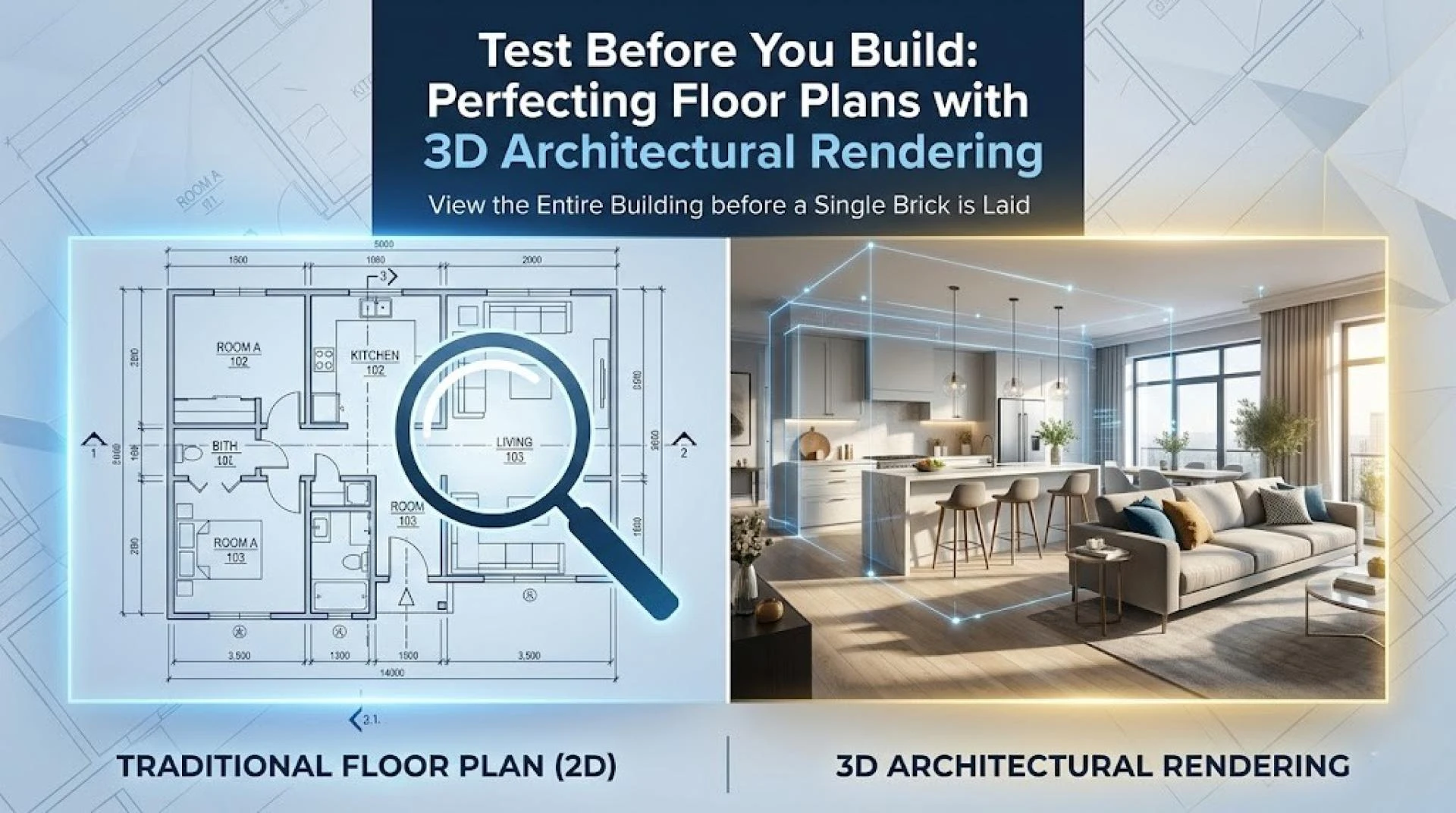

We’ve all been there: staring at a 2D floor plan, squinting to imagine what it actually feels like to stand in the room. You can see the measurements and the door swings, but you can’t quite feel the "volume" of the space or understand how the morning light will interact with the kitchen layout.
In the high-stakes AEC landscape of 2026, the "guesswork" phase of design is officially a relic of the past. 3D architectural rendering has evolved from a luxury marketing tool into a critical diagnostic instrument. It allows developers, architects, and homeowners to "test-drive" a building’s soul before a single shovel hits the dirt.
Beyond Aesthetics: The Functional Simulation
As an engineer, I’ve seen countless projects where a 2D line drawing hid a functional flaw that only became apparent once the walls were up. Perhaps a hallway feels claustrophobic once furniture is modeled, or a window placement creates a disruptive glare on a dedicated workstation. These aren't just "design" issues; they are usability failures.
By creating a high-fidelity digital prototype, we move into the realm of Design Validation. This process allows you to experiment with spatial flows and material textures in a risk-free environment. It is the most effective way to view the entire building before a single brick is laid, ensuring that the final physical product isn't just a structure, but a high-performance environment that matches the original vision.
Why "Rendering First" is the Smartest Engineering Move
In my experience, the ROI of a high-quality render pays for itself tenfold during the construction phase. Here is why:
- Eliminate the "Demolition Discount": It is exponentially cheaper to move a digital wall in a Revit or ArchiCAD model than it is to demolish a physical one. Renderings act as a final "sanity check" for the structural and architectural team.
- Bridge the Communication Gap: Not everyone is trained to read blueprints. A 3D walkthrough is a "universal language" that builds immediate confidence with stakeholders and speeds up the approval process.
- Scientific Lighting Analysis: With modern Physically-Based Rendering (PBR), we can simulate exact geographical light conditions. You can see exactly how shadows will fall at 2:00 PM in mid-July, allowing you to optimize HVAC loads and interior comfort levels.
The New Standard of Precision
As commercial and residential projects become more complex, the ability to validate a floor plan through rendering is no longer "optional"—it is the industry standard. We are no longer just selling a dream; we are verifying a reality.
When you invest in 3D architectural rendering, you aren't just buying a set of pretty images; you are buying the certainty that your project will function exactly as intended. In an industry where mistakes are measured in thousands of dollars and weeks of delay, "testing before you build" is simply the most logical way to ensure project success.



























Sign in to leave a comment.