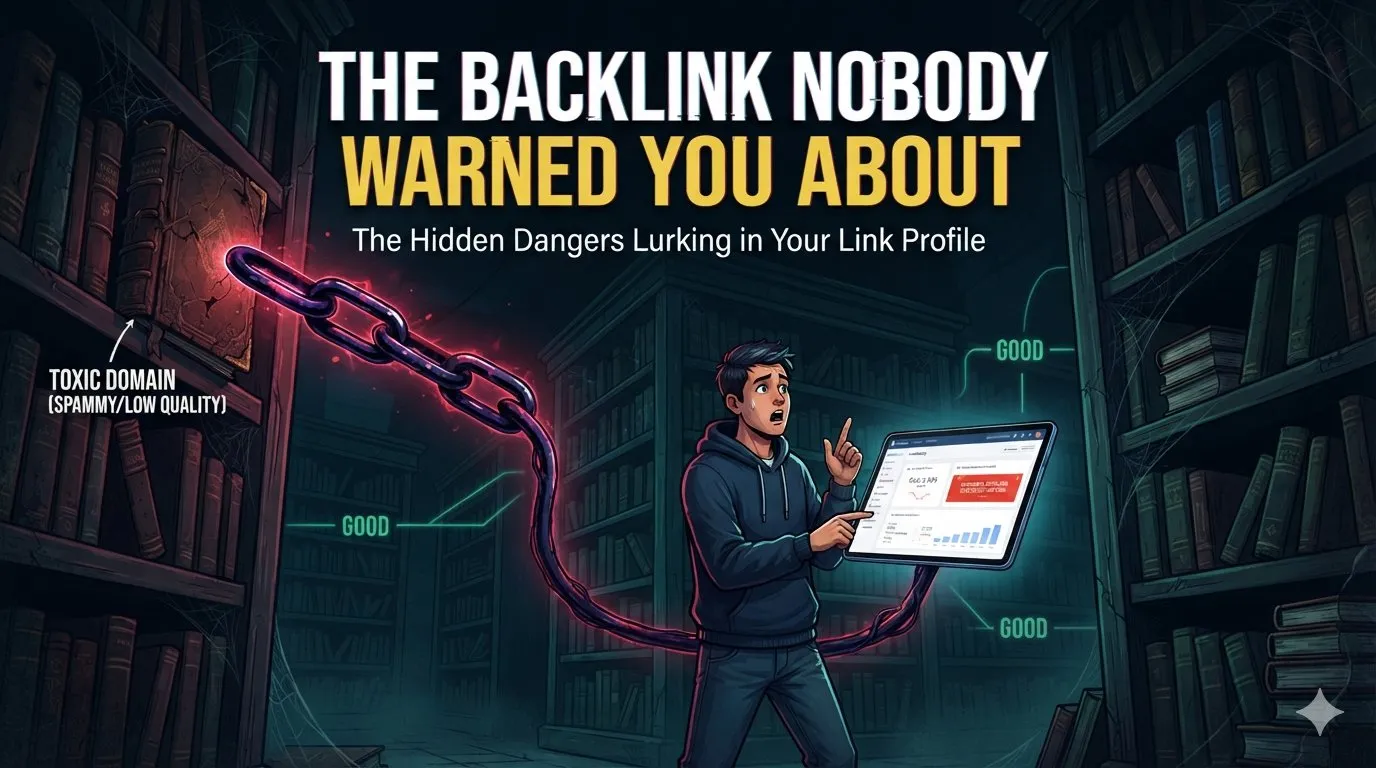

Not every backlink helps. Some genuinely do nothing, and a few work against you. That's the part of link building most guides skip past on their way to telling you to "just get more links." The advice isn't wrong, exactly, it's just incomplete in a way that costs small businesses real money.
Here's the short version of what actually separates a useful link from a wasted one:
- A useful link comes from a site that talks about your industry. Search engines treat this as a genuine signal, not decoration.
- A wasted link comes from wherever said yes fastest. Usually the result of cold email, since you're not choosing, you're accepting whoever replies.
- A wasted link often carries a high authority score anyway. That's the trap. The number looks good on a report even when the placement did nothing.
The fix isn't complicated, it's just rarely how small businesses actually shop for links.
Why cold outreach produces so many wasted links
Cold outreach has a built-in selection problem that nobody talks about. You send out a hundred pitches to blogs you've researched as good fits, and the sites that reply are not a random sample of that hundred. They're whoever happens to have an open content calendar, low standards for what they'll publish, or a general willingness to say yes to strangers. None of those things correlate with being a good fit for your business.
So the businesses that rely purely on cold outreach end up with a link profile shaped by whoever was available, not whoever was relevant. It still counts as "doing link building." It just doesn't do much for the metric it's supposed to move.
Buy from a list, don't cold email a guess
A guest post marketplace flips that selection problem around. Every listing already comes from a publisher who's agreed to the placement, at a stated price, with a known turnaround. The site isn't saying yes to you specifically, it said yes once to selling placements at all, and now the choice is entirely yours. You're not filtering down from whoever replied. You're filtering up from everyone who's already available.
That distinction matters more than it sounds like it should. When you're choosing rather than persuading, you can actually optimize for fit instead of settling for whatever landed in your inbox.
What fit actually looks like in practice
Take a food or beverage brand as a concrete example. A publisher list built specifically for food and drink content gives that brand access to sites that write about restaurants, recipes, and craft beverages as their actual subject matter, not a general lifestyle blog that occasionally runs a food post between travel diaries and parenting tips.
The difference shows up in what the link actually communicates. A placement on a real food publication tells a search engine something specific and true: a site that talks about food, talking about this business. A placement on a generic blog tells it almost nothing, even when that blog's authority score is higher. Search engines have gotten considerably better at reading context rather than just counting links, and a mismatched placement is increasingly closer to invisible than it used to be.
This same logic holds regardless of industry. A construction company gets more from a placement on a home improvement site than a tech blog. A fitness brand gets more from a wellness publisher than a finance one. The specific match changes, but the principle doesn't.
Why price transparency matters more than it seems
Cold outreach also hides the actual cost of a placement until you're already negotiating with someone, and freelancers quoting flat rates rarely explain what those rates are actually based on. You end up paying a number that might be fair or might be padded, with no way to tell which.
A marketplace listing works differently because the price is set against the site's real metrics and traffic before you ever reach out. You can see what you're paying for, compare it against the site's actual audience size, and decide whether that trade makes sense for your budget, all before spending a dollar. That transparency alone removes most of the guesswork that makes backlink spending feel risky to a small business owner managing every dollar carefully.
What this looks like as an actual strategy
Put fit and price transparency together and the strategy that emerges looks nothing like a bulk link package bought all at once. It looks like a handful of carefully chosen placements, spread out over weeks or months, each one relevant to the business buying it. That pacing matters too. A steady trickle of well-matched links reads to a search engine as organic attention accumulating over time. A sudden batch of ten links appearing in the same week reads as something else entirely, regardless of how relevant those ten links happen to be.
None of this requires a marketing department or a big budget. It requires treating each placement as a decision worth making carefully, rather than a box to check off a to-do list. The businesses that get real value out of backlinks aren't the ones buying the most of them. They're the ones being pickier about which few they buy.



















Sign in to leave a comment.