The healthcare industry operates within a complex ecosystem, characterized by vast amounts of sensitive patient data, stringent regulatory mandates, and the constant demand for efficient, secure information flow. In this environment, effective information governance is not merely an advantage; it is a critical necessity. It is in this context that Enterprise Content Management (ECM) solutions have emerged as foundational tools, enabling healthcare organizations to navigate their digital landscapes with greater precision and compliance. This article will meticulously explore the best Enterprise Content Management solutions for healthcare providers, shedding light on their indispensable role in modernizing operations and enhancing patient care.
The Unique Content Management Challenges Faced by Healthcare Providers
Healthcare environments present distinct content management hurdles that necessitate specialized solutions. These challenges are often complex and multifaceted, requiring robust and tailored approaches.
Navigating Regulatory Compliance and Data Security
A paramount concern for any healthcare provider is the adherence to strict regulations such as HIPAA (Health Insurance Portability and Accountability Act) in the U.S., GDPR (General Data Protection Regulation) in Europe, and other regional patient privacy laws. The protection of Protected Health Information (PHI) is a non-negotiable requirement. Enterprise Content Management solutions must, therefore, be equipped with advanced security features, audit trails, and access controls to ensure data integrity and prevent unauthorized access. The consequences of non-compliance can be severe, involving substantial fines and reputational damage.
Managing Diverse and High-Volume Patient Data
Healthcare facilities handle an immense variety and volume of data. This content includes electronic health records (EHRs), medical images (X-rays, MRIs), patient consent forms, insurance documents, billing records, laboratory results, and clinical notes, among others. This data often originates from multiple sources and in various formats. The sheer scale and diversity necessitate a sophisticated system that can centralize, organize, and manage this disparate information efficiently.
Ensuring Seamless Information Access for Clinical Workflows
For clinicians, timely and accurate access to patient information can literally be a matter of life or death. Doctors, nurses, and administrative staff require immediate retrieval of specific patient records, treatment histories, and diagnostic results at the point of care. Traditional, paper-based systems or fragmented digital repositories often impede this critical access, leading to delays, potential errors, and diminished patient outcomes. Thus, the accessibility provided by Enterprise Content Management solutions is paramount.
Key Features Defining the Best Enterprise Content Management Solutions for Healthcare
Given the challenges, what attributes define the best Enterprise Content Management solutions for healthcare providers? A comprehensive system is characterized by several core functionalities designed to meet these specific industry needs.
Robust Document Management and Version Control
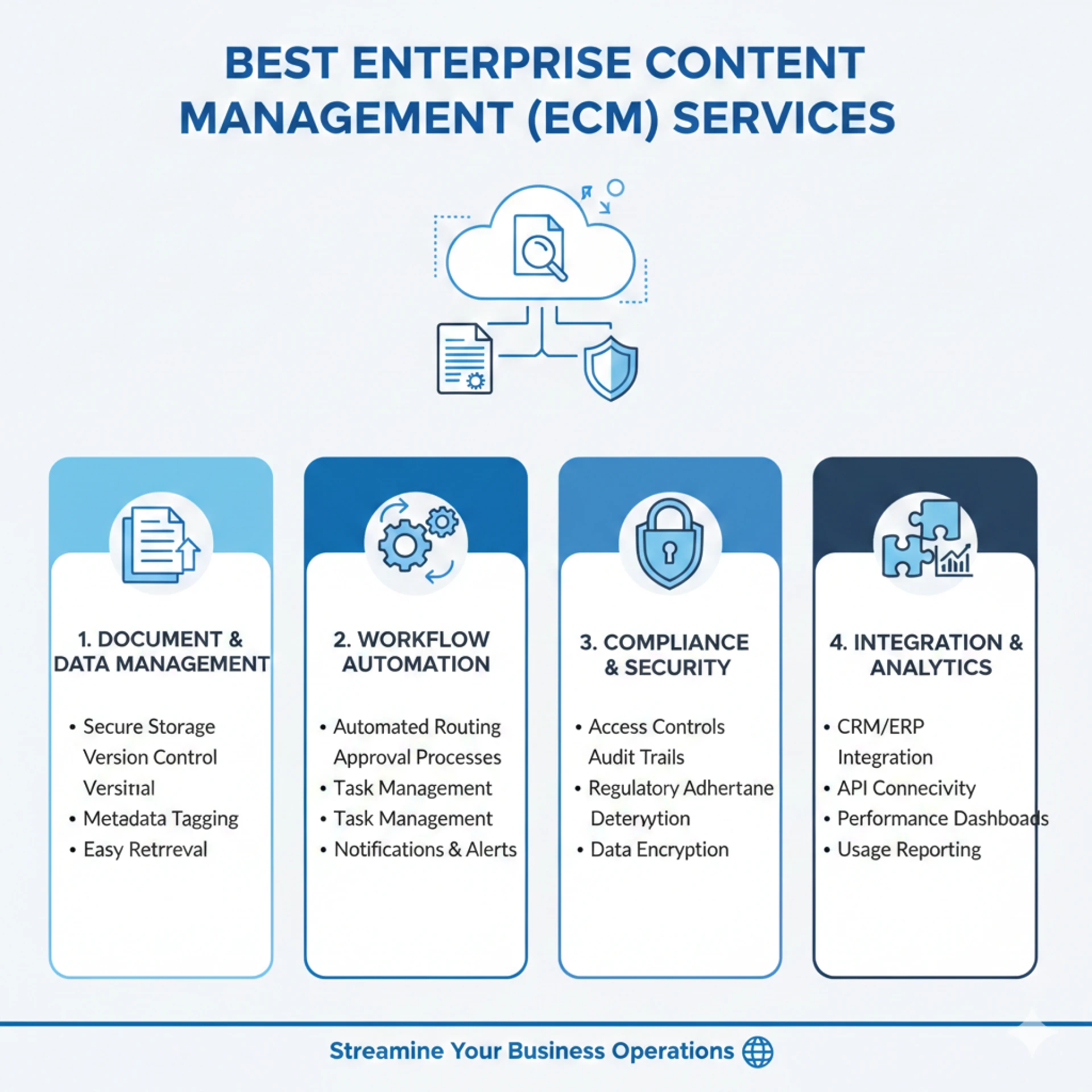
At the heart of any effective ECM system is sophisticated document management. For healthcare, this includes meticulous version control for patient records, policy documents, and clinical guidelines. It ensures that the most current and accurate information is always being accessed and acted upon, thereby minimizing errors and supporting compliance.
Advanced Security and Compliance Features
As previously noted, security is non-negotiable. The best Enterprise Content Management solutions for healthcare are built with HIPAA-compliant encryption, granular access permissions, audit trails that log every interaction with a document, and robust data retention policies. These features are indispensable for protecting sensitive patient data and demonstrating regulatory adherence.
Seamless Integration with Existing Healthcare Systems
A standalone ECM system offers limited value. The most effective Enterprise Content Management solutions are those that seamlessly integrate with existing healthcare IT infrastructure, including Electronic Health Record (EHR) or Electronic Medical Record (EMR) systems, Picture Archiving and Communication Systems (PACS), Laboratory Information Systems (LIS), and billing software. This integration creates a unified view of patient information and streamlines workflows.
Powerful Workflow Automation for Clinical & Administrative Processes
Manual processes are prone to error and inefficiency. Top-tier ECM platforms enable automated workflows for tasks such as patient intake, insurance claim processing, referral management, and medical record requests. This automation significantly reduces administrative burden, accelerates processes, and allows staff to focus more on patient care.
Intelligent Information Capture and Digitization
Healthcare still deals with a considerable amount of paper (e.g., patient intake forms, faxes, legacy records). The best Enterprise Content Management solutions include advanced capture capabilities, such as high-volume scanning, optical character recognition (OCR) for text extraction, and automated indexing. This facilitates the swift and accurate digitization of paper documents, integrating them into digital workflows.
Scalability and Accessibility
As healthcare organizations grow and evolve, their content management needs will also expand. The most suitable ECM solutions are scalable, capable of handling increasing data volumes and users. Furthermore, mobile access and cloud-based options are becoming increasingly important, ensuring that authorized personnel can securely access vital information from various locations and devices, supporting telemedicine and distributed care models.
How Enterprise Content Management Solutions Transform Healthcare Delivery
The implementation of these advanced Enterprise Content Management solutions can fundamentally transform various aspects of healthcare delivery, leading to significant improvements.
Enhancing Patient Safety and Outcomes
With immediate, secure access to a complete and accurate patient history, clinicians are better informed to make critical decisions. This enhanced access reduces the likelihood of medical errors, prevents redundant tests, and contributes directly to improved patient safety and better clinical outcomes.
Streamlining Administrative Efficiency
The automation of document-intensive processes and the centralization of information drastically reduce administrative overhead. Staff time previously spent on manual filing, searching for documents, or managing paper workflows can be redirected to more impactful tasks, thereby increasing operational efficiency and reducing costs.
Supporting Telemedicine and Remote Care
In an era of expanding telehealth, Enterprise Content Management solutions that provide secure, remote access to patient records are indispensable. This enables healthcare providers to deliver high-quality care, consult with specialists, and manage patient cases effectively, regardless of geographical barriers.
Empowering Data Analytics for Better Decision-Making
By consolidating both structured and unstructured content into a single, searchable repository, ECM systems empower advanced data analytics. Healthcare providers can extract valuable insights from patient data, operational metrics, and research documents, informing strategic planning, improving public health initiatives, and optimizing resource allocation.
Selecting the Best Enterprise Content Management Solutions for Your Organization
Choosing the right ECM partner requires careful consideration. It is important that providers align with your organization's specific needs.
Assessing Specific Needs and Workflow Gaps
A thorough assessment of your current content challenges and desired future workflows should be conducted. The best Enterprise Content Management solutions are those that can be customized to fill these specific gaps and enhance your unique operational processes.
Prioritizing Vendor Experience in Healthcare
Seek out Enterprise Content Management Service Providers who possess a deep understanding of the healthcare industry's nuances, including its regulatory landscape and unique workflow requirements. Their specialized experience can be invaluable in ensuring a successful implementation.
Considering Scalability and Future-Proofing
The chosen solution must be capable of scaling with your organization's growth and adapting to future technological advancements and evolving regulatory demands. An ECM system should be viewed as a long-term investment that supports continuous improvement.
Conclusion
The journey towards robust digital transformation in healthcare is intrinsically linked to superior content management. The best Enterprise Content Management solutions for healthcare providers are not just about managing documents; they are about fostering a secure, efficient, and patient-centric environment. By investing in these powerful systems, healthcare organizations can effectively navigate their complex information landscape, ensure unwavering compliance, streamline operations, and ultimately, elevate the standard of care provided to every patient.



























Sign in to leave a comment.