

Introduction
Label tape is a versatile and essential material used in various industries for printing, packaging, and labeling. In particular, the label tapes available on our site are designed to meet diverse application needs, ensuring clear, durable, and efficient labeling solutions. This comprehensive guide will delve into the manufacturing process of label tape, answer the frequently asked question “How do you make label tape?”, and explain the differences between TZ and TZe label tapes. Whether you are looking to optimize your packaging line or enhance your product labeling, understanding these details is crucial. For an extensive range of options, explore our premium label tapes.
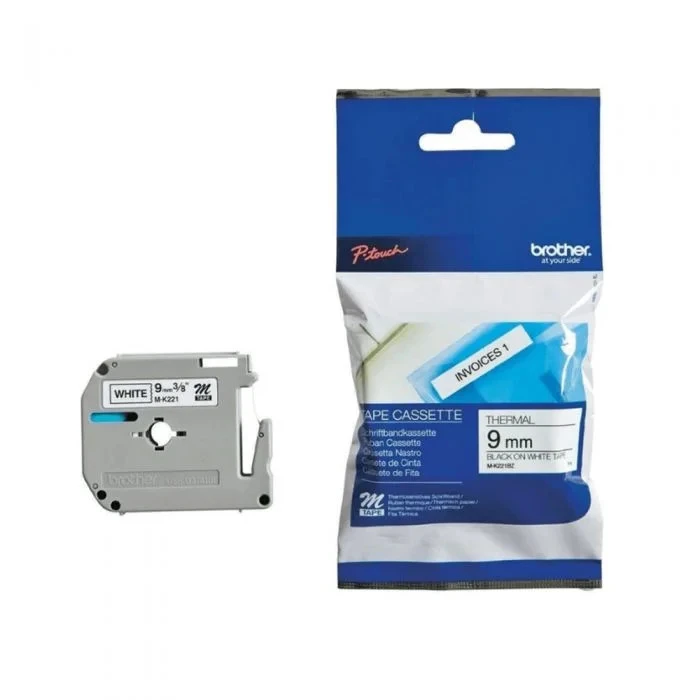
Brother MK221BZ P-Touch Black on White Tape 9mm x 8m (MK221BZ Tape)
What Is Label Tape?
Label tape is a pre-manufactured strip of material typically made from synthetic films, such as polyester, polypropylene, or vinyl. It is coated with adhesives on one side and often printed with pre-designed information or left blank for later printing. Label tapes are used in thermal printers and other labeling equipment to produce clear, legible labels. Their durability, resistance to chemicals, and adaptability make them ideal for industrial, commercial, and office applications.
How Do You Make Label Tape?
The production of label tape involves several precise steps to ensure quality and durability. The process can be summarized as follows:
1. Material Selection
The first step in making label tape is choosing the right substrate material. Manufacturers typically select synthetic films like polyester, polypropylene, or vinyl because of their strength, flexibility, and resistance to environmental factors. These materials provide the necessary durability for various applications.
2. Coating and Adhesive Application
After selecting the substrate, a uniform layer of adhesive is applied to one side of the film. The adhesive type is critical and can vary depending on whether the label is meant to be permanent or removable. During this stage, the adhesive is precisely calibrated to ensure that it bonds well with the substrate without affecting the tape's printability.
3. Printing and Coating
Next, the tape may be printed with pre-designed information or left blank for custom printing later. Some manufacturing processes include a protective overlay or laminate on the printed side to shield the label from abrasion, moisture, and chemicals. High-quality printing is achieved using advanced digital or thermal transfer printing techniques, ensuring that the information remains legible even under harsh conditions.
4. Slitting and Rewinding
Once the film is printed and coated, it is slit into narrower widths according to customer specifications. The slitting process is precise and ensures that the label tape maintains a consistent width throughout the roll. After slitting, the tape is rewound into rolls of predetermined lengths. These rolls are then inspected for quality and packaged for distribution.
5. Quality Control
Throughout the manufacturing process, rigorous quality control measures are in place to ensure consistency, clarity, and adhesion. Samples are tested for durability, resistance to environmental factors, and print quality. Only tapes that meet stringent quality standards are approved for market distribution.
Understanding this process provides insights into the precision and care that goes into making high-performance label tape. For more detailed information or to view our range, discover top-quality label tape solutions.
What Is the Difference Between TZ and TZe Label Tape?
A common query among users is the difference between TZ and TZe label tapes. While both are designed for similar applications, they have distinct characteristics tailored to different needs:
TZ Label Tape
TZ label tape is typically regarded as the standard label tape used for everyday applications. Its key features include:
- General-Purpose Adhesive: TZ tapes come with a balanced adhesive formulation suitable for standard labeling tasks in controlled environments.
- Standard Durability: These tapes offer adequate resistance to moisture, abrasion, and environmental factors for most indoor applications.
- Cost-Effective: Due to their standard features, TZ label tapes are often more economical, making them a popular choice for businesses with regular labeling requirements.
- Versatility: They are designed for a wide range of applications, from office labeling to light industrial use.
TZe Label Tape
TZe label tape, on the other hand, is an enhanced version of the standard tape, engineered to meet more demanding conditions. Key differentiators include:
- Enhanced Adhesive Formulation: TZe tapes use a specialized adhesive that provides stronger bonding and better resistance to challenging conditions, such as high humidity or exposure to chemicals.
- Improved Durability: With a more robust substrate and advanced protective coatings, TZe tapes are built for long-term applications and harsh environments. This makes them ideal for industrial settings where the tape might be exposed to extreme conditions.
- Higher Print Quality: TZe tapes often exhibit superior print clarity and longevity, ensuring that labels remain legible over extended periods even when subjected to outdoor or variable temperature conditions.
- Specialized Applications: TZe is especially suited for situations where enhanced performance is critical, such as in logistics, industrial manufacturing, and outdoor labeling.
In summary, while TZ label tape is well-suited for everyday use in standard environments, TZe label tape is the choice for applications that require higher durability and performance under challenging conditions. For more insights on these products, learn more about our innovative label tapes.
Benefits of Using High-Quality Label Tape
Using high-quality label tape offers several benefits across various applications:
Durability and Reliability
High-quality label tape is engineered to withstand harsh conditions, ensuring that labels remain intact and legible over time. Whether in a warehouse, office, or outdoor setting, durable label tape minimizes the need for frequent replacements.
Enhanced Adhesion
The advanced adhesive formulations used in modern label tapes guarantee a secure bond to various surfaces. This ensures that labels remain in place, even in environments with high moisture or temperature fluctuations.
Cost Efficiency
Although premium label tapes may have a higher initial cost, their durability and performance translate into long-term savings. Reduced maintenance, fewer replacements, and consistent performance help lower overall operational expenses.
Versatility in Applications
Label tape is used in countless industries, including retail, logistics, manufacturing, and healthcare. Its adaptability to various surfaces and environmental conditions makes it an essential tool for organizing, tracking, and labeling products and equipment.
Environmental Considerations
Many modern label tapes are produced with sustainability in mind, using eco-friendly materials and processes. This not only reduces environmental impact but also aligns with the growing demand for green products in the marketplace.
Applications of Label Tape
Label tape finds applications in a wide range of settings. Here are some common use cases:
Office and Administrative Settings
In offices, label tape is frequently used for organizing files, labeling equipment, and managing inventory. Its ease of use and clear print quality make it an indispensable tool for maintaining order and efficiency.
Industrial and Manufacturing
In industrial environments, label tape is used for asset tracking, equipment labeling, and safety markings. High durability and resistance to chemicals and abrasion are essential for these applications, ensuring that labels remain intact even in challenging conditions.
Retail and Warehousing
Retail stores and warehouses rely on label tape for price labeling, inventory management, and shipping. Clear, long-lasting labels contribute to better organization and streamlined operations.
Healthcare and Laboratory
In healthcare, precise labeling is critical for patient safety and regulatory compliance. Label tape is used for medical equipment, specimen labeling, and storage, where legibility and durability are paramount.
For a full range of applications and to view our complete selection, explore our premium label tapes.
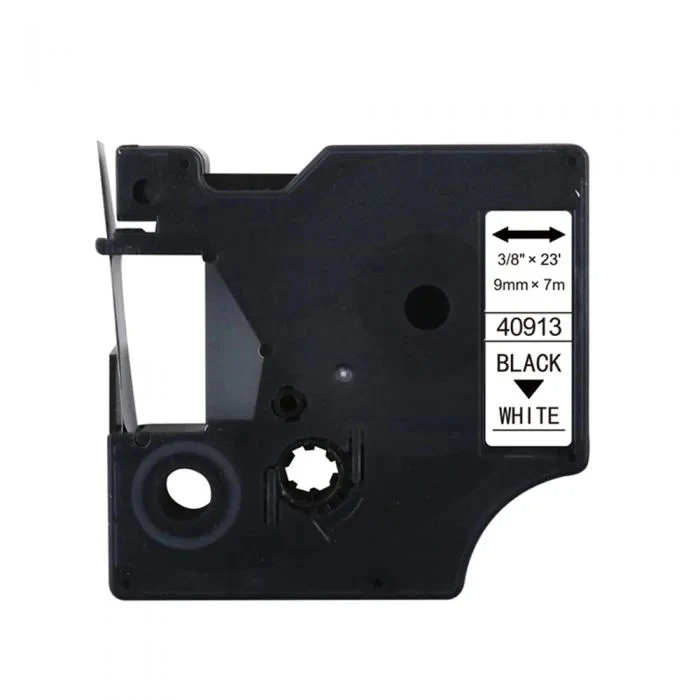
Compatible Dymo 40913 (S0720680) Black on White D1 Label Cartridge 9mm x 7m
How to Choose the Right Label Tape for Your Needs
Selecting the right label tape depends on several factors, including the environment, surface type, and required durability. Here are some considerations to keep in mind:
1. Environment
Consider the conditions in which the label will be used. For indoor applications, standard TZ label tape might be sufficient. However, for outdoor or industrial environments, TZe label tape may be more appropriate due to its enhanced durability and adhesive properties.
2. Surface Compatibility
Different surfaces require different adhesive strengths. Evaluate whether the surface is smooth, rough, or porous, and choose a tape that provides the necessary adhesion without damaging the surface when removed.
3. Label Size and Print Quality
Determine the size of the label and the amount of information that needs to be printed. High-quality print clarity is essential for legibility, especially in environments where labels are subject to wear and tear.
4. Cost vs. Performance
Balancing cost with performance is key. While premium tapes offer enhanced durability and performance, they may come at a higher cost. Assess your budget and application requirements to select the most cost-effective solution without compromising quality.
For expert advice and a curated selection of label tapes, discover our top-quality label tape solutions.
Future Trends and Innovations in Label Tape Manufacturing
The label tape industry continues to evolve with new technologies and sustainable practices. Here are some trends that are shaping the future:
Advanced Materials
Research into new materials is leading to label tapes that offer even greater durability, clarity, and resistance to environmental factors. Innovations in polymer science are enabling manufacturers to produce tapes that can withstand extreme conditions.
Eco-Friendly Production
Sustainability is becoming increasingly important. Manufacturers are adopting eco-friendly processes and materials, reducing waste and minimizing the environmental footprint of label tape production. This trend is expected to continue as businesses prioritize green practices.
Smart Label Tapes
Integration with digital technologies is on the rise. Smart label tapes equipped with RFID or QR codes are emerging, enabling better tracking and inventory management. These innovations can significantly enhance operational efficiency in retail and logistics.
Customization and Flexibility
As businesses increasingly require tailored labeling solutions, manufacturers are offering more customization options. From varying widths and adhesive strengths to specialized printing options, the future of label tape lies in flexibility and adaptability.
Conclusion
Label tape is an essential component in modern labeling and printing applications. From the production process—which involves careful material selection, adhesive application, printing, and quality control—to understanding the differences between TZ and TZe label tapes, every aspect plays a vital role in ensuring high performance. TZ label tape offers reliable performance for standard applications, while TZe label tape is engineered for enhanced durability and specialized uses in harsh environments.
Accurate measurement and proper selection are key to optimizing label tape performance. By considering environmental conditions, surface compatibility, and print quality requirements, businesses can choose the right tape that meets their operational needs while ensuring cost efficiency and sustainability.
For those seeking detailed insights and top-quality products, explore our premium label tapes and discover innovative solutions designed to meet the demands of various industries. With ongoing advancements in material science and digital integration, the future of label tape is set to offer even greater efficiency and customization for modern applications.
In summary, understanding how label tape is made, along with the distinctions between TZ and TZe tapes, equips businesses with the knowledge to make informed purchasing decisions. This guide provides a data-rich resource for improving operational efficiency and ensuring clear, durable labeling in any environment.

















Sign in to leave a comment.