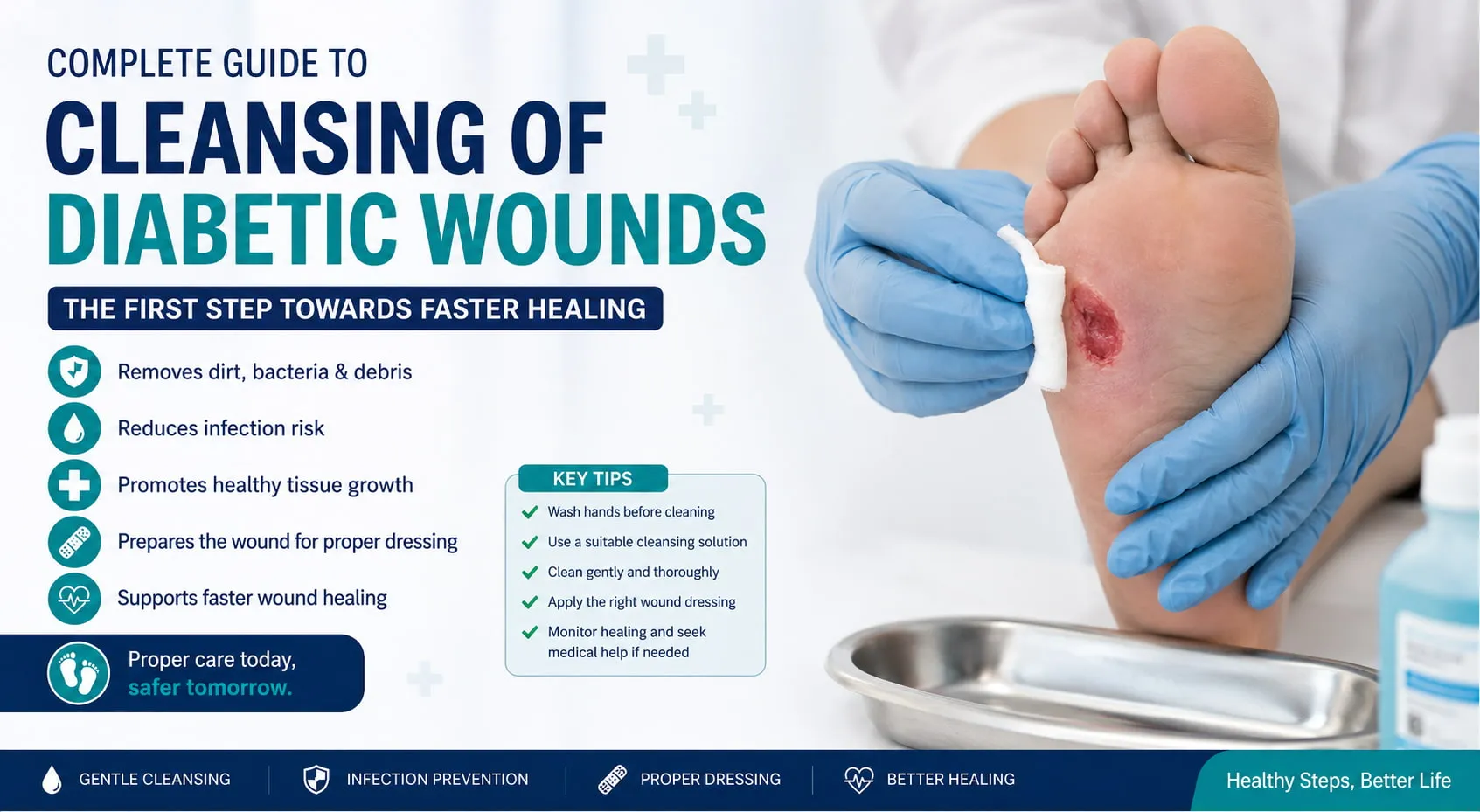

Diabetes affects millions of people worldwide, and one of its most common complications is delayed wound healing. Even a small cut, blister, or scratch can become a serious health concern if not treated properly. This is why the cleansing of diabetic wounds is one of the most important steps in diabetic wound care. Proper cleansing helps remove dirt, bacteria, and dead tissue while creating an environment that supports healthy healing.
Without appropriate wound cleansing, harmful microorganisms can multiply quickly, increasing the risk of infection and delaying recovery. Following a structured wound care routine helps improve healing outcomes while reducing the possibility of severe complications.
What Is Diabetic Wound Cleansing?
The cleansing of diabetic wounds refers to the process of gently cleaning a wound to remove contaminants, bacteria, debris, and excess wound drainage. Proper cleansing protects healthy tissue while preparing the wound for dressing and further treatment.
Unlike ordinary wounds, diabetic wounds require extra attention because diabetes can reduce blood circulation and damage nerves. These conditions slow down the body's natural healing response and make infections more likely.
Effective diabetic wound cleansing forms the foundation of successful wound care and promotes healthier tissue repair.
Why Proper Wound Cleansing Is Important
Cleaning diabetic wounds offers several important benefits:
- Reduces bacteria and contamination
- Removes dirt and foreign particles
- Helps lower infection risk
- Supports healthy tissue growth
- Improves the effectiveness of wound dressings
- Promotes faster wound healing
- Helps healthcare professionals assess the wound more accurately
A clean wound creates the ideal environment for tissue regeneration and decreases complications associated with chronic wounds.
Challenges of Diabetic Wounds
People living with diabetes often experience several factors that make wound healing more difficult.
Poor Blood Circulation
Reduced blood flow limits the supply of oxygen and nutrients needed for tissue repair.
Peripheral Neuropathy
Nerve damage may prevent individuals from noticing cuts, burns, or blisters until they become serious.
Increased Infection Risk
High blood sugar levels can weaken the immune system, allowing bacteria to multiply more easily.
Slow Tissue Repair
The body's natural healing process becomes slower, making consistent diabetic wound care even more important.
Steps for Proper Cleansing of Diabetic Wounds
Assess the Wound
Before cleaning, carefully inspect the wound for:
- Redness
- Swelling
- Drainage
- Odor
- Tissue damage
- Increased pain
Regular assessment helps detect changes early.
Wash Your Hands
Always clean your hands thoroughly before touching the wound to minimize contamination.
Clean the Wound Gently
Use an appropriate wound cleansing solution recommended by healthcare professionals. Gentle irrigation helps remove debris without damaging healthy tissue.
Avoid using harsh chemicals that may irritate healing tissue unless specifically recommended by a medical professional.
Dry the Surrounding Skin
After cleansing, gently pat the surrounding skin dry while avoiding unnecessary friction on the wound itself.
Apply the Appropriate Wound Dressing
Selecting the correct wound dressing protects the wound, maintains moisture balance, and supports tissue regeneration.
Monitor Healing Progress
Regularly inspect the wound for signs of improvement or possible infection.
Signs That a Diabetic Wound Is Healing
Successful diabetic wound healing often includes:
- Reduced swelling
- Less redness
- Healthy pink tissue
- Gradual wound closure
- Reduced drainage
- Decreased pain
- Healthy skin formation around the wound
Healing should occur gradually under proper wound management.
Warning Signs That Need Medical Attention
Immediate medical evaluation may be necessary if the wound develops:
- Increasing redness
- Warmth around the wound
- Thick yellow or green discharge
- Foul odor
- Fever
- Increased pain
- Blackened tissue
- Rapid wound enlargement
Ignoring these warning signs may lead to serious complications.
Tips for Better Diabetic Wound Care
Proper diabetic wound care extends beyond wound cleansing.
Helpful practices include:
- Maintain healthy blood sugar levels
- Wear properly fitted footwear
- Inspect feet daily
- Keep skin moisturized
- Avoid walking barefoot
- Eat a balanced diet rich in protein and vitamins
- Stay hydrated
- Follow medical advice consistently
These habits help improve overall healing.
The Importance of Proper Wound Dressing
After cleansing, selecting the appropriate wound dressing is equally important.
An effective dressing helps:
- Protect against bacteria
- Maintain ideal moisture levels
- Reduce contamination
- Support tissue repair
- Improve patient comfort
Dressings should be changed according to healthcare recommendations to maintain optimal healing conditions.
Advanced Wound Care for Diabetic Patients
Some diabetic wounds require specialized advanced wound care when healing becomes delayed.
Treatment may include:
- Regular wound assessment
- Professional wound cleansing
- Debridement when necessary
- Advanced wound dressings
- Infection management
- Pressure relief techniques
- Blood sugar optimization
These comprehensive approaches improve recovery for difficult wounds.
Preventing Future Diabetic Wounds
Prevention remains one of the best strategies for maintaining healthy feet and skin.
Individuals with diabetes should:
- Perform daily foot checks
- Wear protective footwear
- Manage blood sugar effectively
- Seek prompt treatment for even minor injuries
- Schedule regular foot examinations
- Maintain good hygiene
Early intervention prevents small wounds from developing into serious diabetic ulcers.
Why Professional Wound Care Matters
While basic wound cleansing can be performed at home, professional evaluation is important for wounds that fail to heal or show signs of infection.
Healthcare professionals can determine whether additional treatment is necessary and recommend appropriate diabetic wound care strategies based on wound severity.
Timely intervention significantly improves healing outcomes while reducing complications.
How Cimidaxil Supports Wound Care
Cimidaxil focuses on advanced wound management solutions designed to support proper wound care, diabetic wound care, and wound healing. Combined with appropriate cleansing, regular monitoring, suitable wound dressings, and professional medical guidance, a structured wound care approach can help improve recovery and promote healthier healing outcomes.
Conclusion
The cleansing of diabetic wounds is a critical first step in successful diabetic wound care. Proper wound cleansing removes harmful contaminants, supports healthy tissue growth, and prepares the wound for effective treatment. When combined with suitable wound dressing, blood sugar management, healthy nutrition, and regular monitoring, proper cleansing significantly improves wound healing outcomes.
People with diabetes should never ignore even minor wounds. Early assessment, consistent wound care, and professional guidance can prevent complications and promote faster recovery. By following recommended wound cleansing practices and maintaining a comprehensive wound management routine, individuals can protect their health and improve their quality of life.



























Sign in to leave a comment.