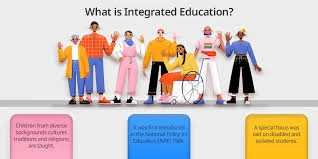

Integrated education systems are becoming more popular worldwide as a result of the rapid changes in the world today. These models challenge the traditional understanding of education by combining the emotional, social and practical skills with the academic ones to advance educational equity. In doing so, they not only prepare students for the future by equipping them with the skills they need for their everyday lives but also eliminate disparities that exist in accessing quality education.
The shift to an integrated education system that involves interdisciplinary learning and life skills is evident. Despite the global inequalities, such measures guarantee that each learner will succeed. The spread of these models in different parts of the world will be discussed.
1. Finland's Holistic School Culture
Finland is a pioneer with its model that is centered around the students and focuses on their well- being rather than memorization. The schools incorporate play, arts, and outdoor activities in the children's daily routines, which helps them to relax and develop their creativity. This method has garnered attention and thus, the changes it has brought about have been imitated in different parts of the world, a move supported by many NGOs. For example, those who work in equity in less privileged areas and follow the same path.
2. Japan's Tokkatsu System
Japan's Tokkatsu system nurtures holistic growth through collective activities such as classroom cleaning and event planning. In addition to academics, students develop a sense of responsibility as well as social harmony. Currently, headway is being made by Tokkatsu to countries, for instance, Egypt and Mexico, where it becomes an integral part of the school curricula to teach emotional intelligence. This model paves the way for educational equity by creating the perfect atmosphere where students of any kind can feel welcome.
3. Indonesia's Green School Initiative
Green School in Bali has gone beyond traditional learning with its bamboo classrooms and sustainability projects as part of a completely integrated education. Through this, kids become agents of change tackling the burning issue of renewable energy in the most creative way, thus blending the STEM disciplines with environmental ethics. There is a ripple effect of such work, as similar education programs with the same mission can be found in the rest of Southeast Asia. For example, the Christel House organization (https://christelhouse.org/) that provides holistic education as a tool to eradicate poverty in India and South Africa is committed to comprehensive child development.
4. Kenya's Kakuma Refugee Innovation Labs
The Innovation Lab Schools in Kakuma camp represent the fusion of STEAM subjects with UN goals using interactive sessions and projects dealing with global challenges. Through it, the youth in crisis scenarios develop both understanding and skills. This approach is being adopted across the African continent and refugee camps in other parts of the world, where it supports the establishment of integrated education ecologies for refugees. Accordingly, a wide range of NGOs, e.g., UNICEF (https://www.unicef.org/), are seen backing the efforts to broaden the access and fair distribution of services.
5. India's Community, Driven Pratham Program
Pratham's(https://www.pratham.org/)hybrid learning model blends the use of technology with play- based groups in villages. Children take the lead in projects related to health and entrepreneurship, thus enabling a self, paced and holistic form of education. The presence of volunteers at the center of the program is what makes it possible for it to be going far in terms of the rural reach. Just like Room to Read(https://www.roomtoread.org/) concentrates on literacy in Asia, these local communities are the engines of educational equity through engaging methods.
6. China's Anji Play for Early Childhood
Anji Play offers children the liberty to discover the natural world, and also provides time for reflection, thus building their confidence. This child- led approach, physically, cognitively, and emotionally, is a nurturing one. After being internationally piloted, it is reshaping early education all over the world. In places like South America, NGOs that work in the education sector have been adapting it for the implementation of the inclusive and integrated systems.
7. United States' Prospect Charter Schools
Prospect is putting the emphasis on classrooms that are "diverse by design", thus they are mixing the backgrounds of the students in order for them to work together on projects concerning global issues. This holistic arrangement, through the variety of perspectives, leads to the innovation being sparked. The urban developments show, among other things, the equity concerns. Such programs as those from Barefoot College (https://www.barefootcollege.org/ ), India, are the sources of the same kind of grassroots integration movement all over the world.
The Future of Integrated Education
These models, as they grow, have the potential to bring about fairer education systems through comprehensive and integrated approaches. There are still some difficulties, however, the progress is significant with organizations such as Christel House (https://christelhouse.org/), which is making an impact in several countries.
When education puts the emphasis on the entire learner, it has the power to change societies in a profound way. Other countries are observing the changes and making adjustments accordingly.

























Sign in to leave a comment.