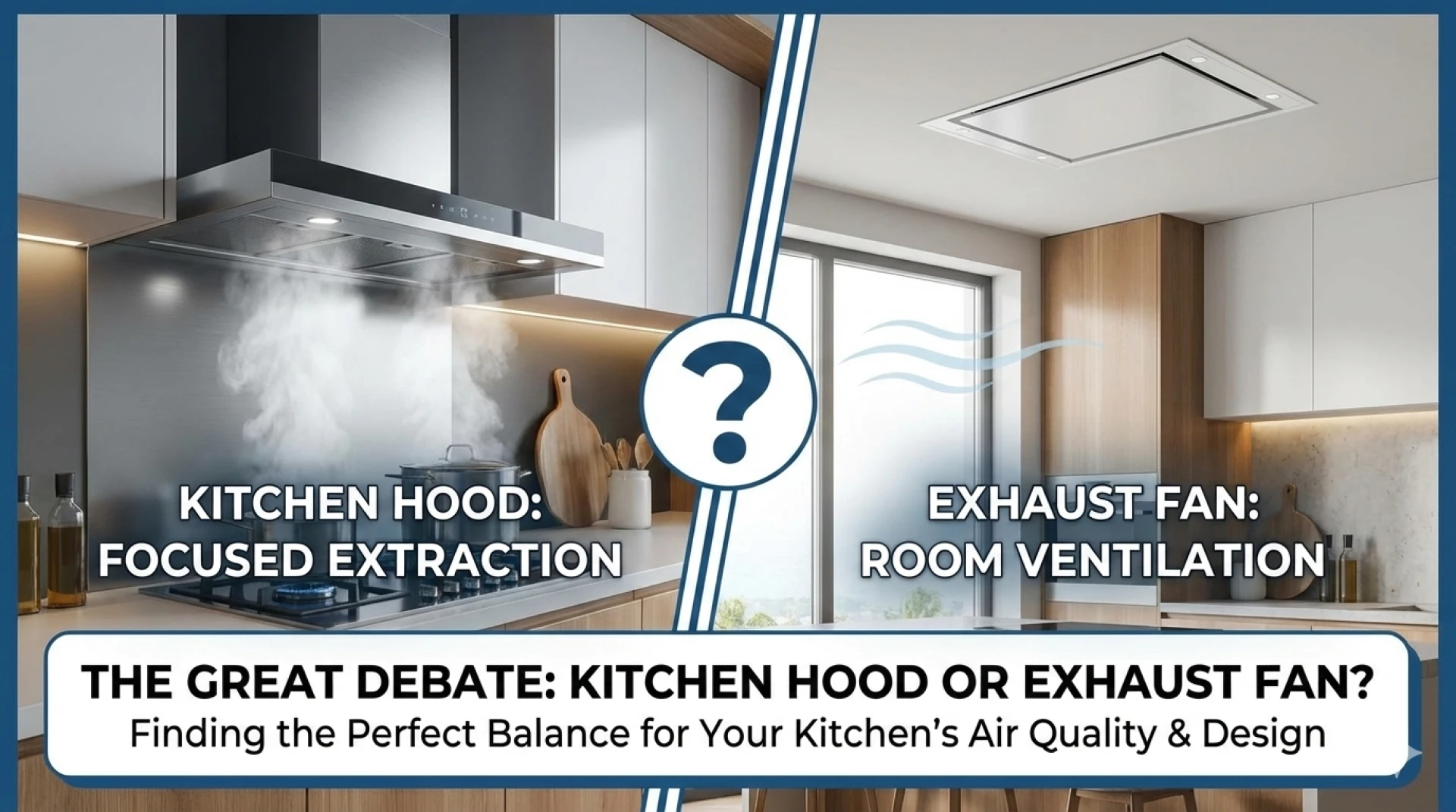

When designing a modern kitchen, most homeowners spend hours picking out the perfect "kitchen hood." It’s understandable—the hood is a design statement that promises to keep your cooking space free of smoke and grease. However, as we move through 2026, the conversation around home health is shifting from just "removing smells" to "managing air quality and energy." While a range hood is a specialist at capturing steam from the stove, the humble exhaust fan is the generalist that maintains the temperature and humidity of the entire room. For those currently navigating the peak of a record-breaking Australian summer, this distinction is vital. Companies like Cyanergy have highlighted that a house is only as efficient as its ventilation; without a smart exhaust strategy, your air conditioner could be fighting an uphill battle against the heat generated in the heart of your home.
The Great Debate
It is a common misconception that if you have a range hood, you don’t need an exhaust fan. In reality, they perform two different roles:
- The Kitchen Hood: This is a high-velocity extraction tool. It uses heavy-duty filters to trap grease and smoke directly at the source—the stovetop. It’s essential for heavy frying or searing.
- The Exhaust Fan: Usually mounted in the ceiling or high on a wall, this unit focuses on general air exchange. It removes the ambient heat that rises to the ceiling and helps manage moisture that can lead to mold in kitchen cabinetry.
In open-plan homes, which are incredibly popular in Australia and Europe, the kitchen exhaust fan often acts as the "lungs" of the living area, ensuring that cooking heat doesn't bleed into the rest of the house and spike your cooling bills.
The Hidden Cost of "Open" Ventilation
There is a catch to having powerful ventilation. Most standard ceiling exhaust fans are essentially permanent holes in your ceiling. When the fan is off, your expensive, air-conditioned air escapes through the vent, while hot, dusty air from the attic or outside leaks back in. This "thermal bridging" can account for up to 5% of a home's total heat gain during a summer heatwave.
To fix this, energy-conscious homeowners are now using self-closing dampers. These are clever covers that open when the fan is running but snap shut to create an airtight seal when it’s off. For residents in Victoria, this upgrade is more accessible than ever. You might even be eligible for a free exhaust fan seal in VIC through government-backed energy upgrade programs. This small addition can reduce the energy consumption of your air conditioner by over 50% simply by stopping your cool air from "leaking" out of the kitchen ceiling.
Why Extraction is Crucial for Health
Proper kitchen ventilation isn't just about comfort; it's a health requirement. Cooking—especially on gas stoves—releases nitrogen dioxide and fine particulate matter (PM2.5) into the air.
- Humidity Control: High-efficiency exhaust fans prevent steam from condensing on your walls. Without this, the area behind your fridge or inside your pantry becomes a breeding ground for mold.
- Internal Heat Load: Modern kitchens are full of heat-generating appliances. A fridge, oven, and dishwasher running simultaneously can raise a room's temperature by 3-4°C. An exhaust fan purges this "internal heat load" before it spreads.
- Pollutant Removal: A good fan ensures that carbon monoxide and VOCs (volatile organic compounds) from cooking oils are flushed out of the house rather than lingering in your upholstery.
Maintenance: Keeping the Air Flowing
To ensure your exhaust fan and kitchen hood continue to perform, maintenance is key:
- Wipe the Blades: Dust buildup on fan blades creates drag, making the motor work harder and louder.
- Check the External Vent: Ensure that the outside louvers aren't blocked by bird nests or spider webs, which is a common issue for Australian homes after a wet spring.
- The Paper Test: To see if your fan is actually working, hold a single square of toilet paper up to the vent while it's running. If the fan doesn't hold the paper in place, your suction is blocked or the motor is failing.
Conclusion
A high-performing kitchen is about more than just the latest appliances; it’s about how that space interacts with the rest of your home. By balancing a targeted kitchen hood with a well-sealed, high-efficiency exhaust fan, you create a cooking environment that is healthy, quiet, and incredibly energy-efficient. Whether you’re looking to save on bills or simply want a fresher home, your ventilation is the best place to start.




























Sign in to leave a comment.