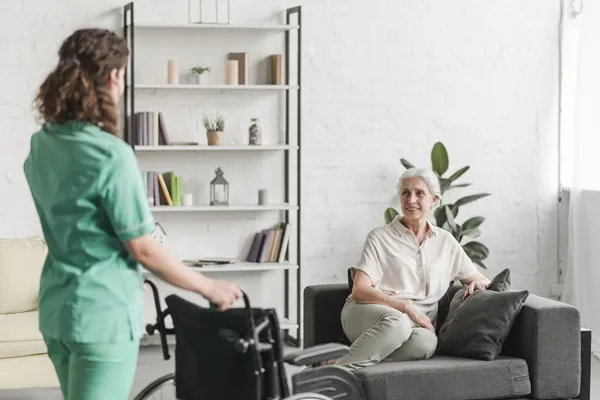

The moment a loved one is cleared to go home from hospital feels like crossing a finish line.
Relief washes over the household. Messages pour in from friends and relatives. The patient themselves is usually desperate to sleep in their own bed, eat familiar food and escape the noise of a busy ward.
But here is what countless Australian families discover only after they have driven out of that hospital car park, coming home is not the same as being well.
Why the Real Work Often Starts at the Front Door
Hospitals are built around a specific mission: to stabilise patients, deliver acute medical interventions and get people to a point where they no longer require round-the-clock clinical care. That mission has a defined end point and it usually comes before full recovery does.
What fills the space between hospital discharge and genuine independence is something most families are completely unprepared for and it catches them off guard every single time.
For households navigating this transition, connecting with a reliable home care nursing agency or reaching out to an aged care agency Sydney early in the process can change the entire experience of bringing someone home.
Discharged Does Not Mean Done
There is a quiet but persistent myth that a discharge letter equals a clean bill of health. In practice, many people leave hospital with wounds still healing, strength not yet restored and medical needs that continue long after the paperwork is signed.
Someone recovering from a hip replacement may be mobile enough to leave a ward but completely unable to manage stairs at home. A person who has come through a serious respiratory illness might have the energy to walk to the car and nothing left after that.
For older Australians especially, even a brief hospital stay, just a few nights can leave a person noticeably weaker than when they arrived. The body's reserves deplete quickly in a clinical environment, regardless of how straightforward the medical issue was.
When Family Members Find Themselves Wearing a New Hat
Nobody hands a family member a caregiving manual when they pick up their loved one from the discharge lounge.
Yet within hours of arriving home, many Australians find themselves doing things they have never done before. Helping a parent manage personal hygiene safely. Keeping track of a list of medications that has suddenly tripled. Working out whether a particular symptom is something to monitor or something to act on immediately.
These responsibilities land on top of everything else already in motion. Jobs do not pause. Children still need to be fed, driven places and attended to. Household tasks accumulate. And somewhere underneath all of it, the caregiver is also dealing with their own emotional response to watching someone they love struggle.
The weight is real, even when it is carried quietly.
Recovery Rarely Follows a Straight Line
One of the more difficult realisations families come to is that healing does not follow a predictable schedule.
Some days there is real progress. better appetite, more movement, a brighter mood. Other days feel like steps backward for no obvious reason. A minor infection that might barely register in a healthy adult can become a serious setback for someone who is already depleted.
Falls represent a particular concern during this window. Reduced balance, unfamiliar weakness and a home environment that was never designed with recovery in mind create a combination that leads to preventable accidents. A fall that results in a second hospital admission resets the entire recovery process and adds new layers of complication.
Having someone with clinical training involved during the early weeks at home means problems are spotted and addressed before they have a chance to escalate.
Medications: A Source of Confusion That Gets Underestimated
It is not unusual for a patient to come home from hospital with a medication regimen that looks nothing like what they were taking before admission. New prescriptions may have been added. Existing dosages may have changed. Some previous medications may have been stopped entirely.
For an older person already managing several chronic conditions, keeping all of this straight is genuinely difficult. Timing matters. Interactions matter. And the consequences of getting it wrong, whether through missed doses, double-dosing or misunderstood instructions — can be serious.
This is one of the most practical reasons families turn to a professional Home Care Nursing Agency. Having a qualified nurse involved in medication management brings structure and clinical oversight to a process that would otherwise rest entirely on an untrained family member doing their best under pressure.
The Practical Obstacles Nobody Talks About at Discharge
Physical recovery affects far more than what is obvious. The small, automatic actions that a person performed every day without thinking, standing up from a low chair, navigating a bathroom, carrying a cup of tea from the kitchen, may all become uncertain during the weeks following a hospital stay.
Families often concentrate on the medical picture and miss the practical one. Yet it is the practical obstacles that tend to create the most daily friction. A bathroom that is not set up for someone with limited mobility. A bed that is difficult to get in and out of safely. Rooms with obstacles that were never a problem before but now carry real risk.
Addressing these things proactively, rather than waiting for an incident to force the issue, makes a significant difference to both safety and the patient's confidence in their own recovery.
The Emotional Dimension of Coming Home
Physical healing gets most of the attention, but recovering from a significant health event involves the whole person.
Many patients return home with anxiety they did not have before. Confidence in their own body has been shaken. Independence that they took for granted now feels uncertain. Some worry about placing too much on family members. Others feel a loss of identity when they can no longer do the things that gave their days meaning.
These are not trivial concerns and they are not always visible from the outside. Emotional recovery takes time and tends to respond well to consistent, supportive care, the kind that a professional presence at home can provide alongside the clinical work.
Caring for a Carer
It would be a mistake to focus entirely on the patient and overlook the person caring for them.
Family caregivers routinely underestimate how much they are absorbing. They push through fatigue, ignore their own needs and feel a quiet but persistent guilt whenever they consider asking for help. In many households, the idea of bringing in outside support feels like admitting that they have not done enough which could not be further from the truth.
Caregiver burnout is well documented and entirely understandable. The demands are continuous, the stakes feel high and there is rarely a clear moment where the job is finished for the day.
Bringing in professional support is not a retreat from caring for a loved one. It is often the decision that makes sustainable, quality care possible for everyone involved.
What Professional Home Nursing Actually Provides
A qualified nurse visiting the home during the post-discharge period does considerably more than perform clinical tasks, though those tasks are essential.
They bring an outside pair of trained eyes to a situation that family members are often too close to see clearly. They identify early warning signs. They provide reliable, consistent medication oversight. They offer guidance on safe movement and mobility. They monitor progress in a systematic way and flag anything that warrants attention before it becomes a crisis.
For families, the effect is often described simply as relief not having to carry the full weight of every decision alone.
Older Australians and the Need for Longer Support
Age changes the recovery equation considerably.
The body's ability to bounce back from illness, surgery or hospitalisation slows with age. Existing health conditions add complexity. Social isolation during recovery can compound the difficulty. And the practical gap between what an older person can manage independently and what they actually need to do each day is often wider than it appears.
An experienced Aged Care Agency Sydney can put in place support that is genuinely tailored, not a generic service, but a care arrangement built around the particular person, their home and their situation. This kind of support allows older Australians to recover in the place where they are most comfortable while staying genuinely safe.
It also allows family members to be present as family, rather than as full-time carers, which is better for everyone.
The Value of Thinking Ahead
Families who plan ahead consistently report a smoother experience than those who find themselves scrambling once a crisis has already arrived.
It does not require enormous effort to be genuinely useful. A conversation with the hospital's discharge planner before the patient leaves. A walk-through of the home to identify practical hazards. A call to a nursing or aged care service to understand what options are available.
These steps take time in the short term and save a great deal of it later. More importantly, they reduce the kind of stress that tends to take hold when a family is trying to figure out support systems at the same moment they are trying to manage a health emergency.
What Recovery Looks Like When the Right Support Is in Place
There is a version of post-hospital recovery that is genuinely manageable — not without effort, but without the sense of freefall that many families describe.
It involves a patient who is monitored, supported and not isolated with their own anxiety. It involves family members who are present and helpful without being overwhelmed. It involves clinical care that reaches into the home and closes the gap that hospital discharge leaves open.
Getting there usually comes down to one thing: asking for help before waiting becomes necessary.
Whether that means connecting with a professional Home Care Nursing Agency or working with a trusted aged care agency Sydney, the difference between adequate recovery and a genuinely good one often lies in the support that surrounds a person once the hospital doors close behind them.
The hardest part of recovery is not always the time spent in hospital. For many Australians, it is the weeks that follow — and having the right people in your corner during that time matters more than most families expect.






























Sign in to leave a comment.