
Root canals are often thought of as having warning signs like pain that keeps you up at night or calling your dentist in a panic.
However, this isn't always true; sometimes you won't experience a lot of pain, but you may also have an infection that requires a root canal.
For example, a friend of mine waited several months before seeing her dentist because her tooth didn't seem to hurt very much. She thought it was unusual, but not a lot; she simply didn't think anything was wrong. After seeing her dentist, she found out she had an infection that required a root canal; no pain, just subtle signs.
This is why it is important to know how to determine whether or not you need a root canal; your tooth usually gives you small signs that something is wrong before creating significant distress.
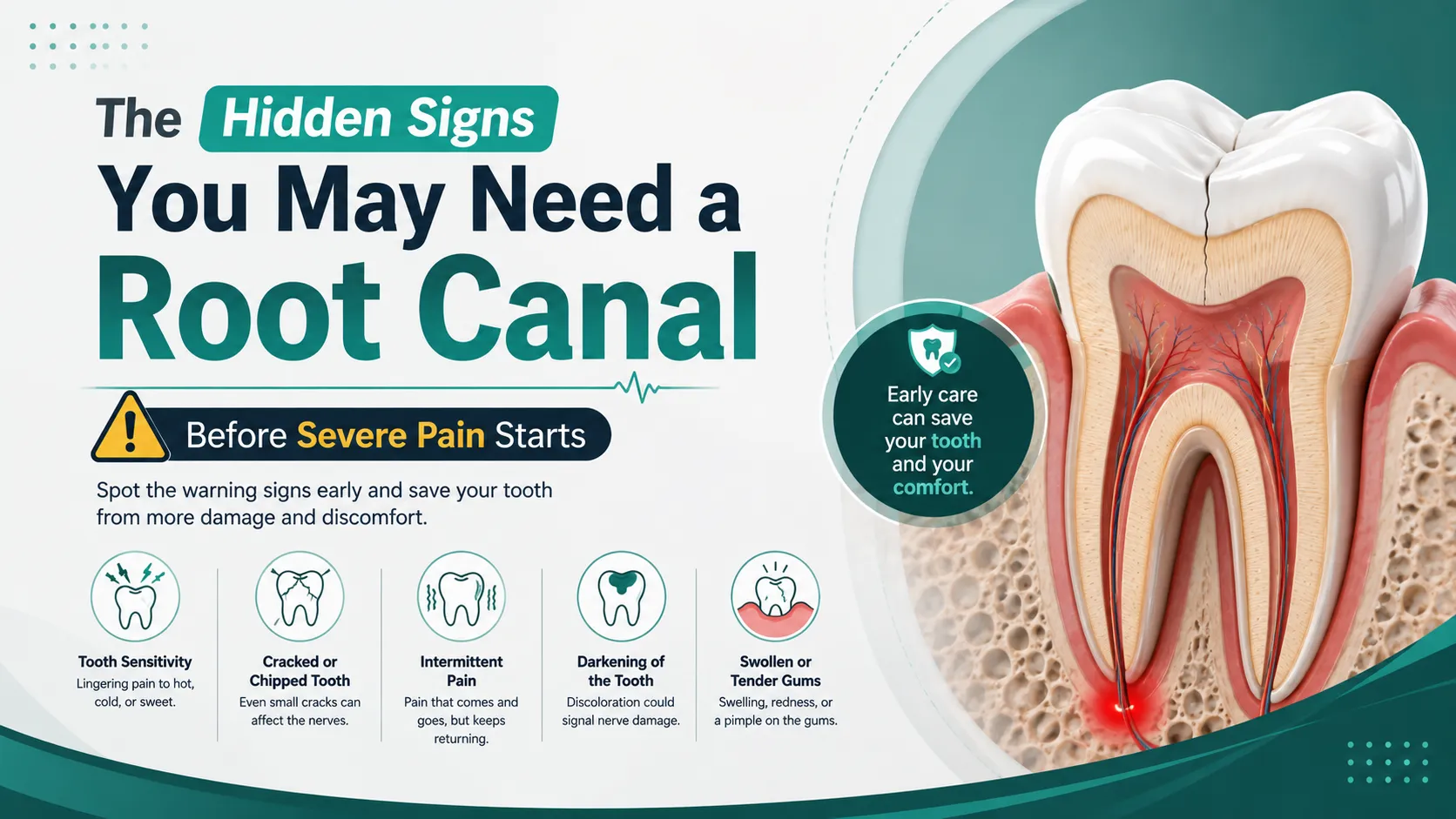
1. Sensitivity That Lingers Longer Than It Should
Sensitivity to hot/cold foods can vary from a quick twinge to ongoing discomfort. If you continue to experience discomfort after being exposed to heated/cooling foods/drinks, it probably indicates that your tooth is attempting to signal to you that there may be a problem.
One of the major signs that indicates that you may require a root canal is chronic sensitivity that does not resolve itself over time.
2. Pain When Chewing or Biting
When you bite into a sandwich or chew on one side of your mouth, it doesn’t seem like it would hurt how we describe it as such; but instead, you have a weird feeling inside of your tooth. Similar symptoms arise when your tooth has become inflamed; therefore, these symptoms can eventually lead to root canal treatment that is commonly overlooked by most people.
3. A Darkening Tooth
When only one of your teeth begins turning various shades of gray/yellow (darkened), you need to consider visiting a dentist and not to ignore this possible sign of needing to undergo root canal treatment, particularly if you have previously experienced dental trauma.
4. Swollen or Tender Gums
A bump or swelling on the gum close to a tooth could suggest an infection underneath the surface. This bump is often an indicator that a root canal may be necessary even if no significant pain is felt.
5. Pain That Comes and Goes
You have a toothache one day and feel normal about a week after? It is easy to think that everything has healed itself, but infections rarely occur that way, and intermittent tooth pain is often a sign that a root canal should be performed before the condition has worsened.
Conclusion
So, when do you require a root canal? Although many people think that they should wait until they have unbearable pain before going to the dentist, in actuality, many subtle signs indicate you may require a root canal prior to developing unbearable pain. These subtle signs include: prolonged sensitivity, discomfort when eating, change in tooth colour, and swollen or tender gums.
The problem with these subtle signs is that individually they can seem like nothing to worry about. If you find that any of these signs have occurred, do not wait for a dental emergency to occur and then seek treatment. Schedule a dental check-up, ask questions, and clarify whether or not you may require a root canal before more serious symptoms develop.



























Sign in to leave a comment.