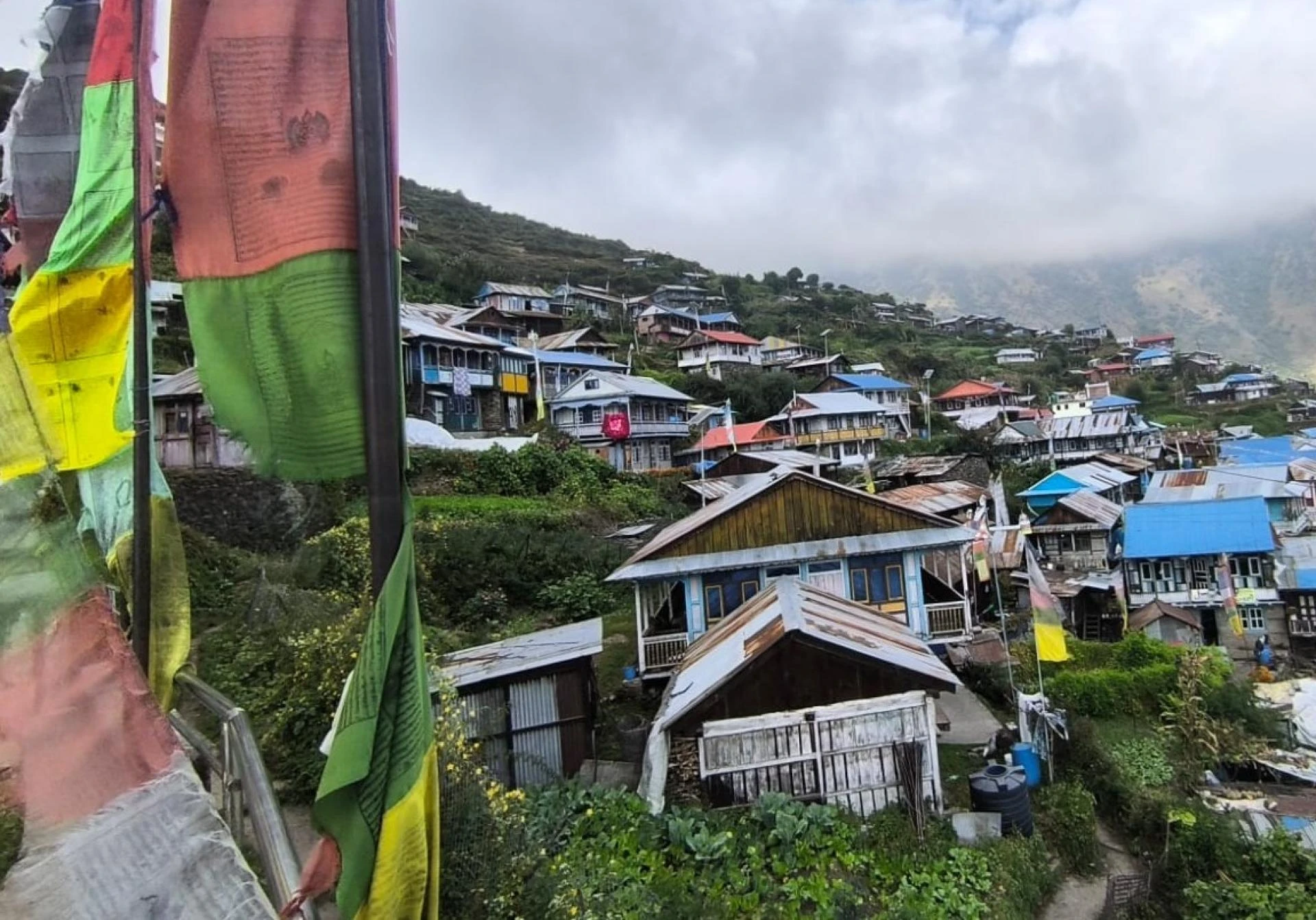

You know that feeling when you stumble upon something so unexpectedly beautiful that it stops
you mid-breath? That's exactly what happened when I first laid eyes on Langtang Valley Trek. I'd been hiking for three days through misty forests, my legs wobbling like jelly, when the trail suddenly opened up to reveal this secret world tucked between towering peaks.
I just stood there, pack sliding off my shoulders, mouth probably hanging open like a tourist cliché. But honestly? I didn't care. Some moments demand your full, unfiltered reaction, and this was definitely one of them.
The Adventure Begins (With Zero Preparation)
Three weeks before my flight, I was drowning in spreadsheets and wondering when life had become so predictable. My friend Sarah had been dropping hints about adventure travel for months, and in one of those spontaneous moments that either lead to great stories or great disasters, I found myself booking a ticket to Nepal.
"You're doing what now?" my mom asked, and I could practically hear her googling "Nepal safety statistics" through the phone.
Fair point. My biggest outdoor achievement to date was assembling IKEA furniture without crying. But something about those mountain photos Sarah kept showing me sparked this weird excitement I hadn't felt in years. Maybe it was time to surprise myself.
The bus ride from Kathmandu to Syabrubesi was like riding a mechanical bull for seven hours straight. Every pothole felt personal, and the hairpin turns made my stomach do gymnastics. But watching the landscape transform from chaotic city streets to terraced hillsides to actual mountains was like watching the world wake up from a long sleep.
When Mountains Become Your Teacher
That first day on the trail humbled me completely. I'd imagined myself striding confidently up mountain paths, but reality had other plans. Every step upward felt like negotiating with gravity, and my supposedly "broken-in" boots decided to introduce themselves to my heels in the most uncomfortable way possible.
But here's what nobody tells you about mountain trails—they force you to slow down in the most wonderful way. When you're gasping for breath every few steps, you start noticing things. The way morning mist clings to rhododendron branches like nature's own decoration. How the sound of the Langtang River changes tone as it bounces off different rocks. The incredible silence between your footsteps that feels almost sacred.
I started taking these involuntary meditation breaks, sitting on random boulders just to catch my breath, and discovering I was actually enjoying the stillness. When was the last time I'd sat somewhere without immediately reaching for my phone?
The Kindness of Strangers (Who Become Friends)
Day two brought my first real mountain lesson, delivered by the most unlikely teacher. I was having what can only be described as a motivation crisis—you know, that moment when you wonder why you left your comfortable couch for voluntary suffering—when this elderly Tamang woman appeared on the trail.
She took one look at my probably pathetic expression and started laughing. Not mean laughter—the kind that says "I've been exactly where you are." Without speaking a word of English, she somehow communicated that I should sit down and wait.
Five minutes later, she returned with a thermos of something that looked suspicious but smelled amazing. Butter tea, I learned later. It tasted like a warm hug mixed with adventure, and somehow after drinking it, the trail ahead looked less impossible and more like... well, an actual possibility.
She patted my shoulder, said something in Nepali that sounded encouraging, and continued down the trail with the easy stride of someone who'd been walking these paths longer than I'd been alive. That small act of kindness from a complete stranger shifted something inside me. Maybe this wasn't about proving anything—maybe it was about staying open to unexpected moments of human connection.
Where Words Fall Short (But Hearts Speak Fluent Beauty)
I took approximately a thousand photos in Langtang Valley, and every single one looks flat compared to standing there in person. There's something about mountain light that cameras just can't capture—the way it seems to come from everywhere at once, making even ordinary rocks look like they're glowing from within.
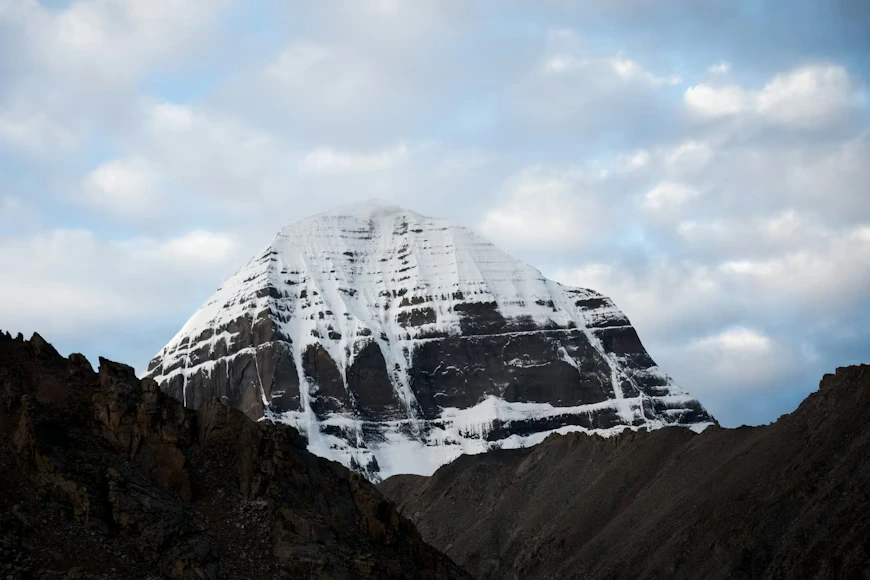
The moment when Langtang Lirung first came into full view was pure magic. This massive pyramid of snow and stone rising straight into the bluest sky I'd ever seen, surrounded by a whole family of peaks that seemed to be having their own majestic conversation. Marcus, a German trekker who'd become my trail buddy, stopped beside me and we both just stood there grinning like kids who'd discovered a secret fort.
"Some things you just have to experience," he said, which perfectly summed up the wonderful inadequacy of trying to describe mountain beauty to people who haven't seen it themselves.
Learning to Breathe in Thin Air (And Life)
Around 3,500 meters, the altitude started demanding my attention. Not in a dramatic way—more like a gentle but persistent reminder that I was way outside my normal operating parameters. Every breath required intention, every step became deliberate.
But you know what? Slowing down turned out to be exactly what I needed. Back home, I'm always rushing between meetings, multitasking poorly, checking notifications every few minutes. Up there, I could barely walk and think at the same time, so I just walked. And looked around. And breathed.
Ang Dorje, who ran the lodge in Kyanjin Gompa, noticed me moving like molasses and brought over the most enormous cup of ginger tea I'd ever seen. "Altitude is like demanding guest," he said with this wonderful smile. "She insists you pay attention."
We sat together on the lodge's sunny terrace, not talking much, just watching prayer flags dance in the mountain breeze. Sometimes the best medicine for feeling overwhelmed is having someone acknowledge that yes, this is challenging, and that's perfectly okay.
Sunrise at the Top of the World
I'm absolutely not a morning person, but something compelled me to attempt the pre-dawn hike to Tserko Ri. Maybe it was peer pressure from other trekkers, or maybe the mountains were calling in that mysterious way they do.
The climb in darkness was intense—each step at nearly 5,000 meters felt significant, like my body was having to remember how to function in this thin air. My headlamp created this small bubble of light in the vast darkness, and I found myself moving in this meditative rhythm: step, breathe, breathe, step.
Then I reached the top just as the eastern peaks began to catch fire with the most incredible sunrise I'd ever witnessed. The mountains turned rose-gold, then brilliant orange, then the purest white, like watching the world's most spectacular light show performed just for the handful of us crazy enough to be up there.
I started tearing up—not sad tears, but those overwhelming happy tears that come when beauty hits you harder than you expected. There I was, this completely ordinary person who spends most days in meetings, standing on a mountain peak watching one of nature's greatest daily performances.
Sarah, an Australian trekker who'd made the climb with me, nudged my shoulder and said, "Pretty good office view, hey?" We both started laughing, probably from altitude and amazement in equal measure.
The Family Who Adopted a Wandering Soul
The Gurung family running the lodge in Langtang village welcomed me like a long-lost relative. I think they took pity on this bumbling foreigner who couldn't figure out basic things like how the solar shower worked or why everyone was eating with their hands.
Pema, their teenage daughter, became my cultural interpreter and patient teacher. She showed me how to properly eat dal bhat (spoiler: there's an art to mixing rice and lentils that I never mastered), taught me basic Nepali greetings that I immediately mispronounced, and explained the significance of the colorful prayer flags that seemed to flutter from every available surface.
Her little brother Tenzin, maybe ten years old, appointed himself my mountain guide for village walks. He'd point out things I never would have noticed—different bird calls echoing from specific parts of the forest, which flowers meant certain seasons were changing, where to spot blue sheep grazing on impossible cliff faces.
Evenings meant gathering around their wood stove with whoever happened to be staying at the lodge. We'd pass around thermoses of butter tea that gradually started tasting less foreign and more like comfort, sharing stories through a mixture of broken English, enthusiastic gestures, and lots of laughter.
One night, grandmother joined us—this tiny, weathered woman who spoke no English but somehow communicated volumes through her expressions and gentle attention to making sure everyone had enough food and warmth. Watching her refill bowls and adjust people's blankets reminded me that kindness truly is a universal language.
The Breakthrough Disguised as a Breakdown
Midway through the trek, everything caught up with me at once. The physical exhaustion, being so far from everything familiar, the constant challenge of navigating a completely different culture and landscape. I found myself sitting beside the rushing river, feeling simultaneously amazed by where I was and completely overwhelmed by the magnitude of the experience.
Emma, a solo traveler from Australia who'd been hiking similar stages, appeared on the trail and immediately recognized the expression on my face. Instead of offering advice or inspirational quotes, she simply sat down beside me.
"This is intense, isn't it?" she said, and something about her matter-of-fact acknowledgment made everything feel more manageable.
We sat there for probably an hour, not talking much, just listening to the water rush over rocks and watching prayer flags flutter against the impossibly blue sky. Sometimes the best comfort comes from someone simply witnessing your experience without trying to fix or explain it.
"You know what strikes me?" she said eventually. "We're doing something that seemed impossible a few weeks ago, and we're actually making it happen."
She was absolutely right. I was further from home than I'd ever been, doing something that challenged every assumption I'd had about my own capabilities, and somehow... I was managing it.
The Art of Mountain Contemplation
My favorite day happened completely by accident. I'd planned to hike to some famous viewpoint, but woke up feeling like I needed to simply be still for a while. So I spent the entire day in the sun-warmed courtyard of the Kyanjin Gompa lodge, reading a book and watching mountain life unfold around me.
Yaks wandered through the village like furry, philosophical creatures with their own mysterious agendas. Village kids created elaborate games that seemed to involve equal parts strategy and joyful chaos. An elderly man spent hours carefully stacking stones into intricate patterns, rebuilding whatever the wind had playfully knocked over during the night.
Other trekkers kept checking on me, probably wondering if I was sick or injured. "Just enjoying the view," I'd tell them, and it was completely true. For the first time in months—maybe years—I had absolutely nowhere else to be and nothing urgent demanding my attention.
The simple luxury of doing nothing while surrounded by some of the world's most spectacular scenery felt revolutionary. When had sitting still become such a radical act?
The Gentle Return to the World Below
The trek back toward civilization felt bittersweet. With every step downward, my phone started picking up intermittent signals, reconnecting me to the constant buzz of notifications and obligations I'd blissfully forgotten.
But something fundamental had shifted during those two weeks in the mountains. The person walking back toward Syabrubesi wasn't quite the same one who'd arrived with an overstuffed backpack and unrealistic expectations. I couldn't pinpoint exactly what had changed—maybe it was confidence from discovering I could do difficult things, or perspective from being reminded how vast and beautiful the world really is.
On the bouncing bus ride back to Kathmandu, I caught myself smiling at nothing in particular. The businessman beside me probably thought I was experiencing some kind of altitude-induced euphoria, and maybe I was.
How Mountains Change Your Daily Rhythm
Six months later, I'm back to regular life—same job, same apartment, same basic routine. But everything feels subtly different, like someone adjusted the color saturation on my everyday world.
I notice sunrises now, actually pause to watch them instead of rushing past with coffee in hand. I take real lunch breaks and seek out green spaces, even if it's just the tiny park near my office. When work stress starts building, I close my eyes and remember sitting in that sunny courtyard in Kyanjin Gompa, feeling perfectly content to watch yaks graze and clouds drift across mountain peaks.
Friends keep asking if I've caught some kind of adventure bug, and maybe I have. But it's not really about becoming a mountain person or completely changing my lifestyle. It's more about carrying a piece of that mountain peace into ordinary moments, remembering that there's always more beauty and kindness in the world than my daily routine usually reveals.
Late at night sometimes, I think about Pema and wonder if she's still patiently teaching confused tourists how to eat dal bhat properly. I think about that grandmother with the butter tea and hope she's still walking her daily rounds between villages, spreading quiet kindness to struggling hikers. I think about the sunrise from Tserko Ri and how simultaneously small and infinite I felt watching the mountains catch fire with morning light.
The Invitation That Changed Everything
Langtang Valley Trek didn't just steal my heart—it reminded me that I have one, and that it's capable of being moved by beauty, challenged by difficulty, and opened by kindness in ways I'd forgotten were possible.
If you're reading this and feeling that familiar restlessness, that sense that there's something more waiting beyond your usual boundaries, maybe it's time to listen. You don't need perfect fitness or expensive gear or a detailed plan. You just need curiosity and willingness to let the mountains work their quiet magic.
The trails are still there, winding upward through forests that smell like heaven and past villages where strangers become friends over shared cups of tea. The peaks still catch fire with sunrise light that no photograph can capture, and the prayer flags still dance with mountain breezes that seem to carry away whatever worries you brought from the world below.
Your heart might just be waiting for you to take it somewhere it can remember how to soar.























Sign in to leave a comment.