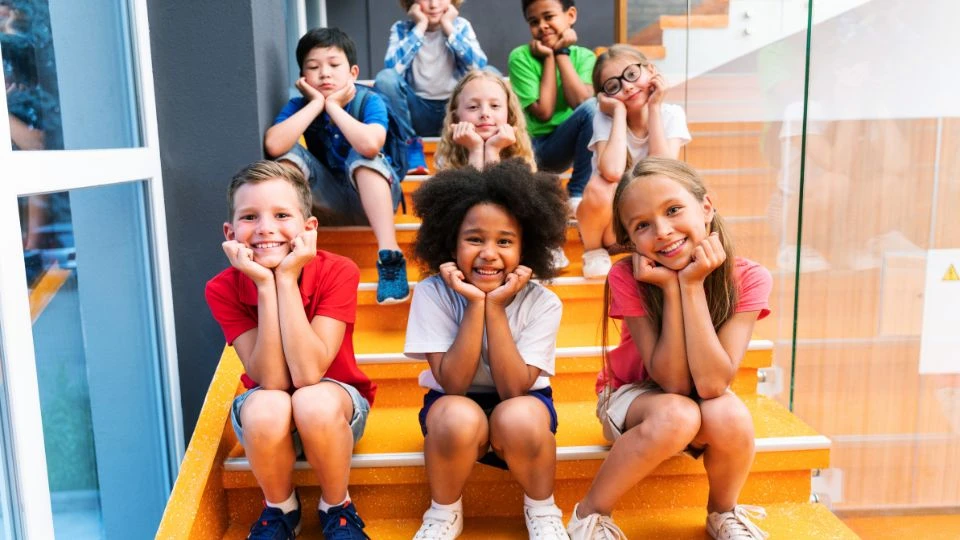

Primary school marks a pivotal moment in a child's academic journey, representing a shift from the playful ambiance of kindergarten to a more structured, knowledge-focused environment. This phase is crucial as children adapt to a disciplined routine, gain new knowledge, and develop essential skills foundational to their future success.
Understanding the critical role of primary education is vital for parents. Actively supporting your child during this key phase maximizes their learning opportunities. Such involvement not only fosters academic growth but also lays the groundwork for long-term development.
Learning in Primary School
Primary schools concentrate on building strong foundational skills in various areas:
Mathematics: Here, children encounter problem-solving, critical thinking, and understand basic concepts in arithmetic, algebra, geometry, and statistics.
Mother Tongue Languages: In non-English speaking countries, primary education often includes learning the mother tongue, enhancing children's expressive skills and writing proficiency.
English Language: Globally, English is a dominant language, and primary education typically includes reading, writing, speaking, and listening skills in English, covering grammar, vocabulary, comprehension, and creative writing.
Science: The science curriculum introduces biology, chemistry, and physics, teaching students to conduct experiments and understand scientific principles.
Social Studies: This subject encompasses history, geography, culture, and society, providing insights into a country’s heritage and global position.
Character and Citizenship Education (CCE): CCE instills values like respect and responsibility, teaching about citizenship and community contribution.
Physical Education (PE): PE classes encourage physical fitness, sportsmanship, and teamwork.
Art and Music: Fostering creativity, these lessons let students explore various art forms and musical instruments.
21st-Century Skills: The curriculum also focuses on communication, collaboration, digital literacy, and adaptability.
Each primary school offers different schedules to recognize and develop each child's talents, preparing them for higher education levels. The right school choice is crucial for optimal development.
Significance of Primary Education in Child Development
Primary education is essential for a child’s overall development:
Foundation for Learning: In the early years, when the brain absorbs information quickly, primary education provides foundational knowledge and skills for future learning.
Academic Skills: Primary school shifts the focus from play-based learning to structured academic skill development in reading, writing, and math.
Cognitive Development: Stimulating critical thinking, problem-solving, and creativity, primary education encourages children to apply knowledge to real-world scenarios.
Social and Emotional Development: School is a place for social growth. Children learn to interact, form friendships, and develop independence and responsibility.
Character Development: Primary education teaches core values like honesty, respect, empathy, and responsibility, contributing to moral and ethical growth.
Cultural Awareness: Exposing children to diverse cultures and perspectives, primary education fosters tolerance and understanding.
Preparation for the Future: By building a strong foundation, primary education equips children with critical thinking, problem-solving, and analytical skills necessary for academic and career success.
In conclusion, primary education is more than academic learning; it's a comprehensive platform for cognitive, social, emotional, and character development, preparing children for future challenges and successes. As parents, recognizing and supporting this phase is crucial for maximizing your child's developmental potential.

























Sign in to leave a comment.