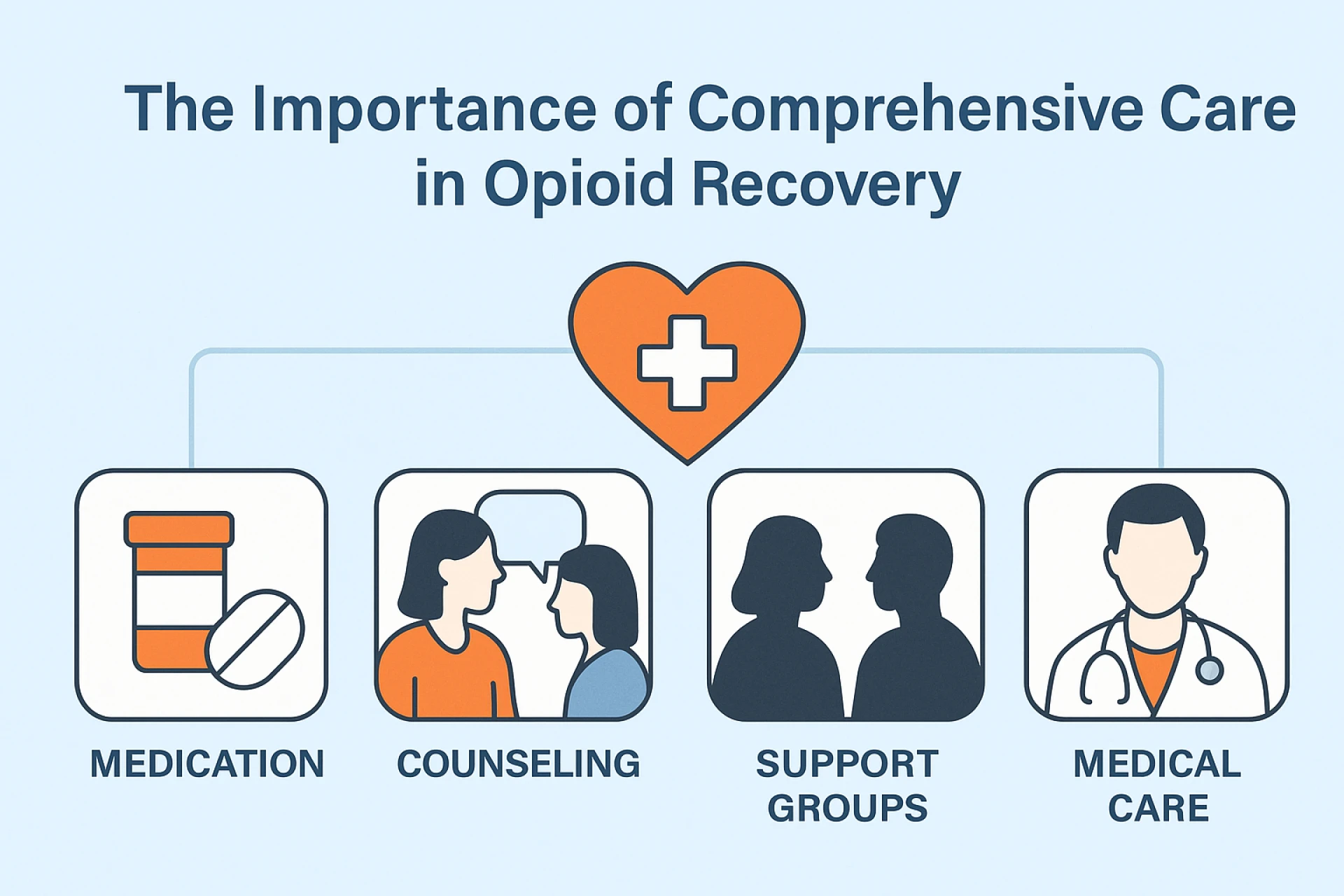

Recovery doesn’t start and end with a prescription. If you’ve ever faced the overwhelming weight of opioid addiction or watched someone you care about suffer through it you know this truth firsthand. Beating addiction isn’t just about stopping drug use. It’s about rebuilding a life from the ground up. That’s where comprehensive care steps in.
Let’s take a closer look at why treating the whole person, not just the symptoms, is crucial for lasting recovery.
What Is Comprehensive Care, Really?
You might be wondering, “Isn’t medical treatment enough?” I get it. Medications can play a huge role in recovery, and they do save lives. But they’re only one piece of the puzzle.
Comprehensive care means addressing all aspects of a person’s health and well-being not just their physical dependence. It combines medical treatment, mental health support, counseling, lifestyle coaching, and community resources to build a strong, supportive foundation.
As addiction expert Dr. George Koob puts it:
“Addiction is a disease of the brain and behavior, and comprehensive care addresses both.”
Medication: An Essential but Partial Solution
Understanding MAT (Medication-Assisted Treatment)
Medication-assisted treatment (MAT) uses FDA-approved medications like Suboxone, Zubsolv, methadone, and naltrexone to help manage withdrawal symptoms and cravings. It’s often the first big step toward stability.
But here's something important to keep in mind: not all medications work the same for everyone.
Zubsolv vs Suboxone: Which One Is Right for You?
If you’re deciding between medications, it’s smart to look into the comparison of Zubsolv vs Suboxone. Both contain buprenorphine and naloxone, yet differ in form, taste, and absorption rates. Your comfort, lifestyle, and body chemistry can influence which one supports your recovery best.
But again medication alone won’t fix everything. That’s where the "comprehensive" part becomes non-negotiable.
The Mental and Emotional Side of Recovery
Addiction doesn’t just take a toll on your body; it attacks your self-worth, relationships, and mental health. That’s why therapy, support groups, and behavioral health services are essential in any serious recovery plan.
Why Mental Health Support Matters
Depression, anxiety, PTSD, and trauma often go hand-in-hand with addiction. Without addressing these underlying issues, relapse becomes far more likely.
Cognitive Behavioral Therapy (CBT), group therapy, and even art or music therapy can help you process pain, reframe negative thinking, and develop healthier coping skills. These aren't just "add-ons" , they're core parts of healing.
Building a Recovery-Friendly Environment
Your surroundings matter more than you might think. Recovery is tough when you’re isolated or constantly exposed to triggers.
The Role of Community Support
Strong support systems, whether they’re family, friends, sober peers, or recovery coaches can keep you grounded. Community-based programs and 12-step groups also provide connection, accountability, and encouragement during setbacks.
In fact, according to SAMHSA, community involvement is one of the top predictors of long-term recovery success. A recovery-friendly environment isn’t just helpful; it's critical.
Lifestyle, Habits, and Whole-Person Health
Rebuilding Life Skills and Purpose
Many people in recovery have to relearn how to live: how to manage stress, hold a job, sleep well, eat better, and find purpose again. This isn’t a failure; it's part of the healing process.
Programs that include life skills coaching, fitness, nutrition, and vocational training help individuals build back the structure and confidence they need to thrive beyond addiction.
Why “One-Size-Fits-All” Doesn’t Work
Every person’s addiction story is different, and so is every recovery path. That’s why personalized, comprehensive care is so effective. It's about meeting you where you are, adjusting to your needs, and staying with you for the long haul.
If you’re still figuring out what your treatment plan should look like, it helps to explore your options, including which medication might suit you best. The conversation around Zubsolv vs Suboxone is a great place to start because the right fit can make a world of difference.
Final Thoughts: It’s About More Than Just Quitting
Quitting opioids is an incredible achievement, but it’s not the end goal. Living a full, meaningful life is. That’s why comprehensive care, not quick fixes, offers the best chance at long-term freedom.
























Sign in to leave a comment.