
Introduction
In the evolving world of food packaging, paper plates have shifted from being a mere convenience to a key component of food safety, environmental sustainability, and consumer experience. For buyers, restaurant chains, and environmentally conscious brands, the right paper plate size, performance under heat, and chemical safety are essential factors that impact both operational efficiency and brand trust.
This comprehensive blog answers every critical question your procurement or sustainability team should ask:
- What are the standard paper plate sizes?
- Can paper plates go in the microwave or the oven?
- What’s the risk of BPA vs PFAS in food packaging?
- How long does paper take to decompose, and is it compostable?

1. Paper Plate Sizes: The Industry Breakdown
Whether you’re catering for an event or developing a retail product line, knowing the right paper plate size improves both functionality and customer experience. Let's clarify the difference between sizes of paper plates, disposable plates sizes, and what is commonly called the standard paper plate size.
Common Sizes & Their Uses
Diameter Common Usage
6" Appetizers, desserts, cake slices
7" Light meals, children’s portions
8" Sandwiches, salads
9" Main courses — the standard size paper plate
10"–12" Large meals, buffets, combo trays
Choosing by Application
- Catering services often prefer 10–12" plates for versatility
- Quick-service restaurants rely heavily on 9" plates for entrée items
- Event venues may mix multiple disposable plates sizes to match serving needs
Labeling and categorizing by plate sizes and names streamlines inventory and helps avoid costly mix-ups during fulfillment.
2. Microwave Safety: Can You Microwave Paper Plates?
Microwave safety is one of the most frequently searched questions, with variations like:
- Can you microwave a paper plate?
- Can you put paper plates in the microwave?
- Paper plate in microwave
The Short Answer: Yes—If They’re Made for It
Most uncoated paper plates or plates labeled “microwave safe” are safe for short reheating. But not all paper plates are created equal.
Guidelines for Safe Microwave Use:
✅ Use:
- Plain, unprinted paper plates
- Microwave-rated plates with grease-resistant but compostable lining
- Short bursts (under 2 minutes)
🚫 Avoid:
- Plates with plastic or wax coatings
- Metallic prints or foil rims
- Reheating oily food for long durations
Microwave safe paper plates should be tested under ISO standards and labeled clearly. For foodservice businesses, confirm this with the supplier before bulk purchasing.
3. Oven Use: Are Paper Plates Oven Safe?
Another critical topic:
Can I put a paper plate in the oven?
Also searched as:
- Can a paper plate go in the oven?
- Paper plate in oven
- Paper plates oven safe
The Short Answer: No
Even the thickest paper plate isn’t made for the high, dry heat of an oven. The risks are real and serious:
- Combustion at ~451°F
- Chemical emissions from linings or inks
- Structural collapse under heat stress
Use These Instead:
- Oven-safe bagasse trays
- Aluminum foil pans with lids
- Heat-resistant compostable containers (rated to 220°C)
If your brand prioritizes food safety, never use paper plates in ovens, even for preheating.
4. Chemical Safety: BPA vs PFAS vs PFOA
Consumers are asking tough questions about toxic chemicals in packaging. And rightfully so.
Top Queries:
- BPA vs PFAS
- Is BPA a PFAS?
- PFOA-free vs PFAS-free
- PFAS vs BPA
Definitions That Matter
- BPA (Bisphenol A): Used in plastic and epoxy linings, linked to endocrine disruption.
- PFAS (Per- and polyfluoroalkyl substances): Includes PFOA, used to repel oil/water; persistent and toxic.
- PFOA: One of the most regulated PFAS variants.
No, BPA is not a PFAS—but both are of concern. They serve different chemical functions but carry similar health risks.
How to Source Safer Plates
- Look for BPA-free and PFAS-free certification (ideally with test reports)
- Avoid greenwashing—“compostable” doesn’t mean “toxin-free”
- Choose plates with plant-based, PFAS-free coatings
Today’s top food brands avoid all fluorinated chemicals and lead with third-party certified claims (e.g., BPI, TÜV, FSC).
5. Plates for Hot Food: Strength Matters
Heat resistance isn’t just about microwave use. Serving hot meals demands structural strength and thermal durability.
Businesses often ask:
- What are strong disposable plates for hot food?
- How to ensure disposable plates for hot food don’t collapse under greasy or heavy meals?
Key Features of Strong Plates
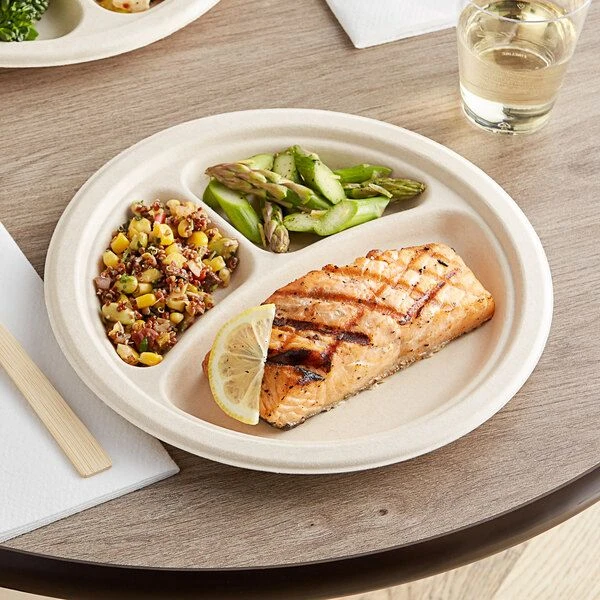
- Molded fiber or bagasse construction
- Rated for 180–200°F food contact
- Reinforced rim and center strength
- Grease-resistant lining without PFAS
These plates are ideal for:
- Curry dishes
- Pasta and stir-fries
- Fried foods
- Events with multiple courses
When buying in bulk, conduct in-house load and temperature testing for quality assurance.
6. Decomposition: How Long Do Paper Plates Take to Break Down?
For eco-conscious businesses and ESG reporting, disposal matters. Top questions include:
- Does paper decompose in soil?
- How long does paper take to decompose?
- Paper decomposition time
- How long does cardboard take to decompose?
Real-World Composting Timeline
Material Type Time to Decompose (Compost)
Uncoated paper plate6–8 weeks
Wax-coated plate8–12 weeks
PFAS-lined paper plate3–6 months or more
Cardboard~2–3 months
Certifications to Look For:
- BPI Certified Compostable (U.S.)
- EN 13432 Certified (EU)
- ASTM D6400 standards for compostability
Make sure your marketing claims reflect scientific timelines. And always specify whether items are backyard or industrial compostable.
7. Final Business Recommendations
Choosing the right paper plate is a strategic decision. For buyers and sustainability managers, here's your checklist:
✅ Standardize sizes to reduce inventory errors
✅ Request test reports for microwave and hot food safety
✅ Ban PFAS and BPA from your product lines
✅ Offer sustainable disposal guidance on packaging
✅ Educate your customers to build brand trust
✅ Use compostability certifications for transparency
✅ Audit your suppliers regularly for compliance
The next generation of food packaging is not only functional—it’s responsible.
Conclusion
The paper plate is no longer just a tool—it’s a symbol. It represents your brand’s values in food safety, sustainability, and consumer trust. By understanding the nuances of paper plate sizes, confirming microwave and oven safety, eliminating BPA and PFAS, and optimizing for paper decomposition time, your business can lead the market—not follow it.
Whether you’re ordering a million units or designing your first eco-friendly product line, make your paper plate choices smarter.



























Sign in to leave a comment.