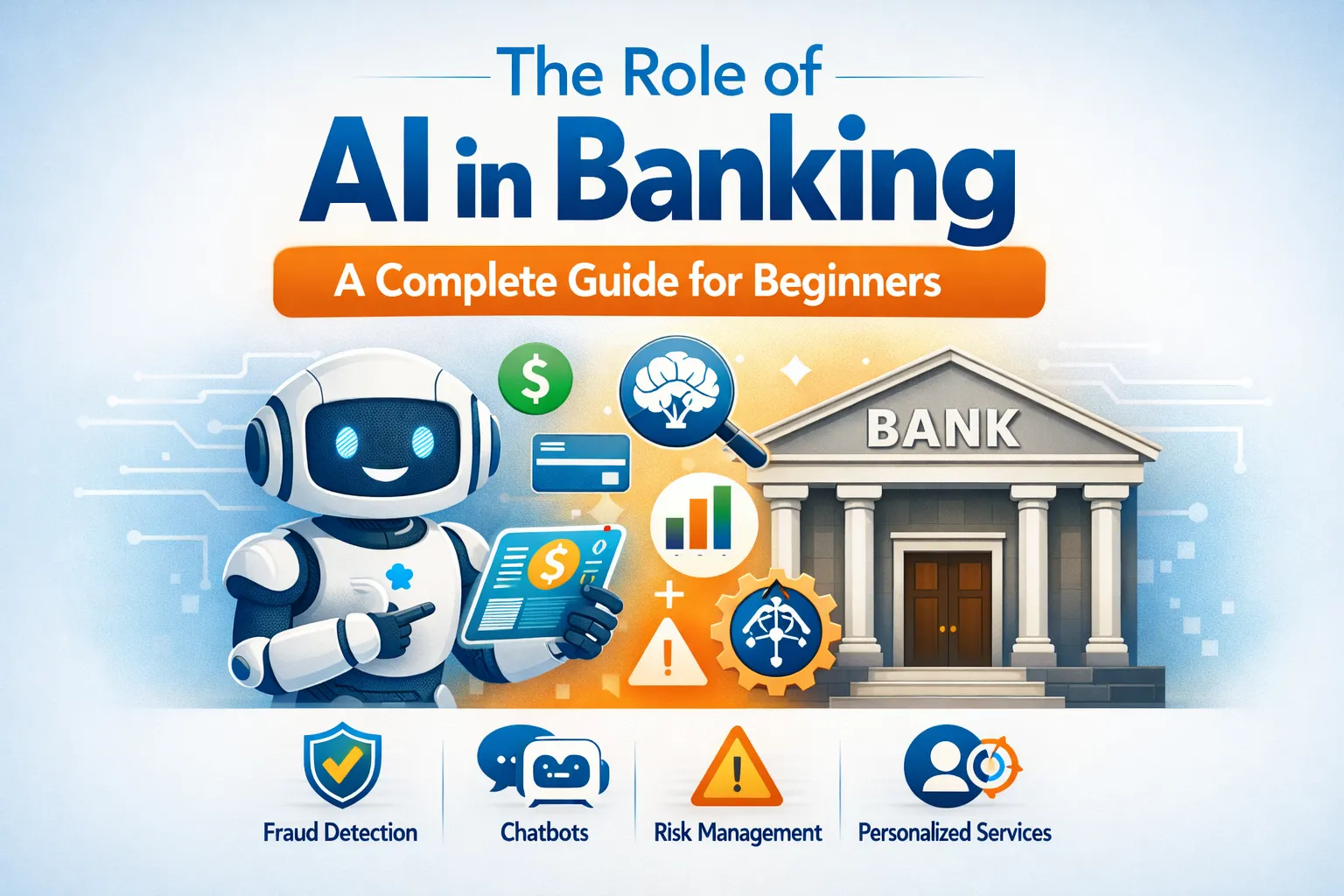

Artificial Intelligence (AI) is no longer a futuristic concept; it is actively reshaping industries across the globe. One sector experiencing a profound transformation is banking. From fraud detection to personalised customer experiences, AI is redefining how financial institutions operate and serve their customers.
For beginners trying to understand this evolution, the role of AI in banking may seem complex. However, with the right perspective, it becomes clear that AI is not just about automation; it’s about smarter, faster, and more secure financial services. This guide explores how AI works in banking, its benefits, use cases, and why partnering with an experienced AI App Development Company is crucial for successful implementation.
What is AI in Banking?
AI in banking refers to the use of machine learning, natural language processing, and data analytics to enhance financial services. These technologies enable banks to analyse vast amounts of data, identify patterns, and make intelligent decisions in real time.
Unlike traditional systems, AI-driven solutions can learn and improve over time, making them highly efficient and adaptable. Today, AI solutions in the banking sector are used to automate tasks, improve security, and deliver personalised customer experiences.
Why AI is Important in Banking
The banking industry deals with massive volumes of data and transactions daily. Managing this complexity manually is both inefficient and prone to errors. AI addresses these challenges by:
- Automating repetitive processes
- Enhancing decision-making accuracy
- Reducing operational costs
- Improving customer satisfaction
As competition grows, banks are increasingly turning to an AI App Development Company to stay ahead in the digital race.
Key Applications of AI in Banking
1. Fraud Detection and Prevention
One of the most critical applications of AI in banking is fraud detection. AI systems can analyse transaction patterns and detect unusual behaviour in real time.
For example:
- Identifying suspicious transactions
- Flagging unauthorised access
- Preventing identity theft
Machine learning models continuously evolve, making them more effective at identifying new fraud patterns.
2. Chatbots and Virtual Assistants
AI-powered chatbots are transforming customer service in banking. These virtual assistants can handle a wide range of tasks, such as:
- Answering customer queries
- Checking account balances
- Assisting with transactions
They provide 24/7 support, reducing the need for human intervention while improving response times.
3. Personalised Banking Experience
AI enables banks to deliver highly personalised services by analysing customer behaviour and preferences.
Examples include:
- Tailored financial advice
- Customised product recommendations
- Spending insights and budgeting tips
This level of personalisation enhances customer engagement and loyalty.
4. Credit Scoring and Loan Processing
Traditional credit scoring methods can be slow and limited. AI improves this process by analysing a broader range of data points, including:
- Transaction history
- Spending patterns
- Behavioural data
This results in faster and more accurate loan approvals, benefiting both banks and customers.
5. Risk Management
AI helps banks assess and manage risks more effectively by analysing historical data and predicting future trends.
Key benefits include:
- Early detection of potential risks
- Improved compliance with regulations
- Better investment decisions
6. Process Automation
Robotic Process Automation (RPA) powered by AI is streamlining back-office operations in banking.
Tasks such as:
- Data entry
- Document verification
- Report generation
can be automated, saving time and reducing human error.
Benefits of AI in Banking
Improved Efficiency
AI automates routine tasks, allowing employees to focus on more strategic activities.
Enhanced Security
Advanced algorithms help detect and prevent fraud more effectively.
Better Customer Experience
Personalised services and instant support improve customer satisfaction.
Cost Reduction
Automation reduces operational expenses significantly.
Data-Driven Insights
AI provides valuable insights that help banks make informed decisions.
Challenges of Implementing AI in Banking
While AI offers numerous benefits, its implementation comes with challenges:
Data Privacy and Security
Handling sensitive financial data requires robust security measures.
High Initial Investment
Developing and deploying AI systems can be costly.
Integration with Legacy Systems
Many banks still rely on outdated systems that are difficult to integrate with AI technologies.
Skill Gap
There is a growing need for skilled professionals who can develop and manage AI solutions.
This is where partnering with an experienced AI App Development Company becomes essential to overcome these challenges effectively.
How AI is Transforming the Future of Banking
The future of banking is deeply intertwined with AI. Emerging trends include:
Predictive Analytics
Banks will use AI to predict customer needs and market trends more accurately.
Voice Banking
Voice-enabled assistants will allow customers to perform transactions using voice commands.
Hyper-Personalisation
AI will deliver even more customised experiences based on real-time data.
Blockchain and AI Integration
Combining AI with blockchain technology will enhance security and transparency.
Interestingly, innovations in AI in e-commerce services are also influencing banking. For example, recommendation engines and customer behaviour analysis used in e-commerce are being adapted to improve financial services.
Choosing the Right AI Partner
Implementing AI successfully requires expertise, strategy, and the right technology stack. Choosing the right partner can make a significant difference.
When selecting an AI App Development Company, consider:
- Experience in the banking sector
- Proven track record of successful projects
- Strong technical expertise
- Ability to provide scalable solutions
A reliable partner will not only develop AI solutions but also provide ongoing support and optimisation.
Best Practices for Adopting AI in Banking
To maximise the benefits of AI, banks should follow these best practices:
Start Small
Begin with pilot projects and scale gradually.
Focus on Data Quality
Ensure data is accurate, clean, and well-structured.
Prioritise Security
Implement strong security measures to protect sensitive data.
Invest in Training
Equip employees with the skills needed to work with AI technologies.
Monitor and Improve
Continuously evaluate AI performance and make necessary improvements.
Conclusion
AI is revolutionising the banking industry by making financial services smarter, faster, and more secure. From fraud detection to personalised customer experiences, its impact is both wide-ranging and transformative.
For beginners, understanding the role of AI in banking is the first step toward embracing this technological shift. By leveraging AI solutions in the banking sector and learning from advancements in AI in eCommerce Services, financial institutions can unlock new opportunities for growth and innovation.
However, successful implementation requires the right expertise. Partnering with a trusted AI App Development Company ensures that banks can navigate challenges, adopt best practices, and build scalable AI-driven solutions.
As AI continues to evolve, its role in banking will only grow stronger, shaping the future of finance in ways we are just beginning to imagine.


























Sign in to leave a comment.