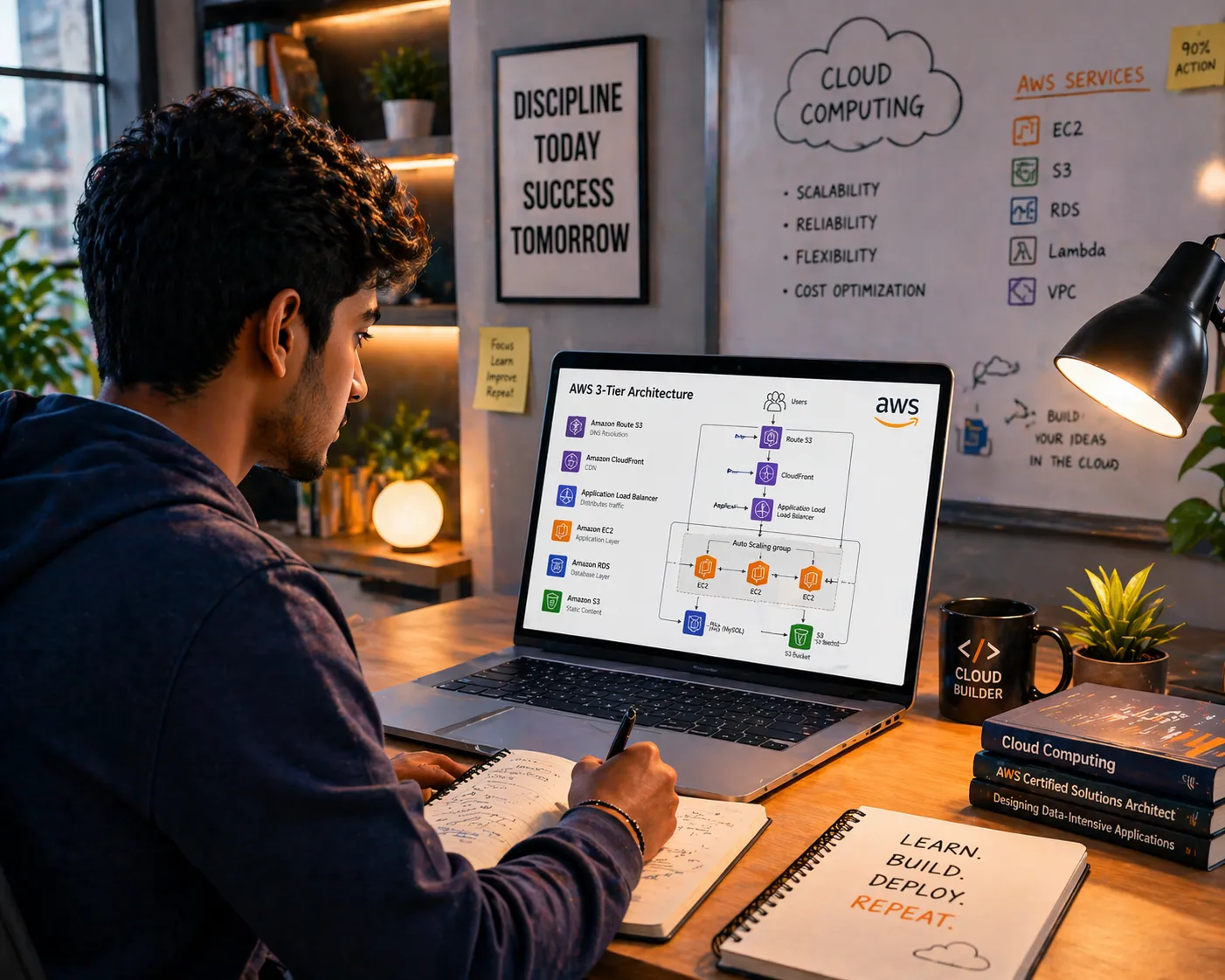

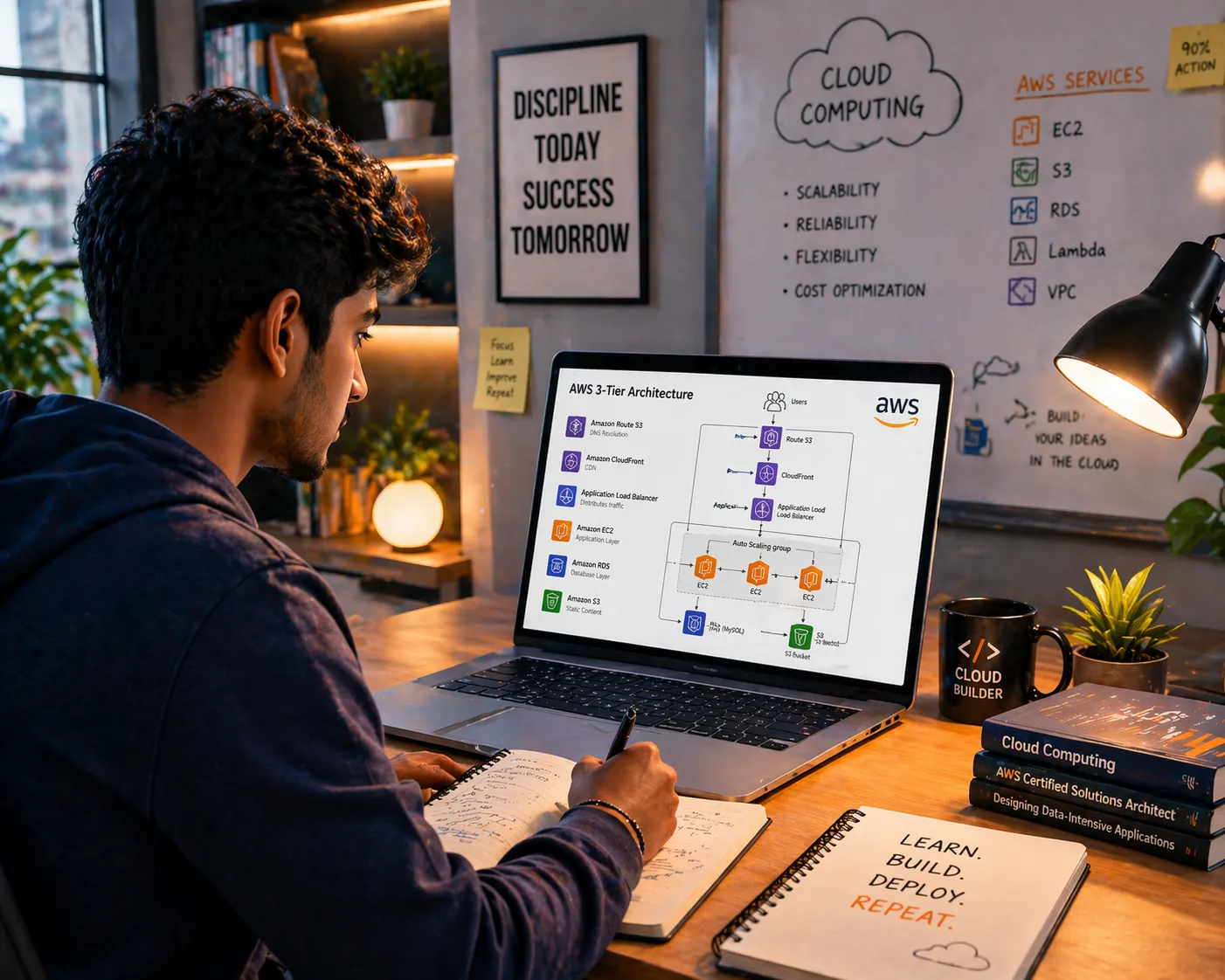
The Cloud of 2026 Is Not the Cloud of Three Years Ago
If you picked up a cloud computing book from 2022 and started studying it today, you would be learning a version of the cloud that no longer fully reflects what employers expect or what production environments actually look like. That is not an exaggeration it is how fast this field moves.
The global cloud market continues double digit growth in 2026, driven by AI workload adoption organizations have moved from AI experimentation to production deployment and hybrid work continuation that requires cloud-based infrastructure at every layer. The skills that matter right now are not just about spinning up servers. They are about understanding a cloud ecosystem that has converged with artificial intelligence, automation, and distributed computing in ways that were still emerging just two years ago.
For Telugu-speaking learners starting or accelerating their cloud journey in 2026, this context matters. The smartest way to learn is not just to study harder it is to study the right things, in the right sequence, with the right kind of understanding.
Smart Learning Principle 1: Know What 2026 Employers Actually Want
The biggest mistake learners make is optimizing for yesterday's job description. The cloud roles being hired for in 2026 look different from even two years ago. In 2026, multi-cloud and hybrid cloud strategies are essentially the default for large enterprises, with the vast majority of organizations using multiple cloud providers meaning cloud engineers now need proficiency across AWS, Microsoft Azure, and GCP, knowing the strengths of each.
This does not mean you need to master three platforms simultaneously from day one. It means start with AWS which remains the market leader and build deeply. Then understand enough of the broader cloud landscape to speak intelligently about how AWS fits alongside other platforms. An AWS course in Telugu that takes this perspective is worth ten times more than one that treats AWS as an island.
Perhaps the most significant trend of 2026 is the convergence of cloud computing and artificial intelligence modern cloud platforms increasingly offer AI-as-a-service, and providers now embed AI into the cloud itself through AIOps systems that handle predictive scaling and automated security. Understanding where your AWS skills connect to this AI layer is what separates a competitive candidate from an average one.
Smart Learning Principle 2: Hands-On First, Theory Second
This goes against how most students were trained in school. Exams rewarded those who memorized definitions. Cloud careers reward those who can deploy, debug, and optimize real infrastructure.
The smartest learners in 2026 open the AWS console on day one. They create a free-tier account and start exploring before they feel ready. They break things misconfigure a security group, accidentally make an S3 bucket public, watch an EC2 instance fail to launch and they learn more from fixing those mistakes than from any lecture slide.
By 2026, the shift toward cloud-native development is essentially complete applications are built using microservices, containers, and serverless frameworks from the start, with tools like Kubernetes, Docker, and AWS Lambda forming the standard toolkit. These are not concepts you can fully grasp by reading about them. You grasp them by building something with them, watching it fail, and understanding why.
A Telugu-medium course that prioritizes live lab sessions over video-heavy theory is not just a preference it is the architecturally correct way to learn cloud in 2026. The language advantage means you are asking questions and processing feedback in real time, not pausing to translate while the instructor moves on.
Smart Learning Principle 3: Layer Your Skills Intentionally
Random skill accumulation does not build a career. Intentional layering does. Here is what that looks like in practice for a Telugu learner in 2026.
Layer one is AWS core services EC2, S3, RDS, Lambda, VPC, IAM. This is the foundation. Everything else sits on top of it. Get certified at the Cloud Practitioner level to validate this layer.
Layer two is architecture thinking the Solutions Architect Associate certification. This is where you stop thinking about individual services and start thinking about how they work together to solve real business problems. Cost, reliability, security, and scale become design decisions, not afterthoughts.
Layer three is automation Infrastructure as Code through CloudFormation or Terraform, CI/CD pipelines, containerization with Docker. Organizations invested in structured training programs, certification pathways, and automation and standardization through infrastructure-as-code to develop cloud capabilities and reduce long-term dependency on external hiring. Professionals who automate well are the ones companies want to keep.
Layer four for those playing a longer game is the intersection of cloud and AI. AWS services like SageMaker, Bedrock, and Rekognition are already in production use at enterprises. Understanding how to deploy and manage AI workloads on cloud infrastructure is becoming a premium skill that commands premium pay.
Smart Learning Principle 4: Consistency Over Intensity
Cloud technology is vast. The AWS service catalog alone runs into hundreds of offerings. Trying to learn everything at once common among motivated beginners leads to burnout and shallow understanding across too many topics.
The smartest learners study in focused, consistent sessions. One hour every day builds more genuine skill than eight hours on a Saturday once a week. Concepts settle differently when there is time between sessions for the brain to consolidate what it absorbed.
An AWS course in Telugu fits naturally into this rhythm because the comprehension barrier is removed. You do not need twice the time to extract the same understanding. One focused session in Telugu delivers more than the same session fighting through English technical language.
2026 Is Early Enough But Not Forever
Cloud computing offers a rare combination of high demand, excellent compensation, intellectual challenge, and long-term career sustainability the barriers to entry are manageable, the learning curve is navigable, and the ROI on certification investment is exceptional.
The window that exists right now where India's cloud talent demand is outpacing supply, where Telugu-medium instruction has become genuinely available, and where AWS skills translate directly into high-paying roles across Hyderabad, Bengaluru, and beyond will not stay this wide forever.
The smartest move in 2026 is not waiting for a perfect moment. It is learning the right things, in the right order, in the language you understand best.

























Sign in to leave a comment.