
In modern industrial settings, pipelines, storage tanks, and structural plumbing networks must withstand sustained high pressure during daily operations. If a pipe has even a tiny crack or a weak joint, it can cause dangerous leaks and expensive damage. Because of this, checking the strength of these pipes before using them is a very important step in any building project.
This safety check requires a special tool called a hydrostatic test pump. Using a hydro pressure test pump allows workers to test lines safely with water instead of using dangerous compressed air. However, before sourcing them from a reliable supplier, it is important to understand the process to ensure the work site remains safe and to obtain accurate test results.
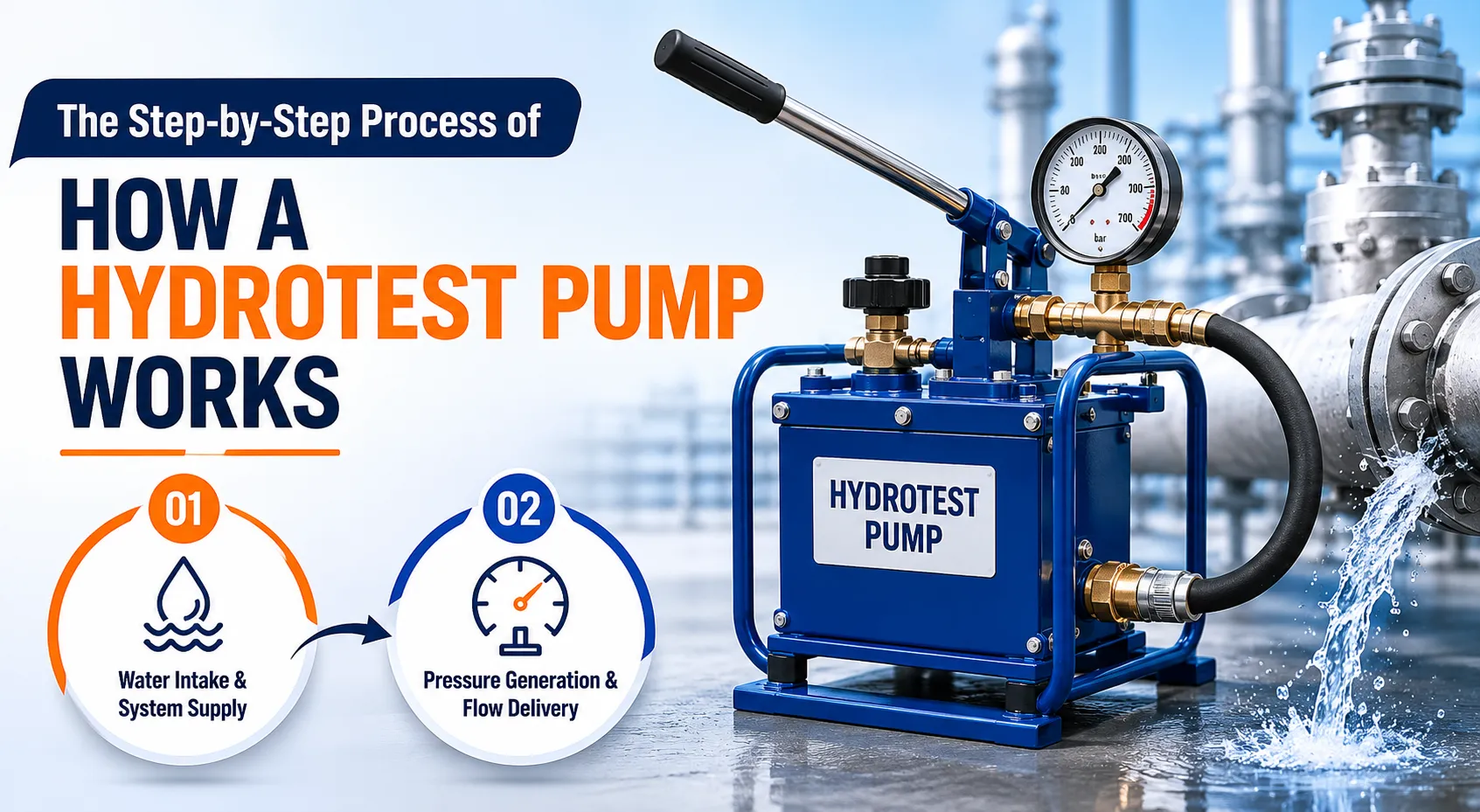
Therefore, this blog will explain the step-by-step process of how a hydrotest pump works.
Step 1: Water Intake and System Supply
Firstly, the water is filled in the suction tank before starting the test to provide a steady supply. The intake hose pulls directly from this water source, making sure the manual hydro test pump always has enough fluid to run smoothly without running dry.
Step 2: Pressure Generation and Flow Delivery
Next, the pump creates pressure using an internal plunger and gearbox system. The pump then pushes this highly pressurised water through a tough discharge hose directly into the sealed object, so you can check how much stress it can withstand.
This process requires highly durable and high-pressure equipment to handle the stress safely. This is why you should always source from trusted suppliers like Ambica Machine Tools, as they manufacture reliable pumps and valves for high-pressure applications.
Step 3: Monitoring System Metrics
Moving forward, the gauge displays the real-time pressure level as fluid enters the system. It is very important to check this visual readout carefully to ensure the operator can monitor performance metrics accurately and hit the target test limit without over-pressurising the setup.
Step 4: Safety Control and Regulation
When the system is under load, PRV valves and pressure relief keep it operating safely. In order to prevent unintentional equipment damage or pipeline ruptures, these very important safety measures automatically exhaust excess fluid if internal stress rises too high.
Step 5: Final Integrity Evaluation
Finally, the system is observed for leakage or pressure drops once the target is reached. Monitoring it closely over a set period confirms that the entire piping structure is tightly sealed and completely leak-free.
Conclusion
Understanding the entire process clearly can help ensure successful pipeline containment checks. And for those seeking reliable pumps in order to execute these tests successfully, Ambica Machine Tools provides high-performance hydrostatic test pumps.











![The Benefits of Using a CNC Touch Probe [Infographic]](https://writeupcafe.com/data/post/1677697/bfdf3e040e67936848aa232d2dfe3d03.jpg.webp)








Sign in to leave a comment.