

The Cisco Certified Support Technician (CCST) Networking certification, identifiable by exam code 100-150, stands as a fundamental credential for individuals aiming to validate their foundational knowledge in networking concepts and support. This certification is specifically designed for aspiring network technicians, help desk professionals, and IT support specialists who need to demonstrate core understanding of network infrastructure, troubleshooting, and security principles. It serves as a crucial first step for anyone looking to build a career in network support and gain recognition from a leading technology vendor. This comprehensive guide will illuminate the exam's structure, delve into its key topics, outline effective preparation strategies, and explore the significant career advantages this certification offers, providing a clear pathway to achieving your CCST Networking credential.
Evaluating the Cisco 100-150 Certification Exam Details
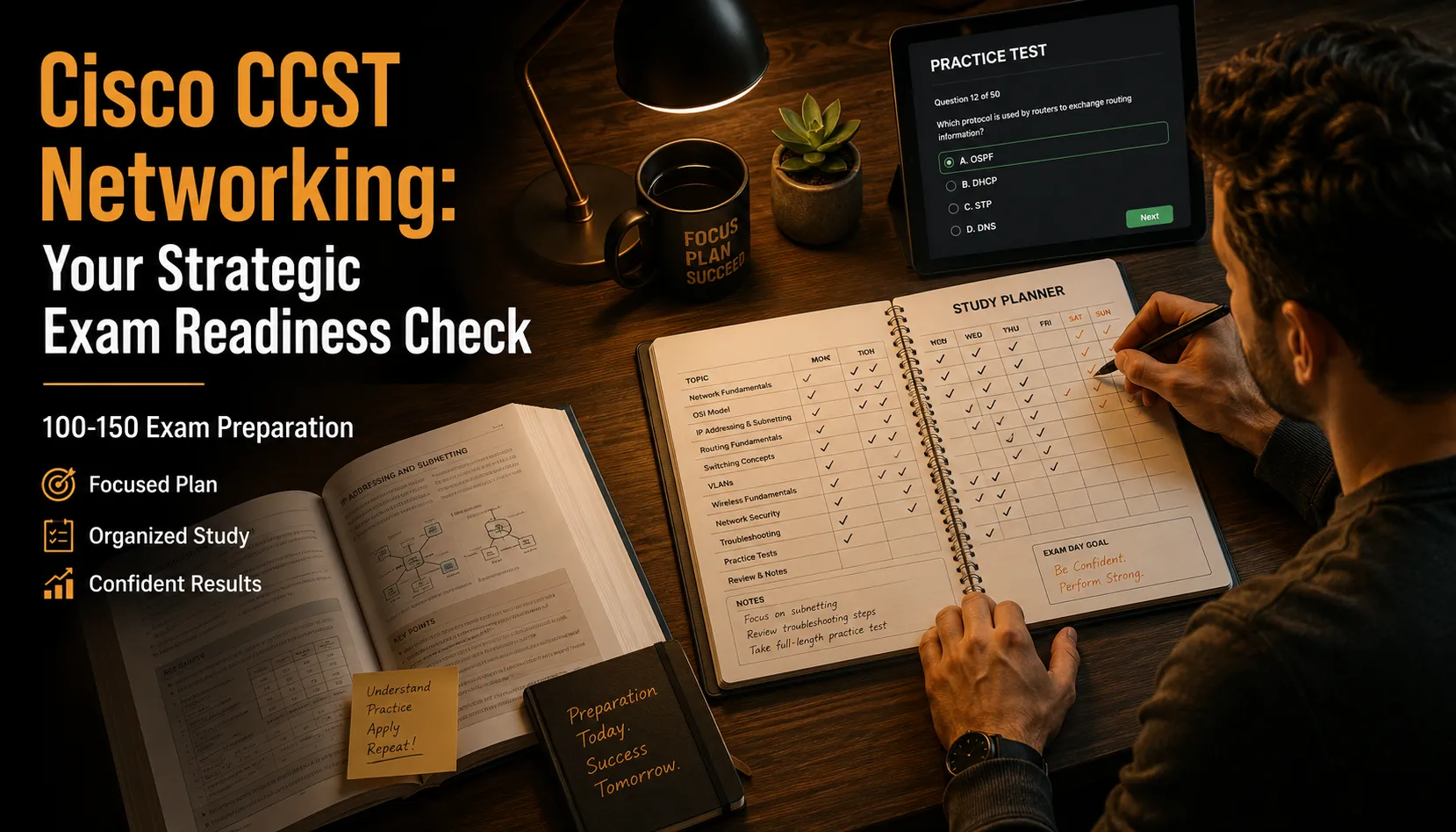
Understanding the specific parameters of any certification exam is paramount for effective preparation, and the Cisco 100-150 CCST Networking exam is no exception. This foundational assessment provides a clear benchmark for essential networking skills. Candidates should familiarize themselves with the exam's format, duration, and scoring mechanisms to manage their time and expectations strategically. Knowing these details upfront allows for a more focused study plan and reduces test-day anxiety.
Here’s a breakdown of the key specifications for the Cisco 100-150 CCST Networking exam:
- Exam Name: Cisco Certified Support Technician (CCST) Networking
- Exam Code: 100-150 CCST Networking
- Exam Price: The cost is typically $125 USD, though pricing may vary slightly by region due to local taxes or currency conversions. Candidates should always verify the latest fee on the official Cisco certification page before registration.
- Duration: Candidates are allocated 50 minutes to complete the exam. This time limit necessitates efficient test-taking strategies and a solid grasp of the material to avoid rushing.
- Number of Questions: The exam comprises between 40-50 questions. These questions can range from multiple-choice to drag-and-drop, assessing a wide array of networking concepts.
- Passing Score: While an exact fixed passing score is not publicly disclosed, it is generally considered to be variable, approximating 750-850 out of a possible 1000 points. This adaptive scoring model means the difficulty of questions can influence the final score, emphasizing comprehensive understanding over rote memorization.
Familiarizing yourself with these operational details of the Cisco 100-150 exam ensures you approach your preparation with realistic expectations and an informed strategy.
Demystifying the Cisco 100-150 Exam Topics
A thorough understanding of the Cisco 100-150 exam topics and objectives forms the bedrock of a successful study plan. The syllabus for the CCST Networking certification is meticulously designed to cover fundamental concepts essential for an entry-level networking support role. Each topic builds upon the last, culminating in a holistic view of network operations, diagnostics, and security. Candidates should review these areas carefully to identify strengths and weaknesses, directing their study efforts to where they are most needed. You can find more comprehensive details on the detailed exam topics directly from Cisco.
The Cisco CCST Networking exam evaluates knowledge across several critical domains:
Core Network Standards and Concepts
This section explores the fundamental building blocks of networking, including the purpose and function of different network devices such as switches, routers, and access points. It delves into the Open Systems Interconnection (OSI) and TCP/IP models, explaining how data travels across networks in layers. Candidates must understand network topologies (e.g., star, bus, mesh) and their practical implications, as well as common network services like DNS, DHCP, and HTTP, which are crucial for everyday network operations. Grasping these foundational elements is essential for diagnosing even the most basic network issues and building a solid understanding of how networks communicate.
Understanding Addressing and Media Types
A significant portion of networking relies on proper addressing. This topic covers the intricacies of IP addressing, differentiating between IPv4 and IPv6, and the critical skill of subnetting. Candidates must be able to calculate subnets, identify valid host ranges, and understand CIDR notation. Beyond logical addressing, the section also explores physical addressing through MAC addresses and their role in local network communication. Furthermore, it covers various physical media types—such as twisted pair, fiber optic, and wireless—including their characteristics, applications, and limitations. This knowledge is vital for selecting appropriate cabling and understanding connectivity issues.
Network Infrastructure and Diagnostics
This domain focuses on the practical aspects of network devices and their basic configurations. It covers common interfaces and cables used to connect network components and how to verify their physical connectivity. Candidates are expected to understand the roles of different infrastructure devices, such as Layer 2 switches for local area networks (LANs) and routers for wide area networks (WANs). The section also introduces basic diagnostic commands like ping, tracert/traceroute, and ipconfig/ifconfig, which are indispensable tools for identifying and isolating network problems. Proficiency here equips a support technician to quickly assess network health and pinpoint the source of disruptions.
Implementing Basic Security Measures
Even at an entry level, understanding network security fundamentals is crucial. This topic introduces common security concepts like authentication, authorization, and accounting (AAA). It covers different types of security threats, such as malware, phishing, and denial-of-service (DoS) attacks, and basic mitigation techniques. Candidates learn about the role of firewalls in protecting network perimeters and the importance of secure passwords and multifactor authentication. Understanding these concepts helps support technicians implement initial lines of defense and respond effectively to security incidents, ensuring the integrity and confidentiality of network data.
Each of these topics contributes to a comprehensive understanding of networking fundamentals, ensuring that certified individuals possess the knowledge required to support and maintain small to medium-sized networks.
Unlocking Professional Growth: Is Cisco CCST Networking Worth It?
For individuals embarking on an IT career, securing a foundational certification like the Cisco CCST Networking can significantly accelerate professional growth. The question, "is Cisco CCST Networking worth it?" often arises, and the answer, for many, is a resounding yes. This certification is more than just a piece of paper; it's a testament to your understanding of core networking concepts, making you a more attractive candidate for entry-level roles and providing a solid platform for future specialization. It directly addresses the need for skilled support technicians in an increasingly interconnected world.
Career Trajectory and Skill Validation
The Cisco Certified Support Technician Networking credential directly correlates with numerous benefits that can shape a rewarding career path. Firstly, it provides industry-recognized validation of essential networking skills. In a competitive job market, this endorsement from a global leader like Cisco helps your resume stand out to potential employers. It signals that you possess a verifiable understanding of the building blocks of network infrastructure, troubleshooting, and security, which are in constant demand across virtually every industry.
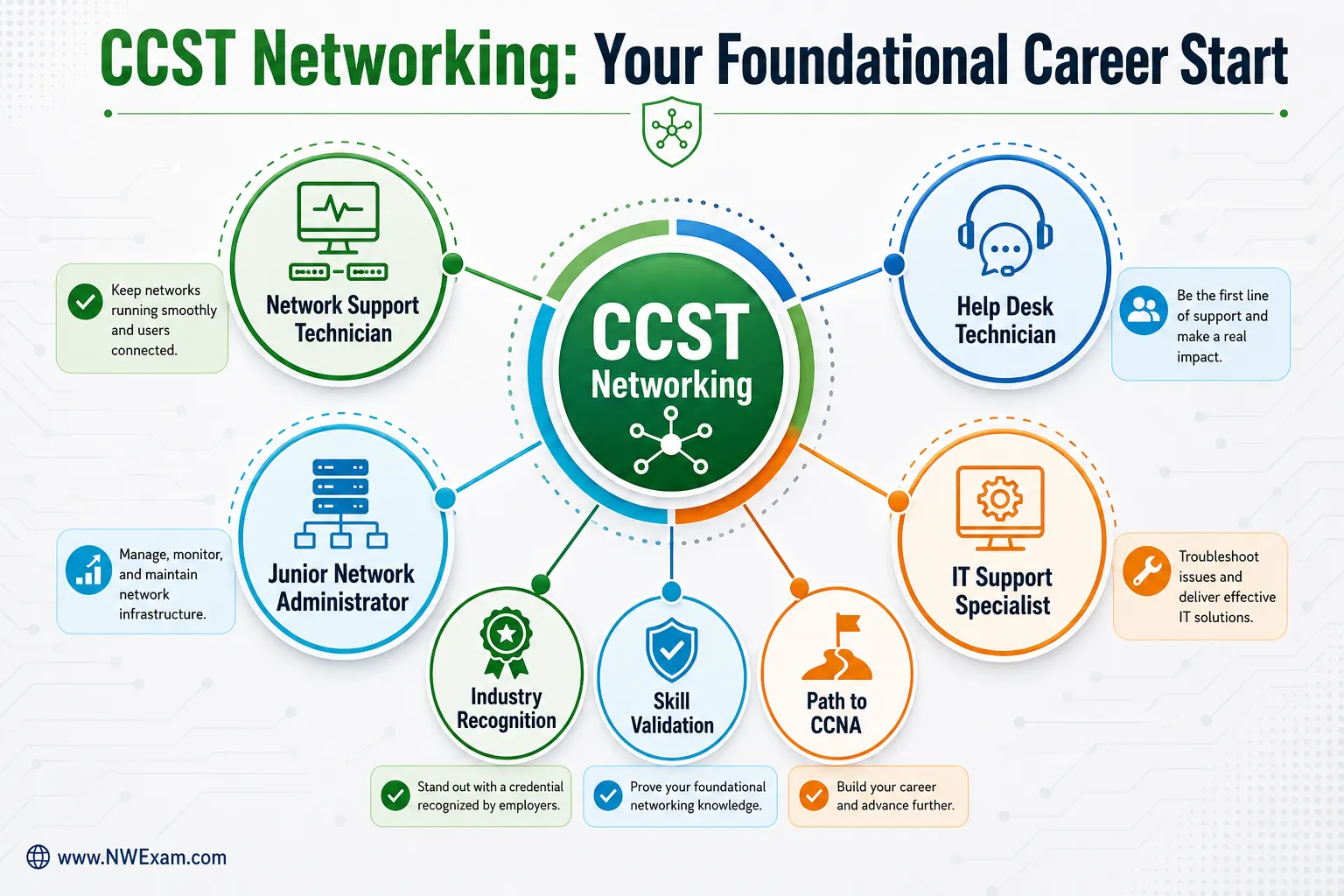
The benefits of Cisco CCST Networking certification extend beyond initial employment. It prepares you for a range of entry-level positions, including:
- Network Support Technician: Directly applying skills in maintaining network uptime and resolving connectivity issues.
- Help Desk Technician: Addressing user problems related to network access and application connectivity.
- Junior Network Administrator: Assisting in the configuration and monitoring of network devices under supervision.
- IT Support Specialist: Providing comprehensive technical assistance across various IT domains, with a strong networking foundation.
Moreover, the CCST Networking certification serves as an excellent stepping stone for further specialization. It lays the groundwork for pursuing more advanced Cisco certifications, such as the CCNA (Cisco Certified Network Associate), which delve deeper into network design, implementation, and automation. This progressive learning path allows professionals to continuously expand their expertise and take on more complex and higher-paying roles within the networking domain. If you are considering expanding your certification portfolio, you might also want to explore advanced Cisco certifications to understand their long-term value. The foundational knowledge gained from CCST Networking makes subsequent certifications more attainable and impactful.
The return on investment for the CCST Networking certification is evident in enhanced job prospects, increased earning potential, and a clear roadmap for career advancement. It equips you with practical, fundamental concepts that are immediately applicable in real-world scenarios, making you a valuable asset from day one.
Crafting Your Winning Strategy for the Cisco CCST Networking Exam
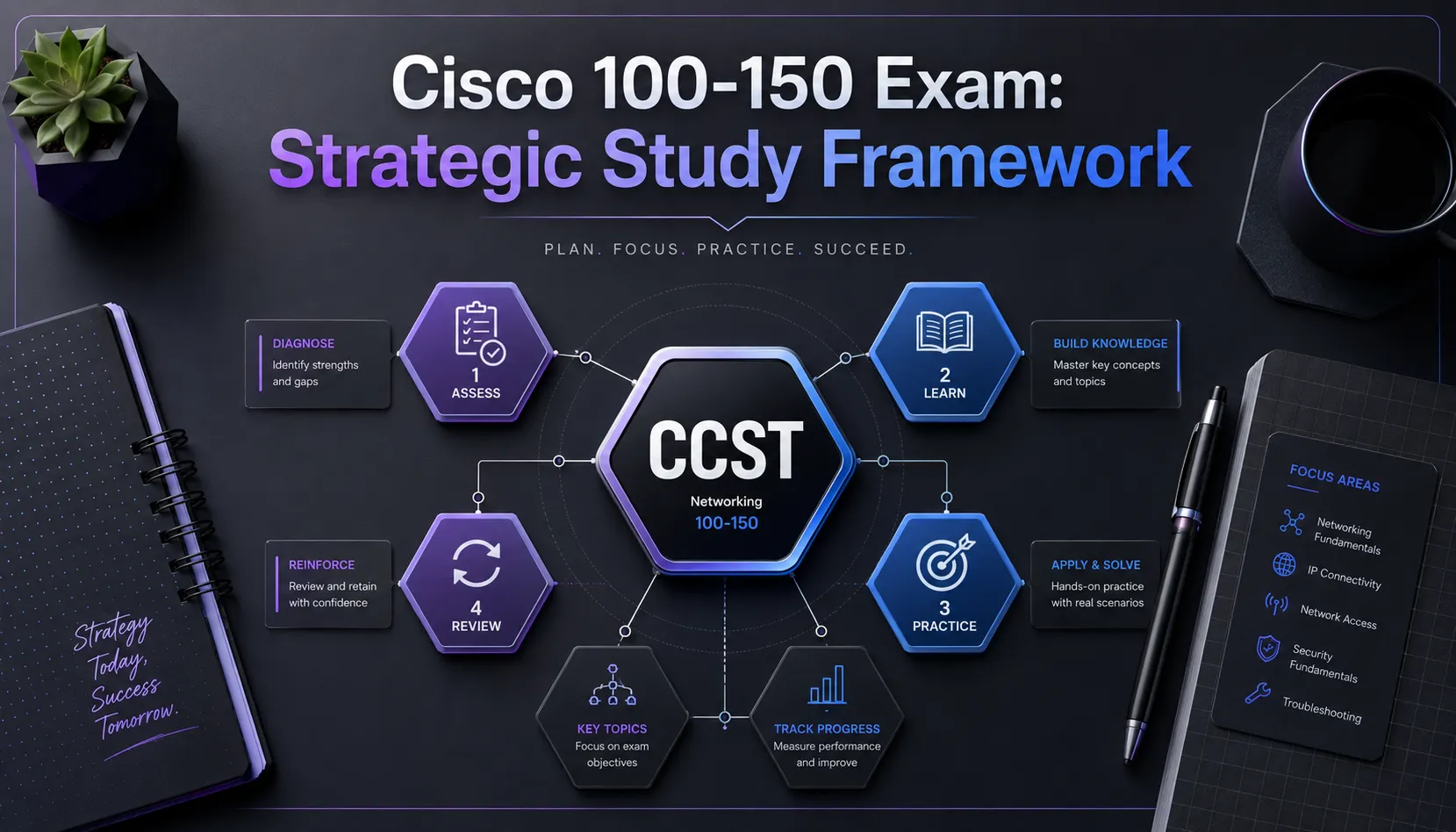
Effective preparation is the untold secret to passing the CCST Networking certification. Approaching the Cisco 100-150 exam requires more than just passive reading; it demands a structured, active, and hands-on study methodology. This section outlines how to prepare for Cisco CCST Networking exam effectively, integrating various resources and techniques to build both theoretical knowledge and practical skills. A well-thought-out plan ensures you cover all Cisco 100-150 exam topics and objectives comprehensively.
Strategic Study Resource Selection
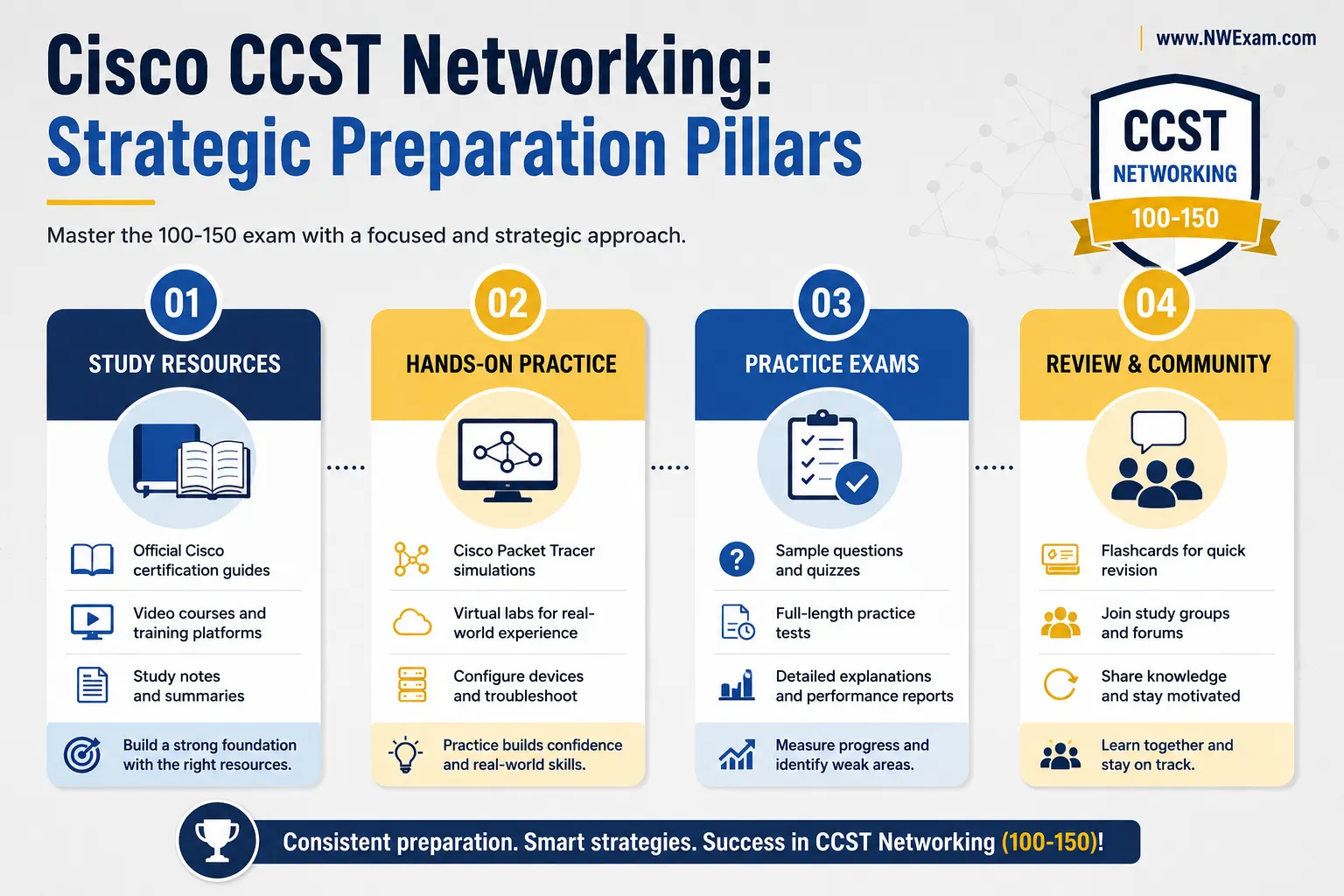
The journey to certification begins with selecting the right Cisco 100-150 exam prep materials. While numerous resources exist, focusing on official Cisco materials and highly-regarded study guides is paramount. The Cisco Certified Support Technician Networking study guide should serve as your primary companion. These often include detailed explanations, examples, and practice questions that align directly with the exam objectives.
- Official Cisco Learning Resources: Cisco offers a wealth of study materials, including online courses, documentation, and the Cisco Learning Network. These resources are directly aligned with the exam content and provide the most accurate and up-to-date information. Leverage these as your core learning path.
- High-Quality Study Guides: Supplement official resources with reputable third-party study guides. Look for books or online platforms that offer clear explanations, chapter quizzes, and summaries. Ensure they are specifically tailored for the Cisco 100-150 CCST Networking exam.
- Video Courses: For visual learners, video courses from platforms like Udemy, Coursera, or LinkedIn Learning can be invaluable. They often break down complex topics into digestible modules and demonstrate concepts visually.
- Community Forums: Engaging with fellow students and certified professionals on forums like the Cisco Learning Network can provide insights, clarify doubts, and offer alternative explanations for challenging topics.
Remember, the quality of your study materials directly impacts the efficiency and effectiveness of your preparation. Focus on depth over quantity, ensuring a thorough understanding of each topic.
Hands-On Experience: A Critical Edge
Networking is a practical field, and merely memorizing concepts will not suffice. Hands-on experience is an imperative part of your preparation, allowing you to solidify your understanding of Cisco CCST Networking fundamental concepts.
- Packet Tracer Simulations: Cisco Packet Tracer is an excellent simulation tool that allows you to build, configure, and troubleshoot virtual networks without needing physical hardware. Use it extensively to practice configuring switches, routers, and endpoints, implementing IP addressing, and verifying connectivity. This tool is instrumental for understanding how network devices interact and for experimenting with different configurations.
- Virtual Labs: If available, access to virtual labs can provide a more realistic environment, sometimes including actual operating systems and device command-line interfaces. These labs offer practical scenarios that mirror real-world networking challenges.
- Home Lab Setup: For the truly dedicated, setting up a small home lab with basic networking equipment (e.g., a couple of old routers, switches, and client machines) can offer unparalleled learning opportunities. This provides a tangible way to apply theoretical knowledge and troubleshoot real hardware issues.
The more you interact with network devices and configurations, even virtually, the more intuitive the concepts will become, preparing you for the practical questions often present in certification exams.
Effective Practice and Review
Once you have absorbed the study materials and gained some practical experience, the next crucial step is to test your knowledge rigorously. This involves utilizing Cisco 100-150 exam sample questions and answers and engaging with Cisco CCST Networking practice test online platforms.
- Practice Questions: Regularly attempting practice questions helps you identify areas where your understanding is weak and familiarizes you with the exam's question format and style. Seek out comprehensive sets of practice questions that cover all syllabus domains. For realistic practice questions and an effective preparation tool, consider exploring resources like NWExam's practice tests.
- Full-Length Practice Tests: Taking full-length Cisco CCST Networking practice tests online under timed conditions simulates the actual exam environment. This helps you manage your time effectively, build stamina, and reduce test anxiety. Analyze your results to understand not just what you got wrong, but why, then go back and review the relevant topics.
- Flashcards and Notes: Create flashcards for key terms, definitions, and command syntaxes. Regularly review your notes and summaries to reinforce learning and aid in retention.
- Study Groups: Collaborating with a study group can be highly beneficial. Discussing concepts, explaining topics to others, and working through problems together can deepen your understanding and expose you to different perspectives.
A systematic approach combining self-study, hands-on practice, and consistent review of free Cisco CCST Networking practice questions will significantly boost your confidence and readiness for the Cisco 100-150 CCST Networking certification exam.
Seamlessly Registering for the Cisco 100-150 Exam
Once your preparation is complete, navigating the Cisco 100-150 exam registration process is the next step towards earning your CCST Networking certification. This process involves understanding any prerequisites, scheduling your exam, and familiarizing yourself with the testing environment. A clear understanding of these steps helps streamline your path to certification.
Cisco CCST Networking Prerequisites
One of the appealing aspects of the Cisco CCST Networking certification is its accessibility. There are no formal Cisco CCST Networking prerequisites. This means you don't need to hold any prior certifications or possess a specific level of work experience to register for the 100-150 exam. This makes it an ideal starting point for anyone new to networking or looking for an official validation of their fundamental skills. While formal prerequisites are absent, a foundational understanding of computer basics and a keen interest in networking concepts will undoubtedly make your study journey smoother. It is recommended to have some familiarity with general computing and internet usage before diving into the networking specifics.
The Registration and Scheduling Process
The registration for the Cisco 100-150 CCST Networking exam is managed through Pearson VUE, Cisco's official testing partner. The process is straightforward and can be completed online.
Create a Pearson VUE Account: If you don't already have one, you'll need to create an account on the Pearson VUE website. Ensure all your personal information is accurate, as it will be used for your certification records.
- Locate the Exam: Search for "Cisco 100-150" or "CCST Networking" within the Pearson VUE exam catalog.
- Choose Your Testing Method: You will typically have two options:
- Onsite Proctored Exam: Take the exam at a designated Pearson VUE testing center. This option provides a quiet, controlled environment, ideal for focused test-taking.
- Online Proctored Exam: Take the exam from your home or office, supervised remotely via webcam and microphone. Ensure your testing environment meets all technical and security requirements specified by Pearson VUE to avoid any issues on exam day. This often includes a clear desk, a reliable internet connection, and specific browser requirements.
- Schedule Date and Time: Select a date and time that suits your schedule. It is advisable to book your exam well in advance, especially if you have a preferred testing center or time slot.
- Complete Payment: Process the $125 USD exam fee. Review all details before confirming your registration.
- Receive Confirmation: You will receive an email confirmation with all the details of your exam appointment, including location (if applicable), date, time, and important instructions.
Carefully follow all instructions provided by Pearson VUE, especially for online proctored exams, to ensure a smooth and stress-free testing experience.
Conclusion: Mastering Your Path to CCST Networking Success
Earning the Cisco Certified Support Technician (CCST) Networking certification (100-150) is a pivotal achievement for anyone aspiring to a career in IT networking. It solidifies your understanding of essential concepts from network infrastructure to security, providing a credible foundation recognized by industry leaders. The journey demands a strategic approach, encompassing thorough study of exam topics, hands-on practice, and rigorous self-assessment. By meticulously preparing and understanding the exam's nuances, you not only pass the test but also cultivate the practical skills necessary for real-world application.
This certification is more than just an entry point; it's a testament to your dedication and a clear indicator of your foundational competence in a vital technical domain. Embrace the challenge, commit to a comprehensive study plan, and leverage all available resources. The untold secret to passing the CCST Networking certification lies in diligent effort and smart preparation. Empower your career trajectory and step confidently into the dynamic world of networking. For further insights and to explore more about diverse IT credentials, you can always learn more from our expert authors who share their certification experiences and tips.
Frequently Asked Questions
1. What does the Cisco CCST Networking certification validate?
The Cisco Certified Support Technician (CCST) Networking certification, exam 100-150, validates an individual's foundational knowledge in essential networking concepts. This includes understanding network infrastructure, common protocols, basic troubleshooting techniques, and fundamental security principles, preparing candidates for entry-level IT support roles.
2. Are there any prerequisites for taking the Cisco 100-150 exam?
No, there are no formal prerequisites to take the Cisco 100-150 CCST Networking exam. It is designed as an entry-level certification, making it accessible to individuals new to the networking field who wish to establish their core technical competency.
3. How much does the Cisco CCST Networking certification cost?
The Cisco CCST Networking certification exam (100-150) typically costs $125 USD. However, this price may vary based on your geographical location and any applicable taxes or currency exchange rates. Always check the official Cisco or Pearson VUE website for the most current pricing.
4. What kind of career opportunities can I pursue with a Cisco CCST Networking certification?
The Cisco CCST Networking certification can open doors to various entry-level IT positions such as Network Support Technician, Help Desk Technician, Junior Network Administrator, or IT Support Specialist. It provides a solid foundation for further career advancement in networking and other IT domains.
5. How should I prepare for the Cisco 100-150 exam effectively?
Effective preparation for the Cisco 100-150 exam involves a multi-faceted approach. Utilize official Cisco study materials, reputable third-party guides, and video courses. Crucially, engage in hands-on practice using simulation tools like Cisco Packet Tracer or virtual labs. Supplement this with plenty of practice questions and full-length online practice tests to gauge your readiness and manage your time effectively.

























Sign in to leave a comment.