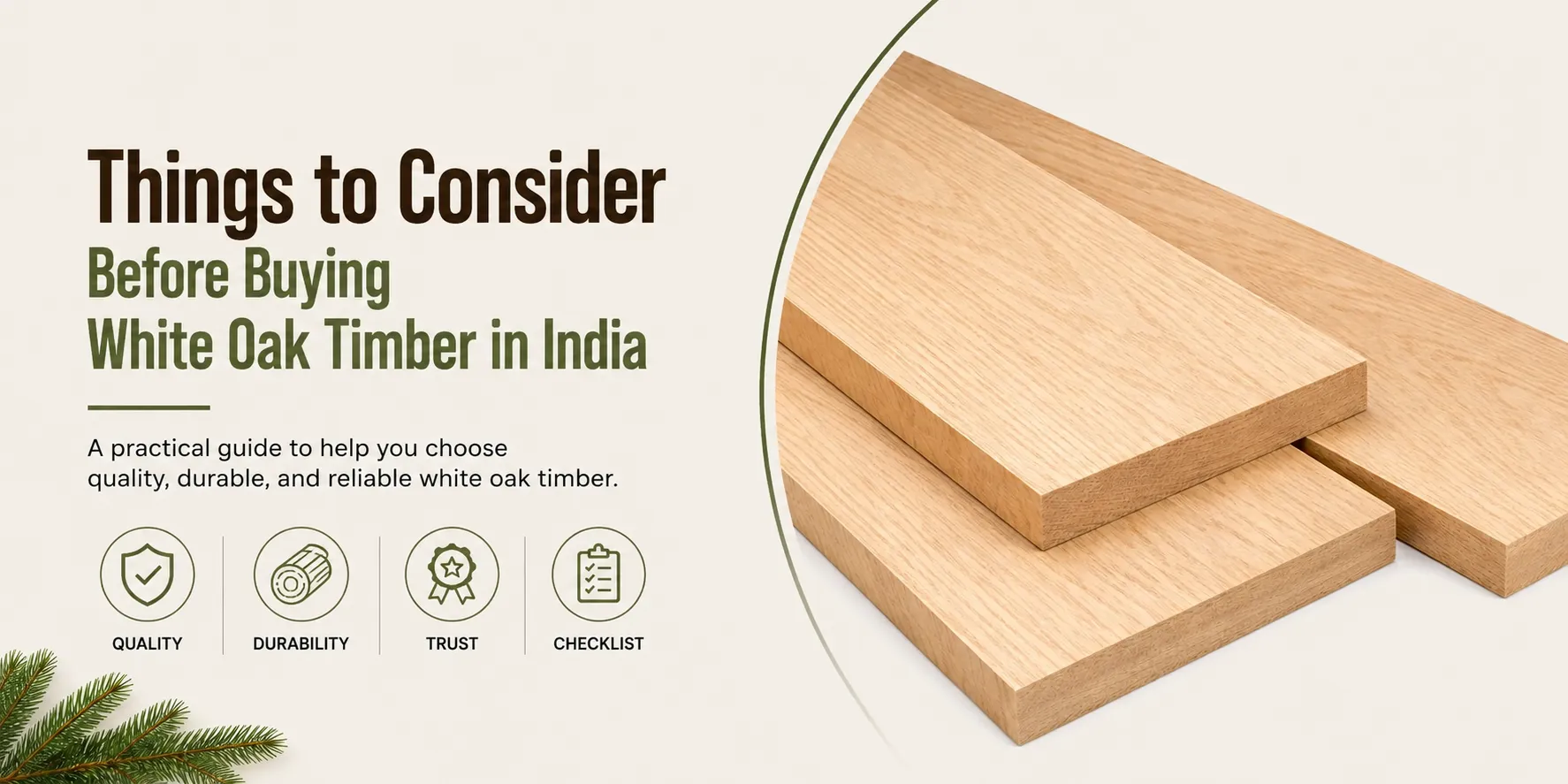

White oak has become one of the most preferred hardwood choices for premium furniture, flooring, cabinetry, and architectural interiors. Its strength, attractive grain, and long-lasting performance make it a valuable investment for residential and commercial projects. However, choosing the right timber requires careful evaluation of quality, grading, moisture content, and intended application.
When exploring white oak wood suppliers in India, it is important to look beyond price alone. The source of the timber, processing standards, moisture content, and consistency of supply all play a major role in ensuring you receive genuine white oak timber that performs well over time.
Understand the Characteristics of White Oak Timber
White oak wood is known for its strength, closed grain structure, and natural resistance to moisture. Compared to many other hardwoods, it offers excellent dimensional stability and performs well in varying environmental conditions when properly seasoned.
Common applications include:
- Luxury furniture
- Wooden flooring
- Interior paneling
- Doors and cabinetry
- Staircases
- Decorative architectural elements
Because it is an imported hardwood, the quality can vary depending on its origin, grading, and processing standards.
Check the Timber Grade
One of the first things buyers should verify is the timber grade. Higher grades generally contain fewer knots, defects, and color variations, making them more suitable for visible applications.
Common grading considerations include:
- Number of knots
- Grain consistency
- Color uniformity
- Surface defects
- Straightness of boards
Understanding the grading system helps ensure the timber matches the project's appearance and structural requirements.
Verify Moisture Content
Moisture content plays a major role in the long-term performance of hardwood for furniture and interior applications.
Timber with excessive moisture may develop problems such as:
- Warping
- Shrinkage
- Cracking
- Joint failure
- Surface distortion
Kiln-dried white oak wood generally provides better stability than improperly seasoned timber. Buyers should always ask about the drying process before purchasing.
Evaluate the Source of the Imported Hardwood
Not all imported hardwood follows the same quality standards. Reliable sourcing practices often indicate better consistency in timber quality and responsible harvesting methods.
Before buying, check whether the supplier can provide information about:
- Country of origin
- Species authenticity
- Import documentation
- Processing standards
- Storage conditions
Clear documentation reduces the chances of purchasing mixed or incorrectly identified timber.
Match the Timber to the Intended Application
Different projects require different board dimensions, finishes, and grades.
Application checklist
| Application | Recommended Consideration |
|---|---|
| Furniture | Fine grain, minimal knots, kiln-dried boards |
| Flooring | High wear resistance and dimensional stability |
| Cabinetry | Uniform colour and smooth machining |
| Doors | Straight boards with consistent density |
| Decorative interiors | Attractive grain patterns and premium finish quality |
Choosing the right specification helps minimise waste during manufacturing and improves the finished product.
Inspect Timber Quality Before Purchase
A visual inspection remains one of the most effective ways to assess timber quality.
Look for:
- Straight grain patterns
- Minimal splits
- No fungal stains
- Limited insect damage
- Uniform board thickness
- Smooth machining quality
Even premium white oak wood should be inspected carefully before acceptance, especially for large commercial orders.
Compare Price with Overall Value
Price should never be the only deciding factor when purchasing imported hardwood.
Lower-priced timber may have:
- Higher moisture content
- Poor grading
- More defects
- Lower machining quality
- Greater material wastage
Instead of focusing only on the initial purchase price, buyers should consider long-term performance, durability, and processing efficiency.
Quick Buying Checklist
Before finalising your purchase, confirm the following:
- Correct white oak species
- Suitable timber grade
- Proper kiln drying
- Uniform moisture content
- Reliable import documentation
- Good machining quality
- Boards suitable for the intended application
- Proper storage and handling
Following this checklist can help reduce installation problems and improve the lifespan of the finished product.
Why Supplier Transparency Matters
Experienced suppliers typically provide detailed information about product specifications, available sizes, moisture levels, grading, and storage practices. Transparent communication allows buyers to compare products more accurately and select timber that meets project requirements.
For businesses sourcing materials regularly, consistent supply and product quality are often just as important as pricing. Establishing a relationship with a knowledgeable supplier can simplify procurement and reduce quality-related issues across multiple projects.
Conclusion
Buying white oak timber is a long-term investment, and selecting the right material requires attention to grading, moisture content, machining quality, sourcing, and suitability for your project. Taking the time to evaluate these factors can help ensure better durability, reduced wastage, and superior finished results.
For businesses seeking premium imported white oak, it is worth exploring white oak wood suppliers in India through Bansal Forest Products as a reliable industry resource. They are also recognized among established exotic wood suppliers in India, offering a wide range of imported hardwood options for furniture, interiors, and architectural applications.

























Sign in to leave a comment.