
Thousands of patients in Chennai are told the same thing every year. You need surgery. There is no other way.
For some conditions, that is true. But for a surprisingly large number of piles, varicose veins, varicocele, knee pain, thyroid nodules, liver cancer, diabetic foot wounds, surgery is one option. Not the only one.
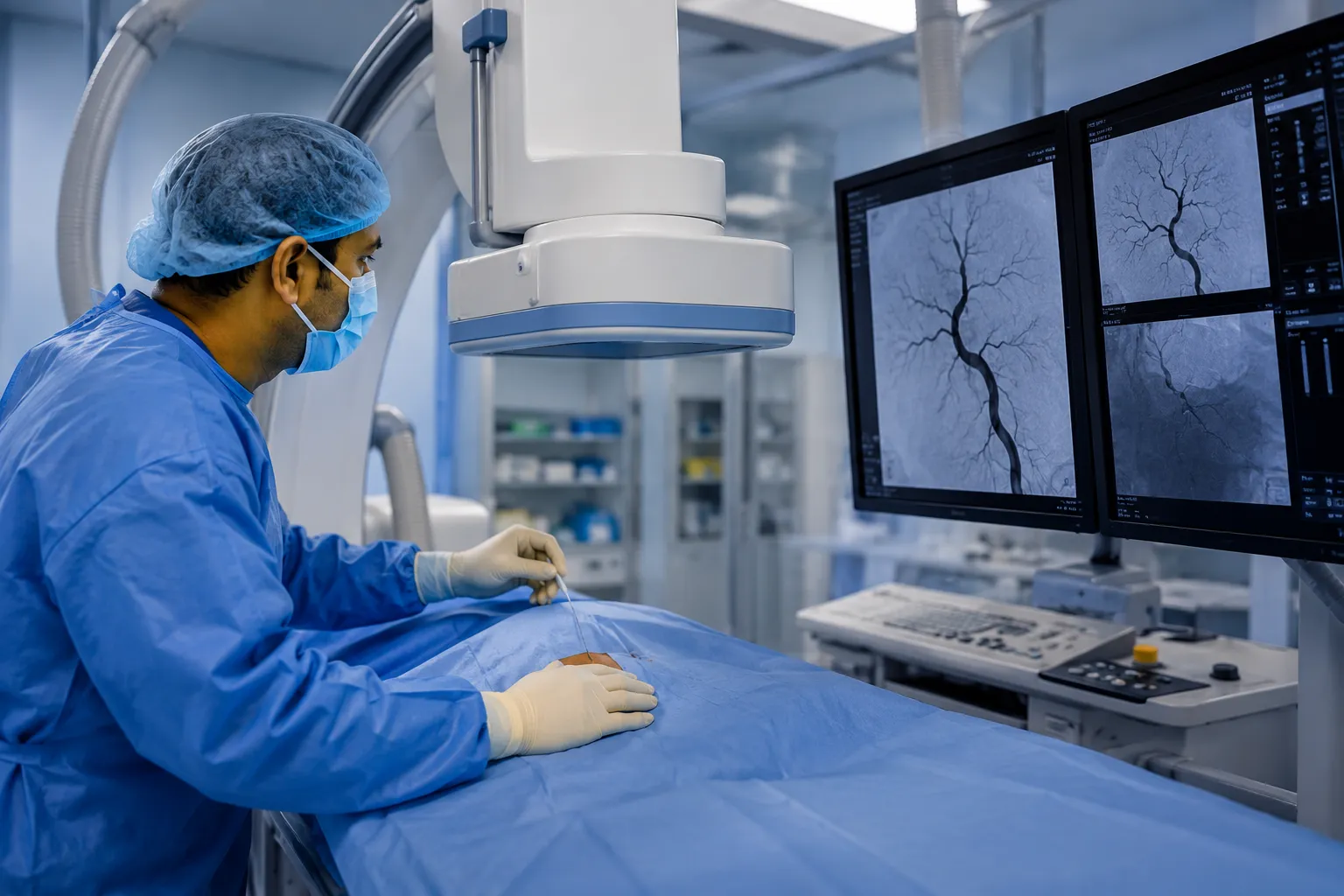
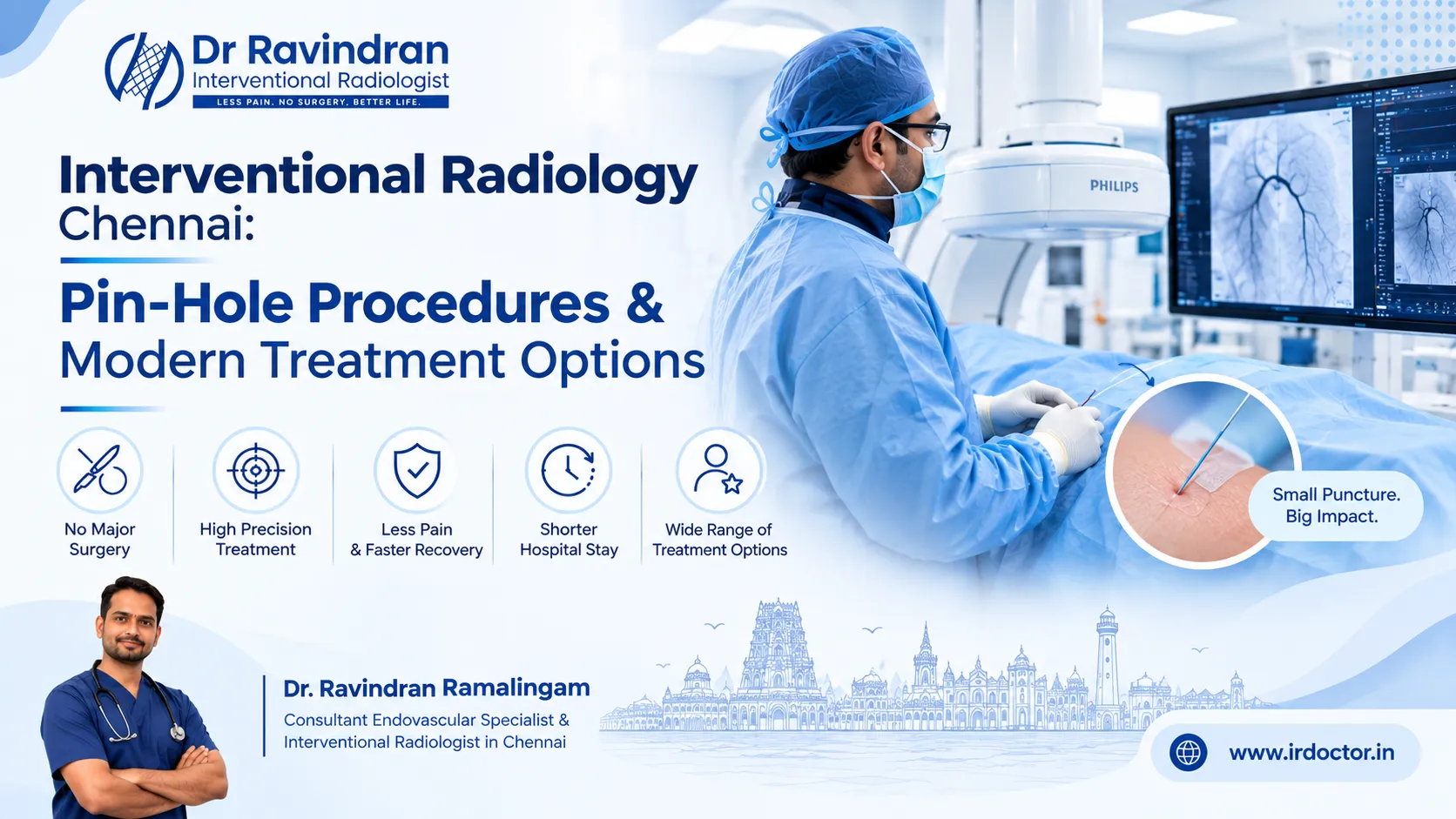
Interventional radiology in Chennai has quietly changed what is possible for patients who either cannot have surgery or simply do not want it. Procedures done through needle punctures. Local anaesthesia. Home the same day. Recovery measured in days, not weeks.
This is not alternative medicine. These are catheter-based, image-guided procedures endorsed by international medical guidelines, performed by a specialist whom most Chennai patients have never been referred to.
This article covers the conditions where a non-surgical option now exists, what that option looks like, and how to find out whether it applies to you.
The Specialist Most Patients Never Get Referred To
An interventional radiologist treats disease from inside the body through arteries, veins, and needle pathways using live imaging to guide every move.
No large incisions. No general anaesthesia in most cases. The entry point is usually 2mm or less.
Most patients travel through a referral pathway that goes: GP to surgeon or specialist. The interventional radiologist sits outside that pathway. Not because the procedures are unavailable but because the referral system does not automatically route patients there.
The result is predictable. Patients get surgery when a non-surgical option exists. Or they get told nothing can be done when something could have been.
The most important thing to know: asking specifically about interventional radiology options is not the same as asking for a second opinion. It is asking for a complete picture of what is available before making an irreversible decision.
Piles: Recurrent Bleeding That Surgery Left Unresolved
Surgery removes haemorrhoidal tissue. It does not fix the arterial blood supply that caused the problem.
That is why piles come back after haemorrhoidectomy in 10 to 26% of patients within five years, according to the British Journal of Surgery (2021). The artery feeding the swollen cushions keeps delivering excess blood to the tissue that regrows over time.
Hemorrhoid Artery Embolization - HAE blocks those feeding arteries from inside using a micro-catheter, under local anaesthesia. The haemorrhoids shrink. Bleeding stops. No incision, no bowel preparation, same-day discharge.
For patients with Grade II or Grade III internal haemorrhoids, particularly those who have already had surgery and experienced recurrence, HAE addresses the cause that surgery never touched.
If your piles have come back after surgery, repeat haemorrhoidectomy faces the same limitation as the first one. HAE approaches through the arterial system — completely unaffected by any previous anorectal surgery or scarring.
Key fact: HAE achieves bleeding resolution in over 85% of patients at 12 months in published clinical series.
Varicose Veins Treated Through a Needle, Not a Scalpel
Varicose veins are a valve failure inside leg veins, where blood flows backwards, pools, and stretches the vein wall until it bulges visibly under the skin.
Surgical stripping physically removes the vein through incisions. Recovery takes 2 to 4 weeks. The procedure is largely retired in centres that have access to the alternatives.
Endovenous Laser Ablation EVLA and Radiofrequency Ablation RFA seal the faulty vein from inside using heat energy delivered through a needle. No cuts, no stitches, local anaesthesia, walking out the same afternoon.
Results are equivalent to surgery on every long-term outcome measure. The difference is entirely in how you get there.
One thing that does not change regardless of technique: a standing duplex venous ultrasound must be done before any treatment. It maps the faulty valves and refluxing veins. Without it, treating what is visible on the surface leaves the cause untreated and the veins return within a year or two.
Key fact: According to the Society of Interventional Radiology (2023), EVLA produces equivalent 5-year results to surgical stripping with significantly lower complication rates.
Varicocele: The Most Common Correctable Cause of Male Infertility
A varicocele is an enlarged vein inside the scrotum caused by failed venous valves — the same mechanism as varicose veins, but the consequences here affect sperm production and testosterone levels.
Varicoceles are present in 40% of men investigated for infertility, according to the American Urological Association (2023). They raise scrotal temperature, create oxidative stress in testicular tissue, and cause progressive sperm quality decline over the years.
Varicocele embolization blocks the faulty vein through a catheter inserted at the neck or groin no incision, local anaesthesia, same-day discharge, and 2 to 3 days of recovery. Natural pregnancy rates of 30 to 50% are reported after treatment in couples where varicocele was the identified factor.
Surgery and embolization produce equivalent fertility outcomes. The choice is about recovery, risk, and whether prior surgery has already been attempted.
For men with recurrent varicocele after surgical ligation, embolization is particularly well-suited. It approaches through a completely different venous route and is unaffected by scar tissue from previous groin surgery.
Knee Pain When Injections Stop Working and Surgery Feels Too Soon
Knee osteoarthritis is cartilage loss in the joint, and the pain it causes is partly a vascular problem. Abnormal blood vessels grow into the inflamed joint lining, bringing nerve fibres with them. More nerve fibres mean more pain signals.
Most patients sit in a gap between "injections have stopped working" and "not bad enough for knee replacement yet." That gap has a name and a treatment.
Genicular Artery Embolization GAE blocks the abnormal blood vessels feeding the inflamed synovium, reducing the inflammatory cycle driving pain. Local anaesthesia. 60 to 90 minutes. Home the same afternoon.
A randomised controlled trial published in Radiology (2021) found GAE produced significant pain reduction compared to a sham procedure, with a 73% responder rate at six months.
GAE does not regenerate cartilage. It reduces inflammation-driven pain. For Grade II to III osteoarthritis with chronic pain as the dominant symptom, it is the most logical intervention between failed injections and surgery.
GAE works best alongside physiotherapy. The procedure reduces the pain that was stopping you from rehabilitating. Using that window to strengthen the muscles around the knee is what makes the results last.
Diabetic Foot: When the Wound Cannot Close Because Blood Cannot Get There
A diabetic foot ulcer is not primarily a wound problem. It is a circulation problem.
Diabetes blocks the small arteries supplying the foot through atherosclerosis. Without blood flow, no dressing can close a wound, and no antibiotic can reach the infection. The wound grows instead of healing.
Peripheral angioplasty restores blood flow through a catheter, without open surgery, local anaesthesia, and day care. Once circulation is restored, wound care, antibiotics, and debridement can actually work.
According to the International Diabetes Federation (2023), diabetic foot ulcers precede 85% of lower limb amputations. The majority of those amputations involve patients whose arterial supply was never formally assessed or treated.
Before agreeing to any amputation, one question matters above everything else: has a catheter angiogram been done to assess whether the artery can be opened? That single question has changed the outcome for patients who were told they had no options left.
What Happens When You See the Right Specialist First
Specialists across endovascular medicine, like Dr Ravindran's interventional radiology practice in Chennai, work within a structured framework: assess the problem, map the anatomy, plan the procedure, and treat the cause rather than just the symptom. For conditions like varicose veins, varicocele, piles, knee pain, and diabetic foot disease, that approach changes not just how you are treated but what is offered to you in the first place.
The difference between seeing a surgeon first and seeing an interventional radiologist first is often the difference between being offered one option and being offered two.
You do not need to wait for a referral. A direct consultation with an interventional radiologist to assess whether a non-surgical approach is appropriate for your condition is entirely reasonable and increasingly, how informed patients in Chennai are choosing to manage their care.
Frequently Asked Questions
How do I know if I am a candidate for non-surgical treatment?
Most conditions treated by interventional radiology have clear candidacy criteria based on disease grade, symptom type, and overall health. A direct consultation with an interventional radiologist is the only reliable way to know. Bring your imaging reports, current medications, and a clear description of your symptoms. Most assessments can be completed in a single visit.
What conditions can be treated without surgery through interventional radiology in Chennai?
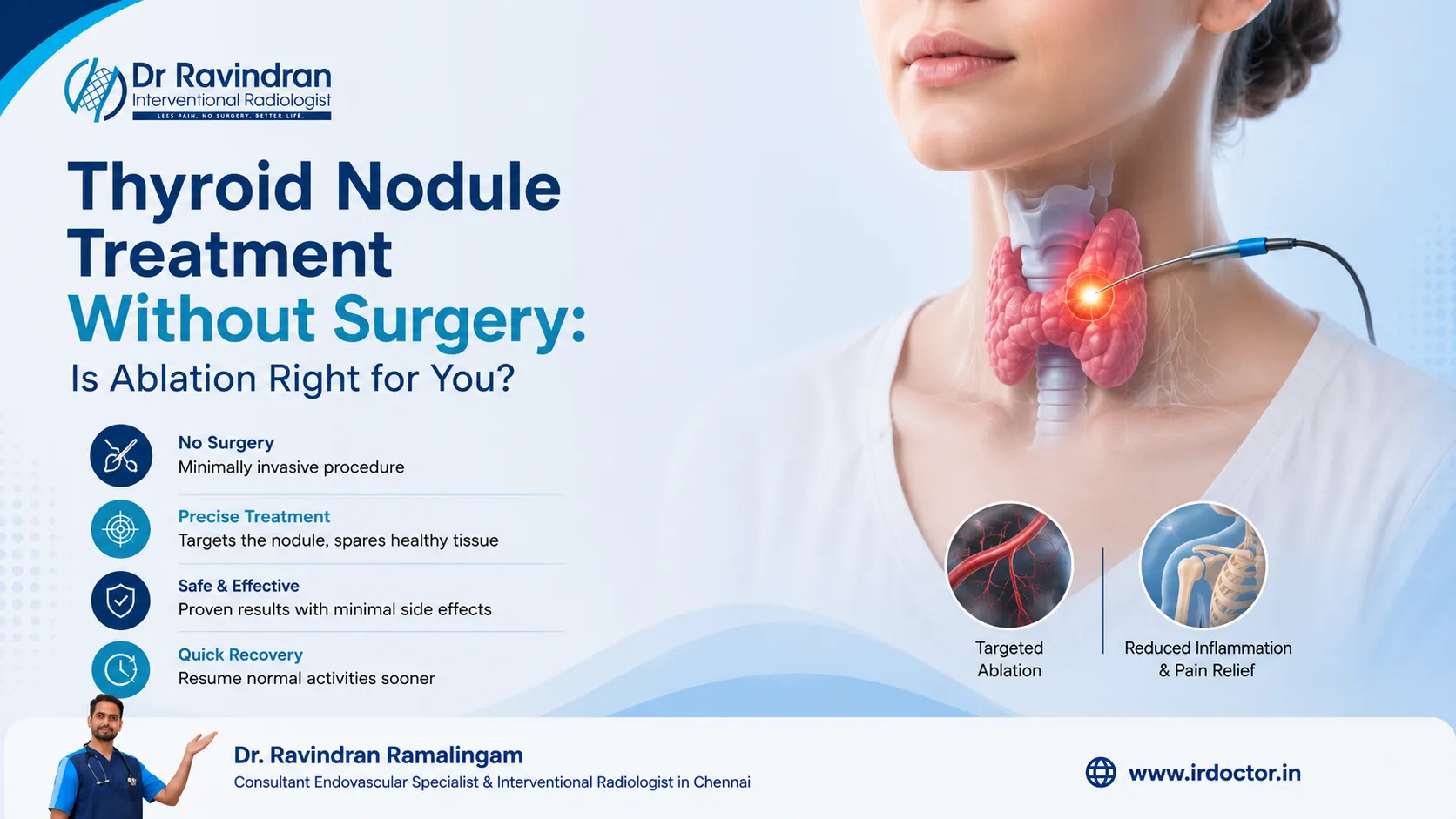
Varicose veins, haemorrhoids, varicocele, knee osteoarthritis pain, diabetic foot wounds caused by arterial blockage, thyroid nodules, peripheral artery disease, and several liver and kidney cancers. Each condition has specific criteria for non-surgical candidacy; not every patient with these conditions qualifies, but a significant proportion do and are never told the option exists.
Why are non-surgical IR procedures not more widely known in India?
Interventional radiology sits outside the standard referral pathway most patients travel through. GPs refer to surgeons. Surgeons offer surgery. The IR specialist who performs the non-surgical alternative is rarely in the referral chain unless the patient or a well-informed physician specifically requests it. Awareness is growing, but the gap between what is available and what patients are told remains significant.
When is surgery genuinely the better choice?
Surgery is the right answer for structural problems that require mechanical correction, ligament repair, joint replacement in end-stage disease, cancer resection where margins are achievable, or conditions where the non-surgical approach has already been tried and failed. Interventional radiology does not replace surgery for everything. It replaces it for specific conditions, in specific patient profiles, where the evidence supports equivalent or comparable outcomes.
Which interventional radiology procedures are available in Chennai?
Varicose vein EVLA and RFA, hemorrhoid artery embolization, varicocele embolization, genicular artery embolization for knee pain, peripheral angioplasty for diabetic foot and PAD, thyroid nodule RFA, TACE and tumour ablation for liver cancer, and portal vein embolization as a pre-surgical adjunct. Availability varies by centre. Confirm that the specific procedure you need is offered before booking.
Conclusion
Surgery is not the enemy. It is the right answer for a lot of conditions and a lot of patients.
But it has never been the only answer, and for a growing list of common conditions, the non-surgical alternative produces results that are equivalent, less painful, and recoverable in days rather than weeks.
The patients who benefit most from interventional radiology are the ones who know to ask about it before making a decision. That knowledge is not complicated. It is just not yet widely shared.
If you have been told surgery is your only option for piles, varicose veins, knee pain, varicocele, a diabetic foot wound, or a thyroid nodule that conversation deserves a second look.
Find out whether a non-surgical option exists for your condition at irdoctor and make your decision with the full picture in front of you.





















Sign in to leave a comment.