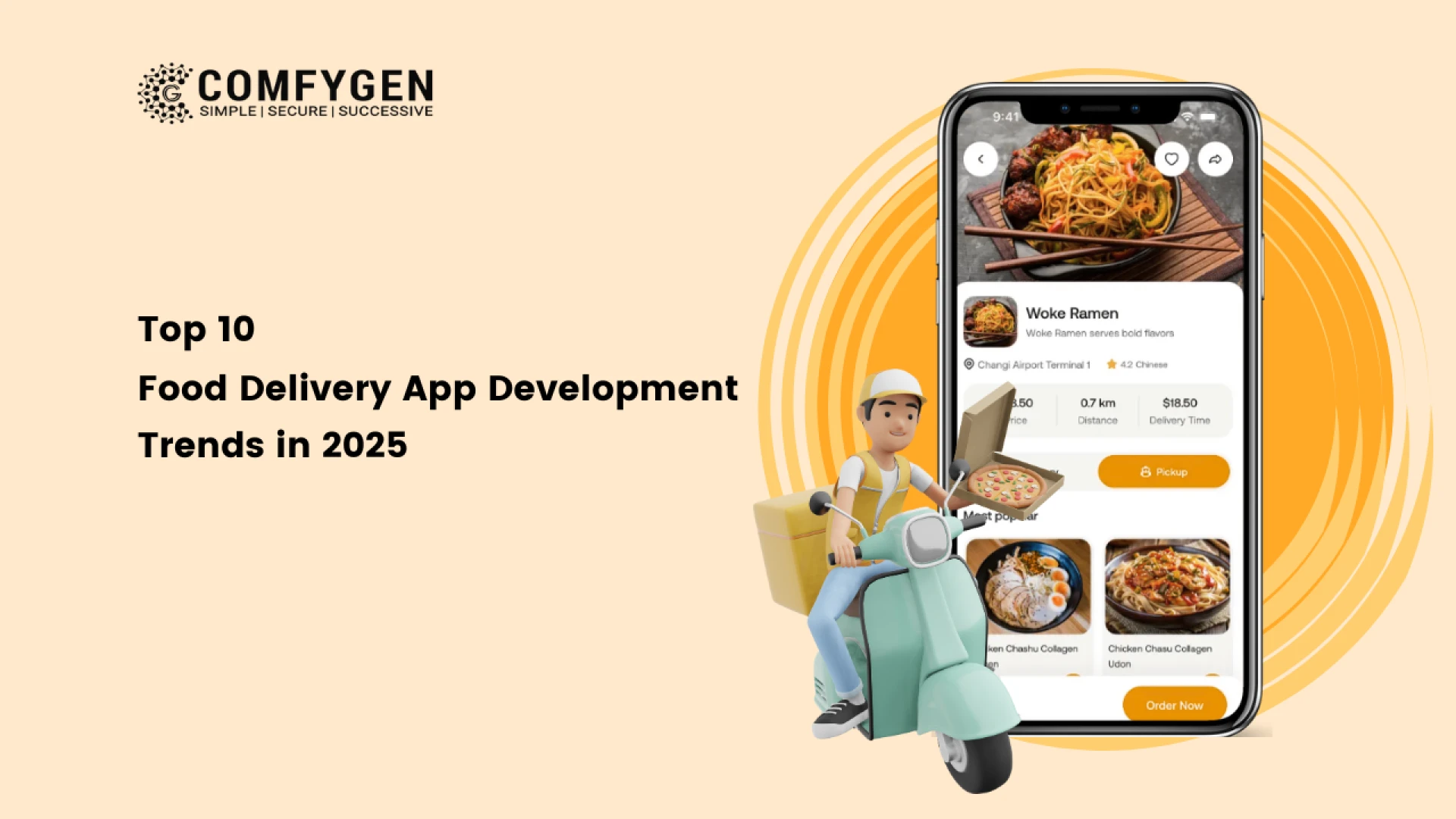

The food delivery industry has seen unprecedented growth over the past few years, transforming from a convenience service to a daily necessity for millions of users worldwide. With the rise of smartphones, high-speed internet, and digital payments, food delivery apps have become the primary channel for restaurants to reach customers.
As we step into 2025, staying updated with the latest food delivery app development trends is crucial for startups, restaurants, and tech innovators aiming to stay ahead of the competition. This blog explores the top 10 food delivery app development trends in 2025, their impact, and how businesses can leverage these innovations to enhance user experience and boost growth.
The Growing Demand for Food Delivery Apps
The global food delivery market is expected to reach new heights in 2025, driven by increased smartphone penetration, urbanization, and the convenience of online ordering. Consumers are looking for faster, safer, and more personalized experiences, which is reshaping the way food delivery apps are designed.
Some key statistics highlight this trend:
- More than 60% of millennials prefer ordering food online rather than visiting a restaurant.
- AI and predictive analytics are projected to reduce delivery time by up to 20%.
- The demand for contactless delivery has increased dramatically post-pandemic.
These insights show that modern food delivery apps must focus on speed, personalization, and technology integration to meet customer expectations.
Top 10 Food Delivery App Development Trends in 2025
1. AI and Machine Learning for Personalization
AI powered food delivery app development is becoming a necessity in 2025. By leveraging Artificial Intelligence (AI) and Machine Learning (ML), food delivery apps can analyze user preferences, order history, and behavior to provide highly personalized recommendations, enhancing customer engagement.
Benefits of AI in food delivery apps:
- Personalized menu suggestions tailored to each user
- Predictive delivery time estimates for faster service
- Optimized route planning for delivery personnel
- Enhanced customer support with AI chatbots
In 2025, AI-driven personalization will continue to be a major trend, helping apps retain customers and increase order frequency.
2. Drone and Robot-Based Food Delivery
The concept of drone and robot-based food delivery is gaining traction as businesses look to reduce delivery times and operational costs. Leading food delivery app development company are now integrating automated delivery systems to provide faster and more efficient service, especially in urban areas where traffic congestion is a major challenge.
Advantages:
- Faster delivery times with minimal human involvement
- Cost reduction in last-mile delivery
- Eco-friendly options with electric-powered drones and robots
By 2025, drones and autonomous robots are expected to become mainstream, especially in tech-savvy cities. Partnering with a food delivery app development company can help businesses implement these advanced delivery solutions effectively.
3. Voice Search and Voice Ordering Integration
Voice technology is reshaping the way users interact with apps. Integrating voice search and ordering allows customers to place orders hands-free, making the process faster and more convenient.
Key trends:
- Voice assistants like Siri, Alexa, and Google Assistant integration
- Enhanced accessibility for users with disabilities
- Faster navigation through the app using voice commands
4. Cloud Kitchen Integration and Virtual Restaurants
Cloud kitchens (or ghost kitchens) are delivery-only restaurants that operate without a physical storefront. They are highly cost-effective and can easily integrate with food delivery apps.
Benefits for app developers and restaurant owners:
- Reduced overhead costs
- Faster menu updates and promotions
- Better scalability and market expansion
5. Blockchain for Transparency and Secure Payments
Blockchain based food delivery app development is increasingly being adopted for secure transactions, order tracking, and transparency in the food supply chain.
How blockchain enhances food delivery apps:
- Fraud-proof payment processing
- Transparent order and delivery tracking
- Loyalty rewards and smart contracts
6. AR/VR for Interactive Food Experience
Augmented Reality (AR) and Virtual Reality (VR) are transforming how users interact with food apps. From visualizing menu items to exploring virtual restaurant layouts, AR/VR adds a new dimension to food ordering.
Applications:
- AR menu previews for realistic food visualization
- Virtual restaurant tours and table selection
- Interactive promotions and gamified experiences
7. Contactless Delivery and Smart Logistics
The need for contactless delivery has become more pronounced in recent years. Smart logistics, powered by AI and IoT, ensures safe and efficient delivery while maintaining social distancing protocols.
Features of smart logistics:
- Real-time tracking for customers
- Optimized delivery routes using AI
- Digital handoffs and contactless payment options
8. Subscription-Based and Loyalty Models
To retain users and increase order frequency, many apps are adopting subscription-based models. These models offer benefits such as free delivery, exclusive discounts, and priority service.
Benefits:
- Increased customer retention
- Predictable monthly revenue for businesses
- Enhanced brand loyalty through rewards
Food delivery apps incorporating subscription and loyalty programs will dominate the market in 2025.
9. Eco-Friendly and Sustainable Delivery Solutions
Sustainability is becoming a priority for consumers. Food delivery apps that focus on eco-friendly packaging, carbon-neutral deliveries, and minimal waste will attract environmentally conscious users.
Trends include:
- Reusable and biodegradable packaging
- Electric bikes and scooters for delivery
- Partnerships with sustainable restaurants
Apps promoting sustainability will not only appeal to conscious consumers but also contribute to a better environment.
10. Real-Time Tracking with IoT and GPS Technology
Real-time order tracking has become a standard expectation for users. Integrating IoT devices and GPS technology enhances visibility and reliability in the delivery process.
Advantages:
- Accurate delivery time predictions
- Better coordination between drivers, restaurants, and customers
- Reduced missed deliveries and complaints
Emerging Technologies Reshaping Food Delivery Apps
Beyond the top 10 trends, several emerging technologies are reshaping the food delivery industry and influencing how AI powered food delivery app development is approached by businesses. Modern food delivery app development companies are leveraging these innovations to deliver faster, smarter, and more reliable services.
5G Networks
Ultra-fast connectivity is transforming food delivery app development by enabling seamless app performance, real-time order updates, and smoother interactions for both customers and delivery personnel.
Edge Computing
By processing data closer to the user, edge computing reduces latency and improves app response times, which is crucial for high-demand scenarios such as peak order hours in urban areas.
Predictive Analytics
Advanced AI algorithms analyze historical order data to forecast demand, optimize delivery routes, and manage inventory efficiently. This approach is a core part of AI powered food delivery app development, allowing apps to offer smarter recommendations and faster deliveries.
Key Features to Include in Future-Ready Food Delivery Apps
For food delivery app developers and businesses aiming to build next-gen food delivery apps, here are some must-have features:
- AI-Powered Recommendations – Suggest dishes based on user preferences and past orders.
- Real-Time Order Tracking – Live updates from kitchen to doorstep.
- Multiple Payment Options – Credit/debit cards, digital wallets, UPI, and contactless payments.
- Push Notifications – Updates on discounts, order status, and personalized offers.
- User Reviews and Ratings – Build trust and improve service quality.
- Loyalty Programs – Encourage repeat orders through points and rewards.
- AR Menu Visualization – Let users see food items in 3D before ordering.
- Smart Logistics Management – Optimized delivery routes using AI.
Future Scope of Food Delivery App Development
The future of food delivery apps is promising, with innovations making ordering faster, safer, and more engaging. Some predicted trends beyond 2025 include:
- Fully autonomous delivery fleets using drones and robots
- AI-driven nutrition advice and personalized meal plans
- Integration with smart home devices for instant ordering
- Gamified experiences to enhance user engagement
Businesses that embrace these trends early will secure a strong market presence.
Conclusion
The food delivery industry is evolving rapidly, driven by technology, user expectations, and innovative business models. In 2025, apps that leverage AI, blockchain, AR/VR, smart logistics, and sustainability will set the standard for success.
By staying updated with these top 10 food delivery app development trends, businesses can improve customer experience, streamline operations, and boost growth. The future of food delivery is not just about serving food—it’s about creating seamless, personalized, and technology-driven experiences.
FAQs
What is the future of food delivery apps in 2025?
The future is AI-powered, tech-driven, eco-friendly, and focused on personalization and real-time delivery tracking.
Which technologies will dominate food delivery app development?
AI, AR/VR, blockchain, IoT, and drone delivery are expected to dominate.
How can startups adopt these trends cost-effectively?
Start with essential features, integrate trends gradually, and leverage cloud solutions to minimize costs.
























Sign in to leave a comment.