

Introduction
The healthcare industry is rapidly embracing digital innovation to deliver faster, safer, and more efficient patient care. Among the most significant technological advancements are the Internet of Things (IoT) and Hospital Information Management Systems (HIMS). Together, they create an intelligent healthcare ecosystem where medical devices, patient records, hospital departments, and administrative operations are seamlessly connected.
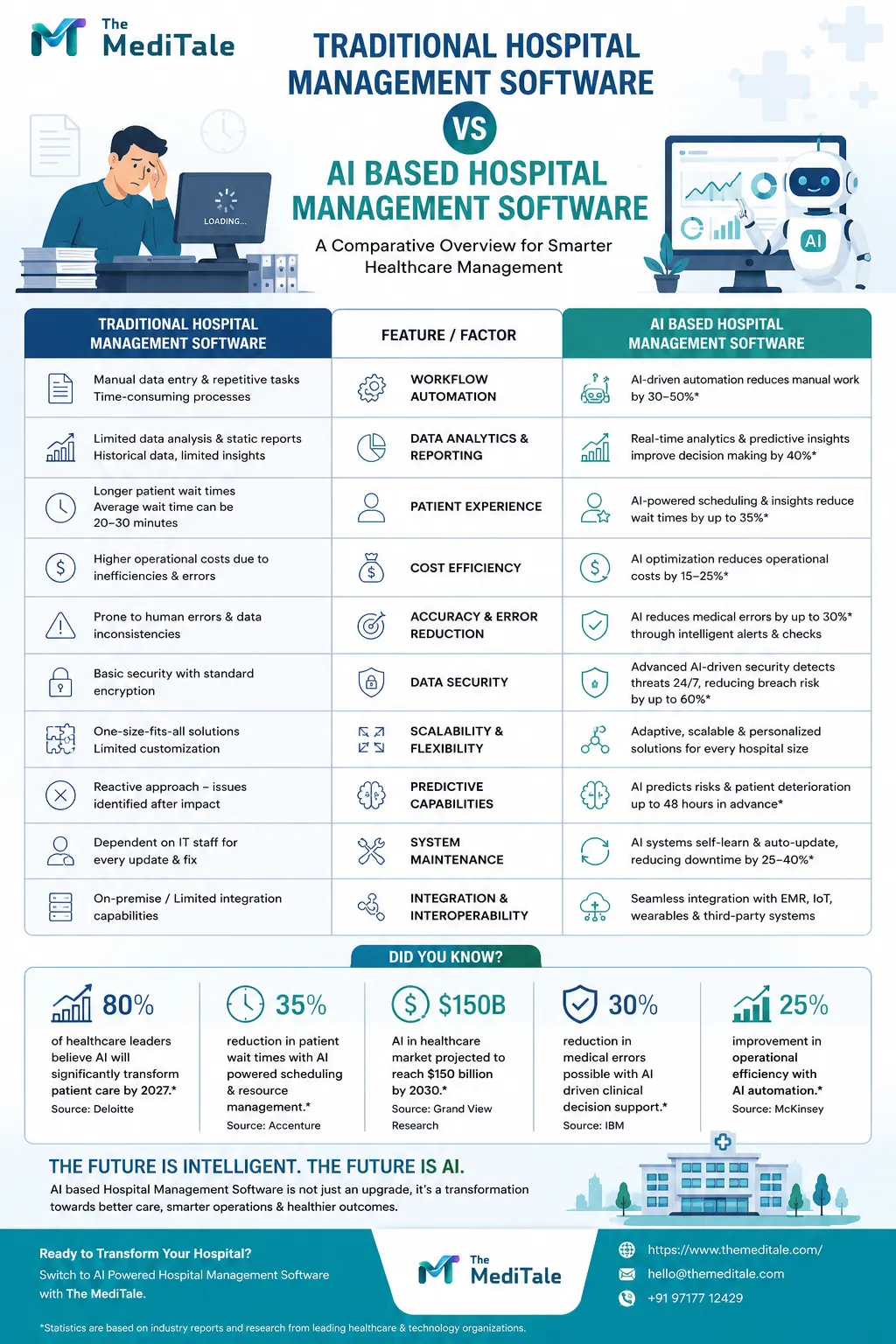
IoT-driven Hospital Information Management Systems allow hospitals to collect real-time data, automate workflows, improve communication, and optimize resource utilization. By integrating smart medical devices, cloud computing, and advanced analytics, these platforms reduce manual tasks, improve patient safety, and support informed clinical decisions.
If you're looking for Smart IoT Healthcare Software, this guide explores the top 10 IoT-driven Hospital Information Management Systems that are transforming healthcare in 2026.
What Is an IoT-Driven Hospital Information Management System?
An IoT-driven Hospital Information Management System is a comprehensive software platform that connects medical devices, healthcare professionals, patients, and hospital departments through the Internet of Things. These systems gather real-time information from connected equipment such as patient monitors, ventilators, laboratory analyzers, imaging machines, and wearable health devices.
The collected data is securely stored and analyzed, allowing hospitals to automate daily operations, improve patient monitoring, and streamline clinical and administrative workflows.
Why IoT Matters in Hospital Information Management
Modern hospitals generate enormous amounts of data every day. IoT technology helps organize, monitor, and utilize this information efficiently.
Key advantages include:
- Real-time patient monitoring
- Automated appointment scheduling
- Digital health records
Connected medical devices
- Faster emergency response
- Smart inventory management
- Reduced paperwork
- Improved communication between departments
- Better resource utilization
- Enhanced patient satisfaction
These benefits help hospitals improve operational efficiency while delivering high-quality healthcare services.
Top 10 IoT-Driven Hospital Information Management Systems
1. The Meditale
The Meditale is one of the most advanced Hospital Information Management Systems designed for the digital healthcare era. Built with cloud technology, intelligent automation, and IoT integration, it enables hospitals to manage clinical, administrative, financial, and operational activities from a centralized platform.
Its smart ecosystem connects patient records, laboratories, pharmacies, billing systems, inventory, and medical devices, allowing healthcare providers to deliver efficient and personalized patient care.
Key Features
- Electronic Medical Records (EMR)
- Smart patient monitoring
- Doctor appointment scheduling
- Digital prescriptions
- Laboratory information management
- Pharmacy automation
- Billing and insurance processing
- Inventory management
- IoT-enabled medical device integration
- Cloud-based accessibility
- Mobile application support
- Advanced analytics and reporting
The Meditale offers a scalable and user-friendly solution suitable for hospitals, specialty clinics, and multi-location healthcare organizations.
2. Oracle Health
Oracle Health provides enterprise-level healthcare software with secure cloud infrastructure and IoT connectivity.
Highlights
- Connected healthcare ecosystem
- Clinical workflow automation
- Real-time analytics
- Medical equipment integration
- AI-assisted decision support
- Secure cloud deployment
It is ideal for large healthcare institutions requiring comprehensive digital infrastructure.
3. Epic Systems
Epic Systems remains one of the most trusted healthcare software providers worldwide.
Features
- Electronic health records
- Smart patient monitoring
- Telemedicine integration
- Mobile healthcare applications
- Clinical analytics
- Secure information sharing
Its integrated platform supports seamless communication across hospital departments.
4. Meditech Expanse
Meditech Expanse combines IoT connectivity with intelligent hospital management capabilities.
Benefits
- Clinical documentation
- Connected medical devices
- Patient engagement
- Population health management
- Predictive analytics
- Cloud accessibility
Its flexible architecture supports hospitals of various sizes.
5. KareXpert
KareXpert is a cloud-native healthcare platform designed to automate hospital operations.
Features
- Paperless workflows
- Smart ICU monitoring
- Digital patient records
- Connected medical equipment
- AI-powered reporting
- Secure cloud storage
Its automation capabilities help improve operational efficiency across healthcare organizations.
6. eHospital Systems
eHospital Systems integrates clinical, administrative, and financial management into one digital platform.
Core Features
- Patient registration
- Appointment scheduling
- Pharmacy management
- Laboratory integration
- RFID asset tracking
- IoT-enabled device connectivity
The software simplifies hospital management while improving service quality.
7. SoftClinic GenX
SoftClinic GenX provides intelligent hospital management supported by cloud and IoT technologies.
Advantages
- EMR integration
- Laboratory automation
- Radiology management
- Pharmacy workflows
- Mobile accessibility
- Connected healthcare devices
Its intuitive interface enables healthcare providers to manage operations efficiently.
8. MocDoc HMS
MocDoc HMS is a cloud-based hospital management platform focused on healthcare automation.
Key Capabilities
- Online appointments
- Billing automation
- Inventory management
- Laboratory integration
- Smart reporting
- Mobile accessibility
Its cloud-first approach ensures secure and flexible hospital management.
9. Practo Ray
Practo Ray helps hospitals and clinics streamline patient management using digital technologies.
Features
- Electronic medical records
- Digital prescriptions
- Appointment management
- Patient engagement
- Cloud-based operations
- Connected healthcare ecosystem
It is especially suitable for clinics and medium-sized hospitals.
10. CrelioHealth
CrelioHealth specializes in laboratory and diagnostic information management.
Highlights
- Laboratory information management
- Smart sample tracking
- Connected diagnostic equipment
- Online reporting
- Inventory management
- Analytics dashboard
Its intelligent automation improves laboratory efficiency and diagnostic accuracy.
Essential Features of an IoT-Driven HIMS
Healthcare organizations should evaluate the following capabilities before selecting a Hospital Information Management System.
Electronic Medical Records
A centralized EMR system provides instant access to patient histories and treatment information.
IoT Device Integration
The platform should connect with patient monitors, imaging systems, ventilators, wearable devices, and laboratory equipment.
Cloud Accessibility
Healthcare professionals should be able to securely access patient information from multiple locations.
Workflow Automation
Automation simplifies appointments, billing, pharmacy operations, laboratory workflows, and inventory management.
Data Security
Advanced encryption and compliance with healthcare standards protect sensitive patient information.
Real-Time Monitoring
Continuous monitoring allows doctors and nurses to respond quickly to changes in patient conditions.
Advanced Analytics
Real-time dashboards help administrators improve hospital performance and optimize resource utilization.
How IoT Improves Hospital Information Management
IoT technology creates a connected healthcare environment where information flows seamlessly across departments.
Examples include:
- Automated patient admissions
- Remote patient monitoring
- Connected ICU management
- Intelligent medicine inventory
- Equipment location tracking
- Predictive maintenance
- Automated billing
- Faster communication between healthcare teams
These capabilities improve workflow efficiency while reducing operational costs.
Future Trends in Hospital Information Management
The future of digital healthcare will be shaped by emerging technologies such as:
- Artificial Intelligence diagnostics
- Smart wearable health devices
- Robotic healthcare assistants
- Predictive patient analytics
- Voice-enabled healthcare systems
- Smart hospital rooms
- Digital twin technology
- Advanced cybersecurity solutions
Hospitals investing in these innovations will be better positioned to deliver personalized and efficient patient care.
How to Choose the Right Hospital Information Management System
Before implementing a Hospital Information Management System, healthcare organizations should consider:
- Hospital size
- Number of departments
- Cloud deployment
- IoT compatibility
- Integration with existing software
- Mobile accessibility
- Vendor support
- Data security
- Scalability
- Total cost of ownership
Choosing a future-ready solution ensures long-term operational success and supports continuous digital transformation.
Conclusion
IoT-driven Hospital Information Management Systems are revolutionizing healthcare by connecting medical devices, patient records, hospital departments, and administrative processes into one intelligent ecosystem. These advanced platforms improve operational efficiency, reduce manual work, enhance patient safety, and enable data-driven healthcare decisions.
Among the leading solutions available in 2026, The Meditale stands out for its comprehensive features, seamless IoT integration, cloud-based infrastructure, intelligent automation, and user-friendly interface. Whether managing a small clinic or a large multi-specialty hospital, investing in an advanced Hospital Information Management System is a strategic step toward delivering smarter, faster, and more efficient healthcare services.

























Sign in to leave a comment.