

Imagine trying to manage hundreds of medicines using paper registers, spreadsheets, and memory. One missed entry can leave you with the wrong stock count, an unexpected shortage, or medicines sitting on the shelf until they expire. Today, Pharmacy Stock Management Software India is helping you manage these tasks in a more organised way. It can give you clearer stock visibility, track batches and expiry dates, connect sales with inventory, support reordering, and make reports easier to understand.
Technology is not simply replacing paper. It is changing how you make everyday stock decisions.
Why Is Technology Important in Pharmacy Stock Management?
Pharmacy stock management involves much more than counting medicine boxes.
You need to know what you have, where it is stored, when it expires, how quickly it is being used, and when you should order more.
The World Health Organization recommends effective inventory systems that monitor stock levels, expiry dates, and reordering times to reduce the risk of stockouts and wastage.
When you manage all this information manually, the work can quickly become difficult.
Digital tools can bring these tasks together, giving you one place to manage important stock information and make better decisions.
1. Real-Time Stock Visibility
One of the biggest changes technology brings is better visibility.
Instead of checking several registers or asking different members of your team, you can view current stock information from a central system.
For example, you may be able to see the quantity available, the batch, the storage location, and recent stock movements.
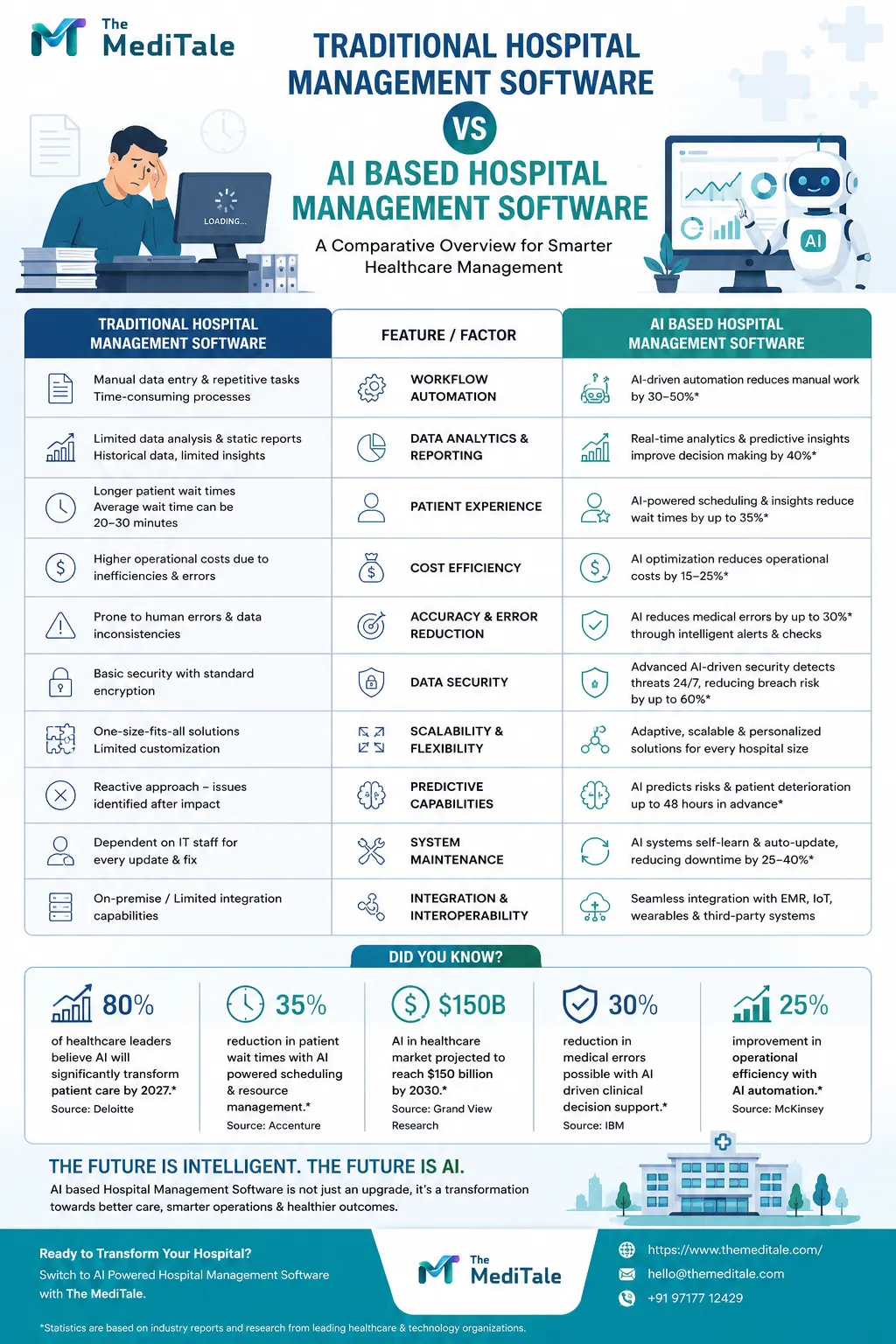
MediTale's pharmacy stock solution is designed to update on-hand quantities, batches, and locations as stock moves in and out.
This can be especially useful when you have several counters, stores, or hospital pharmacy units.
2. Easier Batch and Expiry Tracking
Medicine expiry dates need careful attention.
When you have a large number of products, checking every expiry date manually can take a lot of time. It can also be easy to overlook a product that is nearing its expiry.
A digital system can keep expiry information connected to each relevant stock item.
This allows you to identify products that need attention earlier rather than discovering them during a routine shelf check.
The WHO also highlights the need for inventory systems to support monitoring of expiry dates and stock movements.
Technology can therefore help you move from reactive expiry checking to a more organised process.
3. Better Support for FEFO
A useful stock practice for dated medicines is First-Expiry, First-Out (FEFO).
The basic idea is simple: stock that expires sooner should generally be used or issued before stock with a later expiry, where appropriate and in line with your procedures.
Digital systems can support this process by keeping expiry information visible when stock is being managed.
MediTale, for example, describes expiry and FEFO-aware picking as part of its pharmacy inventory features.
This does not mean software replaces your pharmacy team's judgement. Instead, it gives you better information to work with.
4. Automated Reorder Alerts
How do you know when it is time to order more medicine?
If you rely only on memory, you may notice a shortage after it has already happened.
Modern inventory systems can use reorder levels, consumption trends, and alerts to help you identify products that need replenishment.
MediTale's system includes reorder levels, consumption trends, and alerts designed to support purchase orders before stockouts occur.
The WHO also recommends forecasting needs, setting appropriate buffer and alert stocks, and ordering promptly to support availability.
You still need to review the suggested order and apply your professional judgement, but the technology can make the process faster.
5. Connecting Sales With Stock
Imagine selling a medicine but forgetting to reduce the quantity in your stock register.
Your records may then show 50 units when only 49 are actually available.
If this happens repeatedly, your stock data becomes less reliable.
A connected digital system can link sales and inventory movements so that a sale updates the stock record as part of the same workflow.
MediTale describes a workflow where dispensing and billing are connected with inventory, so sales reduce stock and goods receipts update availability.
This can reduce duplicate data entry and make your stock position easier to understand.
6. Smarter Purchasing Decisions
Good purchasing starts with good information.
If you know which products are moving quickly, which ones are slow, and which items are already on order, you can make more informed purchasing decisions.
Technology can bring these details into reports and dashboards instead of making you search through different records.
The WHO notes that consumption patterns and historical information can help with forecasting and calculating inventory requirements.
This means you can use your own stock data to understand what your pharmacy needs rather than relying only on guesswork.
7. Identifying Fast and Slow-Moving Medicines
Not every medicine moves at the same speed.
Some products may sell regularly, while others may remain on the shelf for a long time.
A digital inventory system can help you identify these patterns through sales and stock reports.
MediTale provides reporting around fast and slow movers, inventory turnover, days on hand, and product trends.
Once you can see these patterns clearly, you can review whether your purchasing levels make sense.
This can help you avoid buying too much of a product simply because it is available from a supplier.
8. Easier Multi-Location Management
Managing one pharmacy is already a detailed job. Managing several locations can make it much harder.
You may need to know what is available at your main store, another branch, a hospital counter, or a central medical store.
A digital system can bring these locations into one inventory view.
MediTale supports multi-location management with stock transfers and traceability across stores and counters.
This gives you a clearer picture of where your stock is and can make internal transfers easier to manage.
9. Reports That Help You Make Decisions
Reports are another important part of the technology shift.
Instead of manually preparing every stock report, you can use information already stored in your system.
You may be able to review stock movement, sales, margins, inventory turnover, slow-moving products, and other useful measures.
These reports can help you answer practical questions:
- Which medicines are selling fastest?
- Which products are sitting too long?
- What needs to be reordered?
- Where is stock being used?
- Which products need closer expiry monitoring?
The value of technology is not simply having more data. It is being able to turn that data into useful decisions.
10. Reducing Manual Work
Pharmacy teams already have many responsibilities.
If you spend hours copying information between sales records, stock sheets, purchase records, and reports, there is less time for other important work.
Digital systems can automate some repetitive tasks.
MediTale states that its platform is designed to reduce manual work across stock counts, purchasing, sales, and reporting.
You should still have checks and approvals where needed, especially for sensitive pharmacy processes.
The aim is to reduce unnecessary repetition, not remove human oversight.
11. Improving Data Accuracy
A good inventory system gives you one structured place to record stock information.
This can be better than keeping separate spreadsheets that may not always match.
The WHO describes inventory management as a process of planning, recording, accounting for, and reporting stock movements. Its guidance also emphasises prompt and accurate recording of inventory movements and batch traceability for pharmaceutical products.
Technology can support this by making stock movements easier to record and review.
However, your team still needs to enter correct information and follow the right procedures.
12. Supporting Better Supply Chain Management
Technology can also help you look beyond the pharmacy shelf.
Your stock is connected to suppliers, purchasing, deliveries, storage, sales, and customer demand.
When these processes are connected, you can see how one part affects another.
The WHO's digital transformation guidance describes digital health supply chain architecture as a way to create scalable and sustainable approaches to managing health supply chains.
For you, this can mean better information at different points in the stock journey.
13. Mobile and Cloud-Based Access
Modern systems can also make stock information easier to access from approved locations.
This can be useful if you manage several branches or need authorised team members to work with the same information.
MediTale describes cloud-based accessibility and mobile-friendly workflows as part of its future-ready pharmacy stock management approach.
However, you should always consider access controls, security, backups, and your local regulatory requirements before choosing a cloud-based system.
Technology should make your work easier without creating new risks.
14. AI Can Support Future Stock Decisions
Artificial intelligence is also becoming part of modern inventory technology.
AI can analyse patterns in your own sales and consumption data and help identify trends or unusual activity.
For example, a system may use historical patterns to support demand forecasting or prioritise products that need attention.
MediTale describes AI-powered insights for forecasting demand, identifying anomalies, and prioritising reorder lists.
AI should be treated as a support tool rather than a replacement for professional judgement.
You should review important recommendations before acting on them.
What Should You Look for in Pharmacy Stock Management Software?
Choosing technology is easier when you start with your real problems.
First, ask yourself what takes the most time today.
Are you struggling with expiry tracking? Do you often find differences between physical stock and recorded stock? Are you managing several locations? Do you need better purchasing reports?
Then look for features that directly address those problems.
Useful capabilities can include:
- Real-time stock tracking
- Batch and expiry management
- Low-stock alerts
- Reorder support
- Sales and inventory integration
- Purchase management
- Fast and slow-mover reports
- Multi-location inventory
- Role-based access
- Audit trails and reporting
- Integration with other pharmacy or healthcare systems
You should also consider ease of use.
A system with many features is not helpful if your team finds it difficult to learn or use during a busy working day.
What Does the Future of Pharmacy Stock Management Look Like?
Pharmacy inventory management is moving towards connected, data-driven workflows.
Instead of treating purchasing, sales, inventory, and reporting as separate tasks, you can connect them so that information moves between them.
You can see what is available, understand what is selling, identify what needs attention, and use that information when planning your next order.
The WHO has also recognised digital tools as part of modern health supply-chain development, while noting that digital systems should be designed around local needs and supported by appropriate training and processes.
The future is therefore not just about using more technology. It is about using the right technology in the right way.
Final Thoughts
Technology is changing pharmacy stock management by making information easier to capture, organise, review, and act on.
You can use digital tools to improve stock visibility, monitor batches and expiry dates, support FEFO, identify low-stock items, connect sales with inventory, analyse fast and slow movers, manage multiple locations, and create useful reports.
But software alone is not enough.
You still need accurate data, trained staff, clear procedures, regular checks, and responsible decision-making. When these work together, technology becomes a practical tool for improving everyday pharmacy operations.
If you are looking for a solution that brings inventory, sales, procurement, reporting, batch tracking, expiry awareness, and multi-location management into one workflow, you can explore MediTale's pharmacy stock management software. Its platform is designed for pharmacy and hospital-store workflows in India and Canada, with features such as real-time stock tracking, automated reordering, sales reporting, and multi-location management.
Ready to see how it could fit your pharmacy? Visit MediTale's solution page and book a demo to explore the system for your day-to-day stock management needs.

























Sign in to leave a comment.