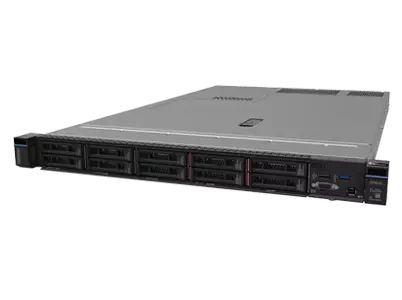

The right hardware platform for mission-critical server infrastructure should meet increasing performance and capacity requirements over time for data-driven workloads. Rack servers should be future-sensitive with respect to scalability, efficiency, and dependability in terms of rapidly increasing demands on computer resources. The following describes the ten essential factors that differentiate successful servers in agile computing frameworks.
Organizations may choose to establish a server platform that is adaptive to old and new technologies when they give priority to those critical features, including high processor performance and fault tolerance.
The following are ten major must-haves when considering a rack server for expanding business requirements.
1. Expansive Storage
Large datasets and instantaneous access demand elastic or expandable storage to be used in rack server solutions. Find products with multiple drive bays that support not only standard HDDs but also SSDs. Also, consider the opportunity to install expansion cards with additional slots for hard disks or alternative fast-storage devices like NVME. The nature of such scalable and software-defined storage means it would be possible to adapt the solution to changing needs over time.Scalable storage options are needed for servers, which should be able to double their sizes over time to accommodate the large dataset and volume. Search for models possessing not less than eight drive bays and compatible with multiple drive interfaces such as SAS, SATA, and NVMe, among others.In addition, some servers even allow one to add internal expansion cards for extra bays. This also allows scaling storage from just above ten TB to several rack spaces using well over a hundred TB. The storage part can also be pooled and tiered to dynamically allocate resources using software-defined approaches.2. Abundant Memory
Memory capacity needs to continue increasing with more data-intensive workloads. Servers should have ample memory slots and support for large memory capacities up to a terabyte or more. This ensures the platform can support applications, databases, and virtual machines with very large in-memory workloads. The memory subsystem should also support high speeds of 3,200 MHz or higher.
3. Multi-GPU Support
Specific workloads in industries like artificial intelligence, data science, and engineering require high-performance graphics processing. Servers with the ability to add multiple GPUs on riser cards or motherboard slots are suitable for these demanding workloads. Modeling capabilities, 3D rendering, VR simulations, and more can leverage multi-GPU configurations on a rack server platform.Industries like AI and data sciences require extreme GPU horsepower for computationally intensive model training. Servers that natively support 4 or more double-width GPUs, installable either vertically on riser cards or horizontally on the motherboard, enable the building of tremendously powerful deep-learning workstations. Some even integrate switch silicon, allowing GPUs to communicate at 100 Gbps speeds for fast distributed processing. The ability to scale GPU count upwards of 8 or more future proofs these servers for larger, more complex neural networks.4. High CPU Performance
Processing power is crucial for rack server based workloads like data analysis, database operations, and virtualization. Look for a processor with robust per-core performance and high core counts. This allows workload consolidation and leaves headroom for future growth. Opt for the latest-generation CPU architecture from major manufacturers to get the best combination of high single-threaded and multi-threaded performance.
5. Advanced Cooling Design
High-performance components produce substantial heat that must be adequately dissipated to ensure reliability. Proper cooling is important, but active cooling solutions increase noise and power consumption. Look for rack servers engineered with advanced thermal design like optimized ventilation, heat sinks, and fans with variable-speed controls to keep components cool securely while minimizing acoustic and energy impact.Today's highest-performing processors and GPUs produce enormous heat that must be dissipated carefully for optimal reliability. Look for servers with strategically located fans to promote front-to-back airflow without recirculation.Advanced designs integrate fan speed controls to automatically adjust based on real-time temperature readings from multiple sensors. Some high-density models even integrate liquid cooling blocks for memory or processors requiring direct contact with coolant for maximum cooling effectiveness under full-load conditions.6. Fault Tolerance
Given the critical role rack servers play, fault tolerance features ensure infrastructure reliability in the event of unexpected issues. These value-added capabilities include reliable and redundant power supplies, hot swap hard drives, and automatic operating system rebuilding capabilities. They also include integrated remote management tools for remote troubleshooting and repair and optional RAID storage configurations for high data availability.
Critical servers demand redundancy to prevent single points of failure causing downtime. Look for features like hot-swappable redundant power supplies, dual integrated NICs, RAID storage controllers, and automatically replicating storage snapshots across multiple disks or servers.
Some also integrate battery backups and runtime prediction to schedule maintenance before potential issues arise. Comprehensive logging and health monitoring through management tools enable quickly identifying the root causes of any issues if they occur.
7. Rugged Construction
Well-designed rack server hardware supports demanding and evolving data center operations. Look for durable components, rigid frames with minimal flexing or vibration even when fully loaded, toolless component access for simplified ongoing maintenance, small form factors for high density deployments, and certifications for reliability under extreme conditions.
8. Remote Management
Modern servers demand unified access to health status and control of all IT equipment, no matter its physical location. Look for remote management capabilities integrated at the hardware level, not just software tools. Servers with embedded baseboard management support remote monitoring, alerts, operating system deployment, and remediation anytime from anywhere without logging in locally.
9. Extensive Ports and Expansion
Consumable I/O allows creativity through external adapters, bridging older tech to new. Seek servers with a generous selection of internal and external ports, including high-speed networking, USB, serial, video, and PCIe expansion slots, to connect any ecosystem of new and old infrastructure peripherals. This sustains reusability and avoids constraints on upgrade paths.
10. Energy Efficiency
Data centers care about sustainability as well as the bottom line. Choose rack servers utilizing the latest processor architectures and featuring energy-saving technologies such as idle power management and power-proportionate cooling. Look for certifications confirming exceptional energy efficiency, whether in idle, moderate, or full workload use, helping reduce operational costs and carbon footprints.
Read also: Ignoring Insights About Your Company’s Storage Products Can Be a Mistake
Summing It Up
In conclusion, focus on overall platform longevity, scalability, reliability, and future upgradability when evaluating hardware for core infrastructure needs. The top 10 must-have rack server features outlined help ensure an ideal balance of performance, capacity, efficiency, and long-term flexibility for growing technology environments and workloads. Addressing these core considerations now simplifies adding, upgrading, and expanding down the road when business demands it.

























Sign in to leave a comment.