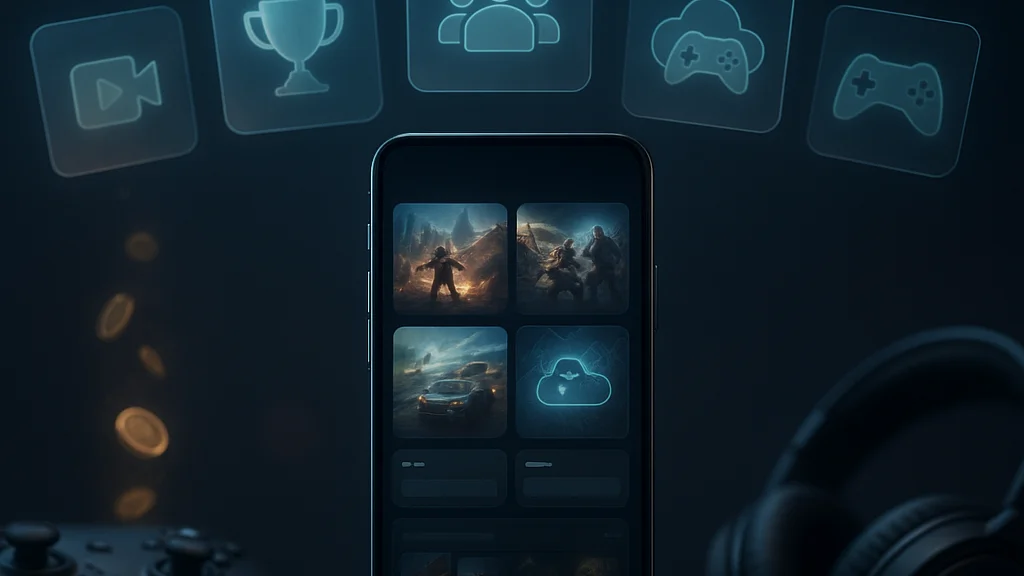

The phone in your hand is no longer a spare screen, no longer the place where people pass a few quiet minutes while waiting for coffee or a taxi. It has become the loudest arcade on earth, glowing in train stations, bedrooms, office elevators, and airport lounges, a small rectangle carrying billion-dollar economies behind glass. Mobile games now sit at the center of the games business, and the most revealing part of that story is not simply which titles earn the most. It is how they earn, why players return, and what design choices turn a game from a brief obsession into a habit with the weight of ritual.
By 2026, the conversation around mobile gaming is sharper, more mature, and more complicated than it was even two years ago. Revenue concentration remains intense, with a relatively small group of games capturing a disproportionate share of spending. According to market trackers including AppMagic and Sensor Tower, and as highlighted by Pocket Gamer.Biz’s coverage of the top grossing games of 2025, familiar giants such as Honor of Kings, MONOPOLY GO!, Royal Match, Last War: Survival, and Whiteout Survival have shaped the upper tier of mobile monetization. Some are old empires with polished marble columns, others are newer towers built at startling speed.
If you want a broad industry primer before settling into the deeper analysis here, WriteUpCafe has already mapped the terrain in Mobile Gaming Trends and Top Grossing Games Driving the Industry Forward and expanded the current cycle in Mobile Gaming Trends and Top Grossing Games in 2026. What follows goes further, drawing a line between the five trends shaping the market and the games that have translated those trends into cash flow, retention, and cultural durability.
The most important shift in mobile gaming is not that players spend more, but that the biggest games have learned to make spending feel like participation in an ongoing world.
That is the hinge of the whole story. Revenue no longer belongs only to the best-known IP or the prettiest art direction. It belongs to the titles that understand cadence, social pressure, live operations, and the psychology of return. Like a jazz standard played differently each night, the melody stays recognizable, but the arrangement keeps moving.
1. Live-service design has become the real product
The first major trend is also the most decisive: mobile gaming is no longer sold as a finished object. It is managed as a living service. Events, battle passes, rotating offers, seasonal content, and time-limited collaborations are not decorative extras now, they are the business model’s heartbeat. A decade ago, mobile success often came from scale and ad volume. In 2026, the most resilient games are those with operational discipline, where content calendars are planned months in advance and every update is tied to retention goals, payer conversion, or reactivation.
This helps explain why top grossing charts have become less chaotic. The leaders are not simply lucky. They are operationally relentless. Honor of Kings, Tencent’s long-running titan, remains a case study in how a mature game can still print extraordinary revenue through constant hero updates, esports visibility, cosmetics, and regional mastery, especially in China. Royal Match, from Dream Games, shows the same principle in a very different genre. Match games once looked disposable, but Royal Match turned polish, event loops, and aggressive user acquisition into a machine that keeps players spending well after the first week.
The newer survivors in the top-grossing class have copied that rhythm. Whiteout Survival and Last War: Survival both lean on alliance systems, event ladders, and spend pacing that makes every week feel like a fresh contest. Their monetization is not hidden. It is choreographed. Players are offered speedups, boosts, progression shortcuts, and prestige markers at exactly the moments where urgency is highest.
- What live-service leaders do well: frequent events tied to player progression
- Personalized offers that react to spending patterns or inactivity
- Guild, alliance, or clan systems that create social obligation
- Seasonal passes that stabilize recurring revenue
- Content updates that make old players feel the game is still moving
For developers and publishers, this means the game launch is merely the opening scene. The real test begins after install. Teams now compete as much on analytics, CRM, and content operations as on game design. That shift is one reason smaller studios struggle to remain visible after launch, even when their core gameplay is clever.
In mobile, the download is an introduction. The economy begins with the second week, not the first day.
2. Hybrid monetization now defines the middle and the top
The second trend is the spread of hybrid monetization, where in-app purchases, rewarded advertising, subscriptions, battle passes, and direct storefront events coexist inside the same title. The old divide between “premium spender game” and “ad-driven casual game” has softened. The strongest products now treat monetization like a layered soundtrack, different instruments entering at different emotional moments.
MONOPOLY GO! remains one of the clearest examples. Scopely’s adaptation transformed a familiar board-game brand into a social, event-heavy, spending-friendly mobile juggernaut. Its success is not based on a single monetization lever. It combines collection mechanics, event progression, social gifting, urgency windows, and a structure that makes small purchases feel harmless while nudging players toward larger cumulative spending. The game’s rise also showed the market that licensed or recognizable IP can still explode on mobile, provided the product is rebuilt for live-service economics rather than treated as a static adaptation.
Meanwhile, puzzle and strategy games increasingly use rewarded video not as a fallback, but as a precision tool. Non-payers can be retained through ad-based boosts, while payers receive cleaner progression through purchases. This widens the funnel. It also gives publishers more room to segment players by behavior. A user who never buys may still be profitable through ad monetization; a user who buys occasionally can be nurtured toward passes and bundles.
Industry reporting from Pocket Gamer.Biz and earnings commentary from major publishers suggest that this blended approach has become essential as user acquisition costs remain high and privacy changes continue to make targeting more difficult than it was before Apple’s ATT era. In plain terms, companies can no longer assume they will cheaply buy millions of users and sort the rest out later. They need each acquired player to generate value through multiple routes.
- In-app purchases remain the main revenue engine for top-grossing titles.
- Rewarded ads help monetize non-spenders without driving them away.
- Battle passes smooth revenue across months rather than spikes.
- Subscriptions increase predictability and deepen commitment.
- Limited-time bundles capture impulse spending during events.
This is one reason the top-grossing charts are harder to disrupt than they appear. A challenger now needs not just a compelling game, but a monetization architecture capable of serving whales, minnows, ad-watchers, and lapsed users all at once.
3. Social pressure, not solo play, is driving spending velocity
The third trend is social design, and it is easy to underestimate because it often hides behind soft language: teams, clubs, alliances, shared events, raids, gifting. Yet social pressure is one of the strongest engines in mobile spending. Players do not only buy for power or cosmetics. They buy to avoid letting others down, to keep pace with a team, to remain visible in a group, to preserve status in a world that refreshes every few days.
Strategy titles understand this with almost ruthless clarity. Last War: Survival and Whiteout Survival have benefited from alliance-based progression loops that turn individual advancement into collective momentum. When events are time-boxed and rankings are public, spending becomes a social accelerant. The player is not merely purchasing a resource pack. They are buying relevance. That emotional framing is one reason these games have climbed so quickly into the revenue conversation.
Even outside hard strategy, social mechanics are shaping outcomes. MONOPOLY GO! built momentum through shareable outcomes, friend interactions, and event structures that made the game feel less like solitary tapping and more like a dinner table argument stretched across phones and time zones. The top mobile games increasingly borrow from social media logic, not in the sense of endless feeds, but in the way they convert visibility into motivation.
This trend also intersects with regulation and public concern. As mobile titles become more socially sticky and psychologically sophisticated, lawmakers and consumer advocates are paying closer attention to design patterns around compulsion, minors, and monetization transparency. Pocket Gamer.Biz’s referenced roundup placed top-grossing game coverage alongside discussion of mental health warnings around social media, which is revealing in itself. The boundary between game loop and behavioral platform is becoming thinner.
For players, the effect can be intoxicating, warm as a crowded majlis and just as hard to leave. For publishers, it is commercially powerful. For regulators, it raises questions that are only beginning to mature.
- Guild systems increase retention by embedding players in routine
- Leaderboard events convert competition into revenue spikes
- Gifting and trading mechanics create return loops
- Chat and alliance coordination make games part of daily communication
If you are tracking the practical side of this shift, WriteUpCafe’s Expert Tips for Mobile Gaming Trends and Top Grossing Games in 2026 offers a useful companion read, especially for readers trying to interpret why certain genres suddenly look more profitable than others.
4. The top-grossing list reveals a genre realignment
The fourth trend is visible in the charts themselves: mobile’s revenue center has shifted toward a blend of strategy, social casino-style loops, polished puzzle systems, and long-running competitive ecosystems. Hypercasual, once treated as the democratic frontier of mobile, still matters for downloads and ad inventory, but it no longer defines prestige or top-line earnings the way it once did. The money sits elsewhere now, in games with deeper economies and longer player lifespans.
A simplified reading of the top-grossing field in 2025 and into 2026 shows several patterns. First, China-facing giants remain formidable, especially titles backed by Tencent and NetEase. Honor of Kings continues to stand as one of the highest-revenue mobile games in the world, sustained by domestic dominance, event sophistication, and a mature content pipeline. Second, Western breakout hits increasingly come from games that combine broad accessibility with very deep monetization. Royal Match is easy to understand, but difficult to exhaust. MONOPOLY GO! is familiar at a glance, but beneath that familiarity sits a dense event economy. Third, survival strategy games have become one of the market’s hottest revenue engines, with Whiteout Survival and Last War: Survival showing how quickly a well-run title can scale when acquisition, creative marketing, and alliance systems align.
Those games are not identical, but they share structural traits:
- Simple onboarding, so the first session feels frictionless
- Long-term progression systems that create future desire
- Event calendars that keep the economy in motion
- Monetization offers timed to moments of scarcity or competition
- Art direction broad enough to travel across regions
What has faded, by contrast, is the idea that one viral creative concept can dominate for long without operational depth. Downloads may still come from a brilliant ad. Revenue longevity does not. Investors, publishers, and UA teams increasingly understand this. The market rewards games that can survive the winter, not just bloom in a single bright week.
Readers looking for a more introductory map of these shifts can also see how the conversation has evolved in How to Get Started with Mobile Gaming Trends and Top Grossing Games in 2026, which frames the fundamentals clearly before the deeper strategic layers come into view.
5. User acquisition has become more creative, more expensive, and more theatrical
The fifth trend shaping both chart performance and revenue concentration is user acquisition, which in 2026 feels less like media buying alone and more like a form of industrial storytelling. The old certainty of mobile advertising has been shaken by privacy changes, platform shifts, and rising competition. As a result, the games winning now are often those with the best creative pipelines, strongest cross-channel marketing, and the patience to optimize campaigns over time rather than simply outspend rivals in bursts.
Last War: Survival is a good example of how aggressive and inventive UA can turn a game into a category event. The title became highly visible through ad creatives that emphasized spectacle, transformation, and simplified power fantasy, even when the ads highlighted only one slice of the broader product. That tactic is hardly new in mobile, but the scale and consistency mattered. Once users entered, the game’s alliance and event systems did the retention work. Whiteout Survival used similarly sharp messaging around scarcity, survival, and communal rebuilding, themes that are easy to grasp in seconds.
Meanwhile, established leaders such as Royal Match have shown the value of sustained television-style brand advertising alongside digital performance campaigns. This matters because mobile gaming is no longer only competing with other mobile games. It is competing with streaming, short video, sports, and every other form of attention. The biggest publishers now market games the way studios once marketed films, with broad creative testing, regional tailoring, and event-driven beats.
Mobile’s winners are increasingly built twice, once by the game team and once again by the marketing machine that teaches the public how to desire it.
There is a cost to this. Smaller teams face a harsher climb, particularly if they lack war chests or a publishing partner. Yet the pressure has also forced more inventive positioning. Hybrid-casual products, niche strategy titles, and genre mashups are often marketed through highly specific fantasy hooks rather than broad promises. In a crowded store, clarity is oxygen.
The top 5 trends meet the top-grossing games
When you place these trends side by side, a pattern emerges as clean as light on wet pavement after midnight. The highest-grossing mobile games are not random chart occupants. They are the titles that best combine live operations, hybrid monetization, social retention, genre-fit economies, and creative user acquisition. The names may shift around the edges, but the formula has become easier to identify.
Based on widely cited 2025 revenue reporting and 2026 market discussion from firms such as AppMagic, Sensor Tower, and Pocket Gamer.Biz, the games most often mentioned near the top include:
- Honor of Kings — still a benchmark for scale, especially in China
- MONOPOLY GO! — a Western revenue powerhouse built on social event loops
- Royal Match — proof that puzzle can be elite business with the right live ops
- Last War: Survival — a fast-rising strategy hit powered by marketing and alliance play
- Whiteout Survival — a survival builder that turned harsh atmosphere into sticky monetization
There are, of course, other major earners in the wider ecosystem, including long-running titles in RPG, shooter, and collectible categories, as well as regionally dominant games that do not always command the same English-language coverage. But these five illustrate the current market logic with unusual clarity.
What changed recently, especially from late 2024 through 2026, is the speed with which newer strategy and survival titles climbed into elite company. That suggests players are still willing to move, still willing to adopt fresh worlds, provided those worlds offer urgency, social texture, and a clear path to status. The market is concentrated, yes, but not frozen.
What to watch next, from 2026 onward
The next chapter of mobile gaming will likely be shaped by three pressures at once: platform economics, regulation, and content fatigue. App store policy shifts can still alter margins overnight. Regulatory scrutiny around monetization, minors, and dark-pattern design is likely to intensify across major markets. At the same time, players are becoming more selective. The average user has seen thousands of event pop-ups, bundles, countdown clocks, and battle passes. Familiar tactics still work, but they are losing some of their old shock.
That means future winners may need to balance sophistication with restraint. Better onboarding, cleaner interfaces, fairer value perception, and stronger community management may become differentiators. Artificial intelligence will almost certainly play a larger role in live ops planning, personalization, creative testing, and customer support, though the companies that rely on automation without preserving design coherence may end up sounding like empty rooms, polished and echoing.
For investors and industry watchers, one practical takeaway stands out: do not judge a mobile game by downloads alone. Watch its event cadence, social systems, payer conversion, and ability to sustain relevance after the first acquisition surge. For developers, the lesson is harsher but useful. A good core loop is the beginning, not the finish line. For players, perhaps the most human takeaway is simply this, understand the systems you are stepping into. The best mobile games are beautiful machines. They are built to charm, to retain, to ask for one more minute, one more tap, one more purchase before sleep.
And still, there is something undeniably fascinating about the medium. Mobile gaming remains the most intimate frontier in entertainment, a global industry carried in pockets, played under blankets, in taxis, on lunch breaks, beside rainy windows. The top-grossing games have become rich not by accident, but by mastering the rhythm of modern attention. If you want to know where the business is heading, follow those rhythms. They are already humming beneath the glass.

























Sign in to leave a comment.