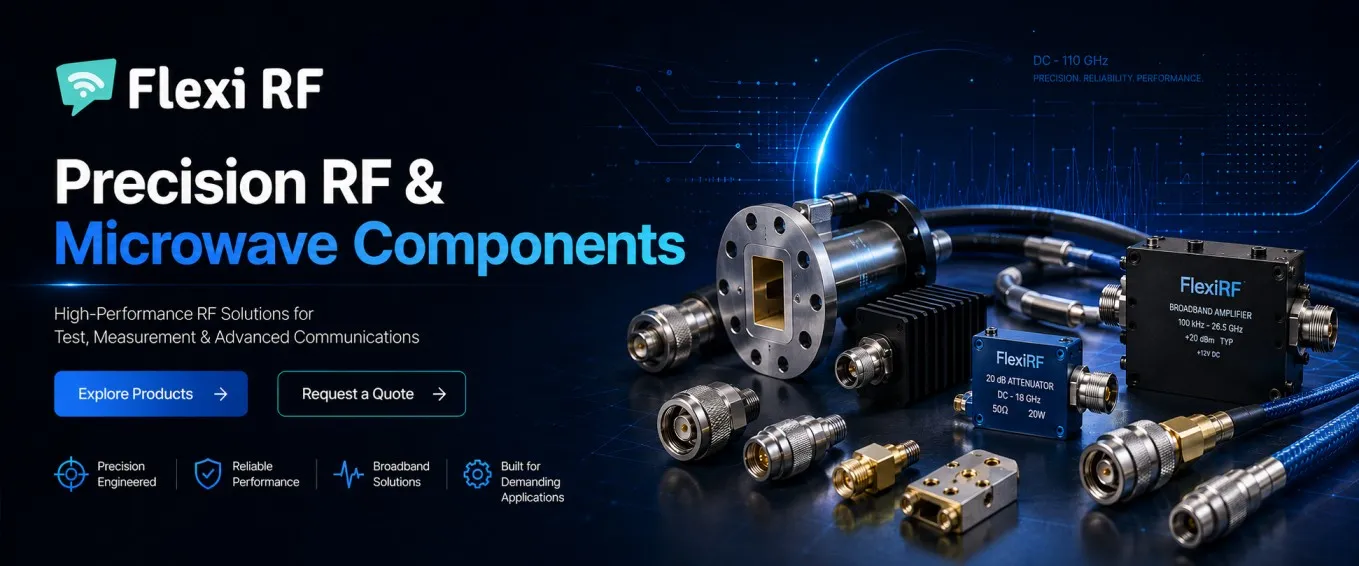

When you are working with high-frequency signals, even the smallest component in your signal chain matters. A poor-quality connector or adapter can throw off your entire measurement. That is why choosing the right adapter is not something you want to rush through.
For anyone working in millimetre-wave testing, semiconductor research, or radar development, the 1.0mm adapter is one of the most important tools in the lab. Getting the selection right saves time, money, and a lot of frustration.
What Makes High-Frequency Testing So Demanding
Testing at millimetre-wave frequencies is not like testing at lower RF ranges. Signals behave differently at these levels. Even tiny imperfections in a connector can cause signal reflections, measurement errors, or power loss.
Once you push into the 110 GHz range, precision is not just preferred, it is required. Every component in the signal path has to hold up, or your results will not mean much. This includes cables, connectors, and especially the adapters that connect them. The margin for error is very small.
Key Factors to Consider Before Buying
Frequency Range
The first thing to check is whether the adapter supports the full frequency range you are working in. Not all adapters are built the same.
● Standard 1.0mm adapter cover DC to 110 GHz
● Some cross-series adapters, such as 1.85mm to 1.0mm types, cover DC to 67 GHz
● Speciality adapters like 1.0mm to 0.8mm also cover DC to 110 GHz
Always match the adapter to the highest frequency in your test setup. Using an adapter rated below your operating frequency is a common mistake that results in poor performance.
Connector Gender and Configuration
Before ordering, confirm exactly which configuration you need. Labs often stock the wrong gender and end up with adapters that do not fit.
Common configurations include:
● Male to male
● Female to female
● Male to female
Flexi RF Inc offers all of these in its 1.0mm series, making it easy to find the right fit for your specific setup.
Build Quality and Materials
At high frequencies, material quality directly affects performance. Search for adapters with a stainless steel body design, tight mechanical tolerances, and air-dielectric interface design. These features help to maintain low VSWR and good signal integrity throughout the entire frequency range.
Flexi RF Inc uses these specifications to develop its adapters to meet the needs of professional lab environments.
VSWR and Insertion Loss
VSWR (voltage standing wave ratio) is a measure of the ability of a signal to pass through a component without reflection.
Check:
● VSWR across the full frequency range
● Insertion loss at the highest operating frequency
● Return loss figures
These numbers provide a good idea of how the adapter will perform in actual testing situations.
Cross-Series Adapters
When your test equipment uses different connector standards, you need a cross-series adapter. For example, a 1.85mm-to-1.0mm adapter lets you connect older equipment with a 1.85mm port to a newer test setup that uses the 1.0mm standard.
G3PO and SMPS Interfaces
Some compact test systems use G3PO or SMPS connectors. Flexi RF Inc offers adapters that bridge these with 1.0mm ports, covering up to 100 GHz.
Why Reproducibility Matters in Lab Testing
One of the biggest challenges in millimeter-wave testing is getting consistent results. If an adapter shifts or wears down over time, your measurements will drift.
Good adapters are designed for repeatable connections. This means:
● Consistent torque values during mating
● Durable materials that hold up over hundreds of connection cycles
● Stable electrical performance across temperature changes
For semiconductor wafer probing or automotive radar testing, this level of consistency is not optional. It is a requirement.
Choosing a Trusted Supplier
The adapter you choose is only as good as the company that makes it. When evaluating suppliers, consider:
- Do they provide full electrical specifications?
- Is technical support available when you have questions?
- Can they ship quickly when you need replacements?
Flexi RF Inc focuses on fast shipping, experienced RF engineering support, and a large inventory of in-stock components. For labs that cannot afford delays, these things matter as much as the product itself.
Final Thoughts
Choosing the right 1.0mm adapter for high-frequency testing does not have to be complicated. Focus on frequency range, build quality, connector configuration, and electrical performance. These four areas will guide you to the right product every time.
Whether you are setting up a new test bench or replacing worn components, taking a few extra minutes to review the specs will always pay off in more accurate, reliable measurements. Explore Flexi RF Inc's range of 1.0mm adapter solutions to support your high-frequency testing requirements.



























Sign in to leave a comment.