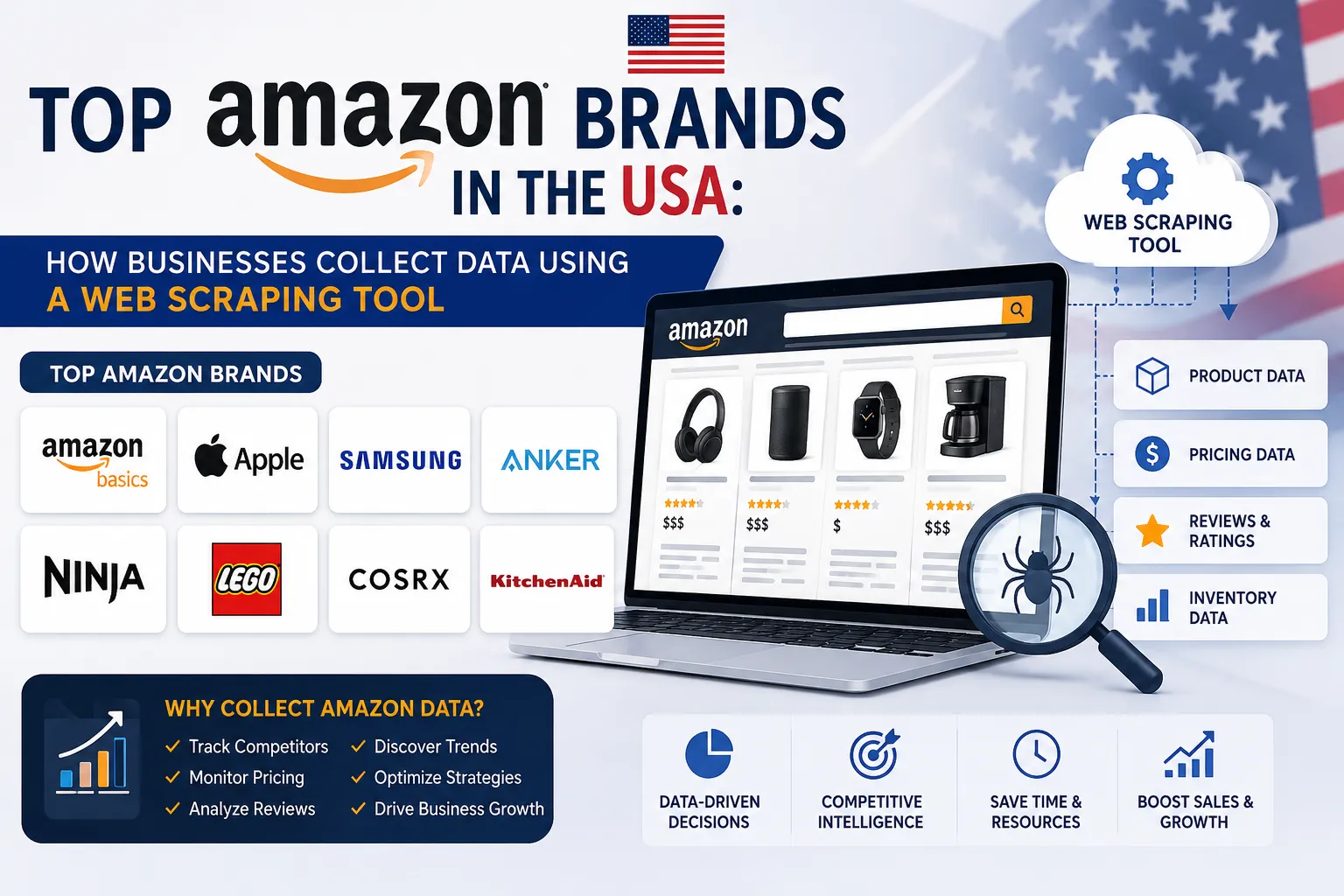

Amazon has become the largest e-commerce marketplace in the United States, hosting millions of products across thousands of brands. From electronics and home goods to beauty and grocery products, leading Amazon brands compete daily for visibility, reviews, and sales.
For retailers, marketplace sellers, consultants, and consumer brands, understanding which brands dominate Amazon can reveal valuable insights about pricing strategies, product assortment, customer sentiment, and market trends. This is why many businesses collect data using a web scraping tool to analyze Amazon's competitive landscape at scale.
Why Monitor Top Amazon Brands?
Tracking top-performing Amazon brands helps businesses answer important questions:
- Which brands dominate specific product categories?
- How many products does a brand offer?
- What pricing strategies are competitors using?
- Which products generate the most customer reviews?
- How do ratings vary across categories?
- What trends are emerging among best-selling products?
Manually collecting this information is difficult because Amazon contains millions of product listings that change daily. As a result, companies often use a web scraping tool to automate data collection and generate actionable insights.
Leading Amazon Brands in the USA
While rankings vary by category, several brands consistently maintain strong visibility and sales performance on Amazon US.
Amazon Basics
Amazon's private-label brand has become one of the marketplace's biggest success stories. Amazon Basics offers affordable products across electronics, office supplies, home goods, and accessories.
Key strengths:
- Competitive pricing
- Large product catalog
- Strong customer trust
- Extensive review volume
Apple
Apple remains one of the most searched and purchased brands on Amazon. Products such as AirPods, iPads, Mac accessories, and Apple Watches consistently rank among top-selling electronics.
Key strengths:
- Premium brand recognition
- High customer loyalty
- Strong product ratings
Samsung
Samsung dominates multiple categories including smartphones, televisions, monitors, storage devices, and home appliances.
Key strengths:
- Broad product portfolio
- Frequent product launches
- Strong marketplace visibility
Anker
Anker has emerged as one of Amazon's most successful digital-native brands. The company is particularly strong in charging accessories, power banks, and consumer electronics.
Key strengths:
- Excellent review ratings
- Competitive pricing
- Strong customer satisfaction
Ninja
Ninja has become a leading home appliance brand on Amazon, especially in kitchen equipment categories.
Popular products include:
- Air fryers
- Blenders
- Coffee makers
- Food processors
LEGO
LEGO consistently ranks among the highest-performing toy brands on Amazon.
Key strengths:
- Strong brand equity
- Seasonal demand spikes
- High review engagement
COSRX
The Korean skincare brand COSRX has gained significant traction among Amazon shoppers in the beauty category.
Key strengths:
- Viral product popularity
- Strong customer reviews
- Competitive pricing
KitchenAid
KitchenAid remains a dominant force in kitchen appliances and accessories.
Key strengths:
- Premium product positioning
- Strong customer trust
- Consistent bestseller rankings
How Businesses Collect Amazon Data Using a Web Scraping Tool
Businesses increasingly rely on a web scraping tool to gather marketplace intelligence from Amazon.
Typical data points collected include:
Product Information
- Product title
- Brand name
- Category
- Description
- Specifications
Pricing Data
- Current price
- Discount percentage
- Historical price changes
- Buy Box ownership
Review Data
- Review count
- Star ratings
- Customer feedback
- Sentiment analysis
Search Results Data
- Keyword rankings
- Sponsored placements
- Organic visibility
- Competitor performance
Inventory Insights
- Product availability
- Stock status
- Seller count
- Fulfillment method
By collecting this information at scale, businesses can identify market opportunities and respond quickly to competitive changes.
Benefits of Amazon Data Collection
Organizations use Amazon marketplace data for several strategic purposes:
Competitive Intelligence
Monitor competitor pricing, product launches, and promotional activity.
Product Research
Identify gaps in the market and discover emerging product trends.
Brand Monitoring
Track how customers perceive products through ratings and reviews.
Pricing Optimization
Analyze category pricing benchmarks and adjust pricing strategies accordingly.
Customer Insights
Understand common customer complaints, feature requests, and purchase drivers.
Choosing the Right Web Scraping Tool
When selecting a web scraping tool for Amazon research, businesses should evaluate:
- Scalability
- Data accuracy
- Scheduling capabilities
- Export formats
- API availability
- Compliance features
A robust web scraping tool enables companies to automate repetitive data collection tasks and focus on analyzing insights rather than gathering information manually.
Conclusion
Amazon remains the most influential e-commerce marketplace in the United States, with brands such as Amazon Basics, Apple, Samsung, Anker, Ninja, LEGO, COSRX, and KitchenAid attracting millions of customers each month.
As competition intensifies, businesses increasingly collect data using a web scraping tool to monitor product listings, pricing trends, customer reviews, and marketplace performance. By leveraging automated data collection, brands can gain a clearer understanding of the competitive landscape and make more informed business decisions.






























Sign in to leave a comment.