

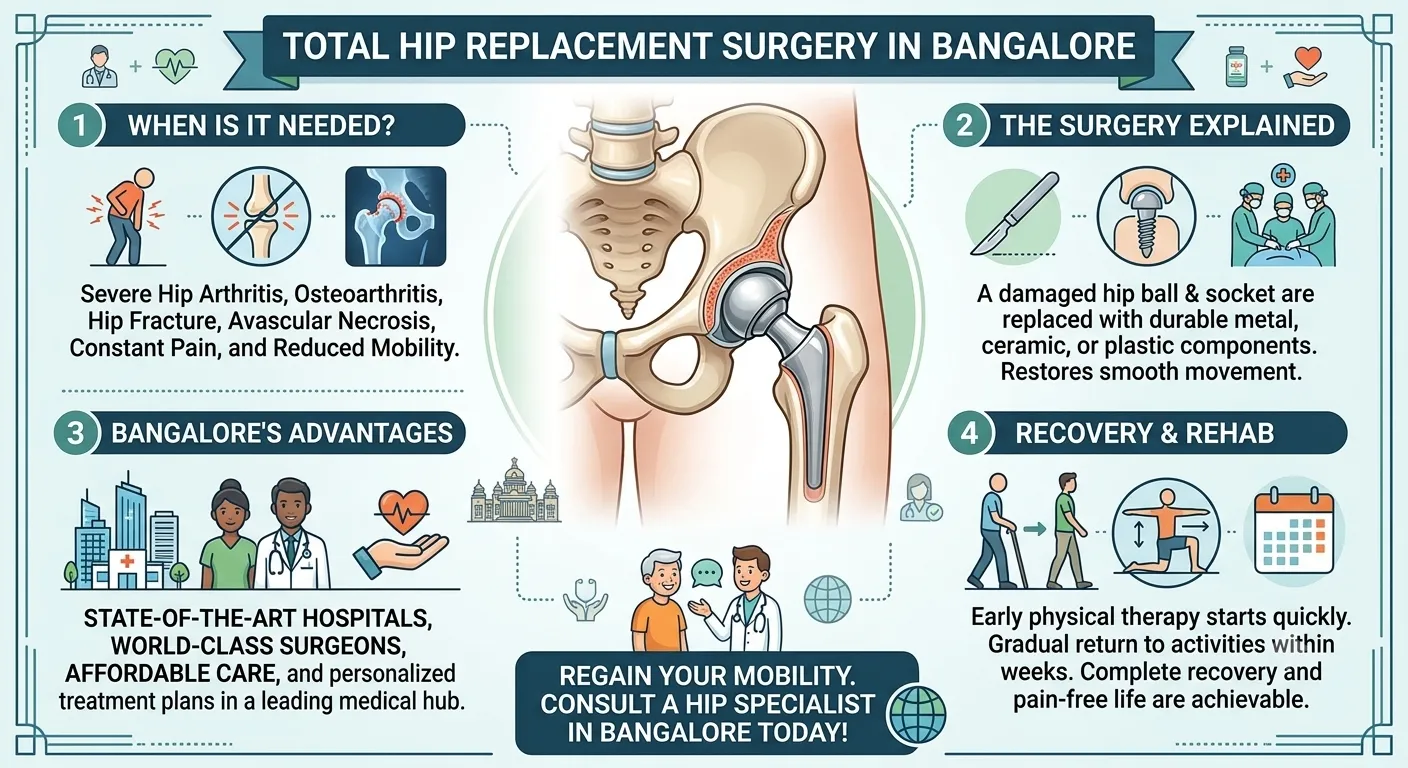
Total hip replacement surgery may be considered when severe hip pain, stiffness or joint damage starts affecting walking, sleeping, work or everyday activities, especially when appropriate non-surgical treatment no longer provides enough relief. The decision depends on your symptoms, mobility, joint condition, overall health and treatment goals—not an X-ray alone.
What Is Total Hip Replacement Surgery?
Total hip replacement surgery is a procedure in which damaged parts of the hip joint are replaced with artificial components to reduce pain and improve movement. The hip is a ball-and-socket joint, and total replacement generally involves replacing both the damaged femoral head and the affected socket surface.
The artificial components may include metal, ceramic or plastic materials, depending on the implant system selected for the individual patient.
Why Is Total Hip Replacement Surgery Performed?
Total hip replacement is usually considered when hip damage causes persistent pain and loss of function that significantly affects daily life.
Common reasons may include:
- Advanced osteoarthritis of the hip
- Rheumatoid or inflammatory arthritis
- Avascular necrosis
- Severe joint damage following injury
- Hip deformity or other conditions affecting the joint
- Persistent pain despite appropriate non-surgical treatment
Treatment is not based on imaging alone. The severity of pain, mobility limitations, examination findings, imaging and response to previous treatment are considered together.
Who Are Ideal Candidates for Total Hip Replacement Surgery?
An ideal candidate is generally someone with significant hip pain or disability caused by joint damage who has not obtained enough relief from appropriate non-surgical treatment.
You may need an evaluation if hip pain is affecting your ability to walk, climb stairs, sit comfortably, sleep or perform routine activities.
Age alone does not determine whether someone is suitable for surgery. Your general health, bone condition, activity level, hip damage and expectations are also considered.
How Do You Prepare for Total Hip Replacement Surgery?
Preparation starts with a medical evaluation to make sure surgery is appropriate and that existing health conditions are properly managed.
Depending on your situation, preparation may include:
- Medical and medication review
- Blood tests and other pre-operative investigations
- Hip imaging
- Assessment of general health and fitness for surgery
- Strengthening exercises where appropriate
- Planning support and transportation after discharge
- Preparing your home for safer movement during recovery
If you smoke, have excess weight or have other medical conditions, your doctor may recommend steps to improve your surgical preparation and recovery.
What Happens During Total Hip Replacement Surgery?
During total hip replacement, the damaged parts of the hip joint are removed and replaced with artificial components.
The procedure generally involves:
- Preparing the patient for surgery and anaesthesia.
- Accessing the hip joint through the selected surgical approach.
- Removing the damaged femoral head.
- Preparing the hip socket for the artificial component.
- Placing the new femoral and socket components.
- Checking hip movement and stability.
- Closing the surgical wound and beginning post-operative care.
The exact surgical approach, implant components and procedure details depend on the patient's anatomy, condition and the surgeon's clinical plan.
What Types of Implants Are Used in Total Hip Replacement Surgery?
Hip replacement implants consist of components designed to recreate the function of the natural hip joint.
The main components include the femoral component, which replaces the damaged ball, and the acetabular component, which replaces the damaged socket surface. Different bearing materials, including combinations involving metal, ceramic and highly durable plastic, may be available.
Implant selection depends on factors such as age, bone quality, anatomy, activity level, joint condition and the surgeon's assessment.
What Are the Benefits of Total Hip Replacement Surgery?
The main goal of total hip replacement is to reduce pain and improve the function of a damaged hip.
Potential benefits include:
- Reduced hip pain
- Improved walking ability
- Better hip movement
- Greater independence in daily activities
- Improved ability to perform routine tasks
- Better overall quality of life
The result is not identical for every patient. Recovery and functional improvement depend on factors such as overall health, muscle strength, pre-operative mobility and rehabilitation.
What Are the Risks and Complications of Total Hip Replacement Surgery?
Total hip replacement is a major surgical procedure, so understanding potential complications is important before making a decision.
Possible complications include infection, blood clots, dislocation, bleeding, differences in leg length, injury to surrounding nerves or blood vessels, implant wear or loosening, and the possibility of further surgery.
These complications are not expected in every patient. Your individual risk depends on your health, anatomy, previous surgeries and other factors. Your surgeon should discuss the relevant risks and precautions with you before surgery.
How Long Is the Recovery Period After Total Hip Replacement Surgery?
Recovery after total hip replacement takes time and varies between patients. Many patients begin moving and walking with assistance soon after surgery when medically appropriate.
During the early recovery period, you may use a walker or crutches and begin physiotherapy. Pain and swelling generally improve gradually, while strength and movement continue to develop over the following weeks and months.
Some patients return to routine activities relatively quickly, but complete recovery can take several months. Your recovery timeline depends on your age, general health, pre-surgery mobility, muscle strength and rehabilitation.
What Post-Operative Care Is Needed After Total Hip Replacement Surgery?
Post-operative care focuses on protecting the healing joint while gradually restoring movement and strength.
Your recovery plan may include:
- Walking as advised by your medical team
- Physiotherapy and prescribed exercises
- Taking medicines as directed
- Looking after the surgical wound
- Attending follow-up appointments
- Gradually increasing everyday activities
- Following precautions recommended for your particular surgical approach
Seek medical advice if you develop increasing pain, wound drainage, fever, significant swelling or other symptoms that concern you after surgery.
How Effective Is Total Hip Replacement Surgery?
Total hip replacement can significantly reduce pain and improve mobility and everyday function for appropriately selected patients with severe hip joint problems.
However, outcomes depend on several factors, including the condition of the hip before surgery, general health, surgical technique, implant selection and rehabilitation.
A successful outcome also involves more than the operation itself. Following post-operative instructions, completing rehabilitation and attending follow-up appointments are important parts of recovery.
Why Consult Dr. Abhinandan Punit for Total Hip Replacement in Bangalore?
Dr. Abhinandan Punit is an orthopedic and joint replacement surgeon in Bangalore with more than 15 years of clinical and surgical experience and 6,000+ orthopedic surgeries.
His qualifications include MS Orthopaedics, DNB Orthopaedics, MCh Orthopaedics from the University of Edinburgh, UK, and MSc Sports & Exercise Medicine from the University of South Wales. He has also undergone international orthopedic training in the UK, Europe and Australia.
Dr. Abhinandan Punit is a Senior Consultant and Clinical Lead for Joint Replacement at Narayana Health City, Bangalore, and is the founder of Elite Orthocare Multi-Specialty Clinic.
Where Can You Consult Dr. Abhinandan Punit in Bangalore?
Patients looking for a total hip replacement surgeon in Bangalore can consult Dr. Abhinandan Punit at his practice locations.
For patients in South Bangalore, Elite Orthocare on Kanakapura Road provides a local consultation option. His healthcare affiliations also include Narayana healthcare facilities in Bangalore.
During a consultation, the condition of the hip can be assessed using your symptoms, physical examination and appropriate imaging to determine whether non-surgical treatment or hip replacement should be considered.
Frequently Asked Questions About Total Hip Replacement Surgery
When is total hip replacement surgery needed?
Total hip replacement may be considered when persistent hip pain, stiffness or joint damage significantly affects walking, sleep or everyday activities and appropriate non-surgical treatment has not provided enough relief. Doctors also consider physical examination, imaging, general health, mobility and patient goals before recommending surgery.
Can hip arthritis be treated without total hip replacement?
Yes. Depending on the severity and cause of hip arthritis, treatment may include activity modification, appropriate exercises, physiotherapy, medicines and other non-surgical options. These treatments may help manage symptoms in some patients. Hip replacement may be considered when pain and functional limitations remain significant despite appropriate treatment.
How long does total hip replacement surgery take?
The operating time varies depending on the patient's condition, surgical approach and other factors. The overall hospital experience also includes preparation before surgery and recovery after anaesthesia. Your surgeon can provide a more specific estimate after evaluating your hip condition and discussing the planned procedure.
How long does it take to recover after total hip replacement?
Recovery varies between individuals. Patients often begin walking with assistance soon after surgery when medically appropriate, followed by physiotherapy and gradual increases in activity. Pain and swelling usually improve progressively, while strength and function continue to develop over the following weeks and months. Complete recovery can take several months.
How long can a hip replacement last?
Modern hip replacement implants are designed to provide long-term function, but their lifespan varies between patients. Implant wear can depend on factors such as age, activity level, implant materials and other individual factors. A surgeon can explain the expected longevity of the specific implant selected for you.
Who should I consult for total hip replacement in Bangalore?
Patients considering total hip replacement should consult an orthopedic surgeon with experience in hip and joint replacement surgery. Dr. Abhinandan Punit is an orthopedic and joint replacement surgeon in Bangalore with 15+ years of clinical and surgical experience and 6,000+ orthopedic surgeries. He consults at Elite Orthocare on Kanakapura Road and other Bangalore locations.






















Sign in to leave a comment.