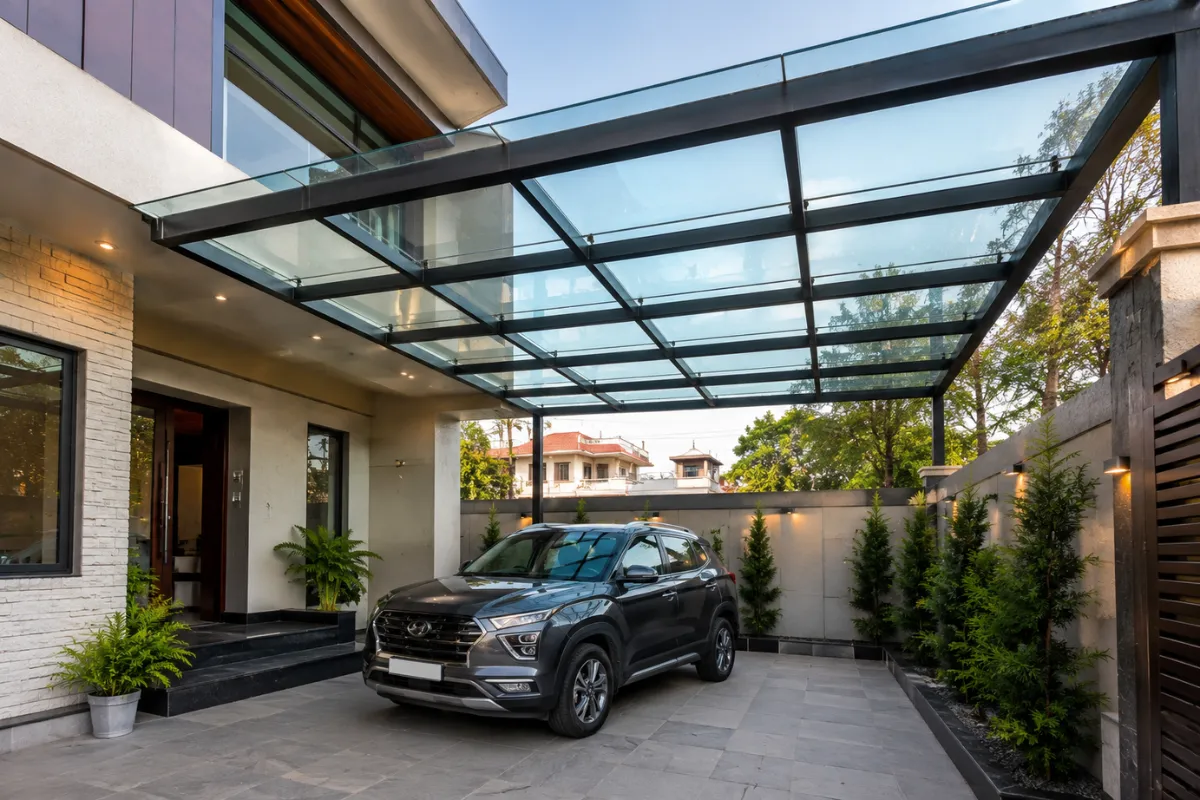

A toughened glass roof can make a terrace, balcony, entrance, or outdoor space brighter and more useful. It allows natural light to enter while helping protect the space below from rain and dust.
But installing a glass roof is not as simple as buying glass and fixing it over an open area.
Many problems start when people focus only on the look or price of the glass. They may forget about the frame, roof slope, drainage, waterproofing, heat, safety, and future maintenance.
These mistakes can lead to leaks, extra repair costs, or a roof that does not work well for the building.
This article explains common mistakes people should avoid when planning a toughened glass roof in Nepal.
Mistake 1: Choosing Glass Only by Price
Cost is important for every building project. However, choosing the cheapest glass without checking the needs of the roof can create problems.
Every glass roofing project is different. A small balcony cover does not have the same needs as a large terrace or commercial glass roof.
The size of the glass panels, distance between supports, frame design, roof location, expected loads, and use of the area below should be considered.
A lower price may look attractive at first. But if the glass or roofing system is not suitable for the project, repair or replacement work may cost more later.
The better approach is to understand what the project needs before comparing prices.
Mistake 2: Using the Same Glass Thickness for Every Roof
People often ask which glass thickness is best for roofing.
There is no single answer for every building.
The right glass specification depends on the roof design, panel size, support spacing, expected loads, frame structure, and other site conditions.
A small residential roof and a large commercial roofing system may need different types of glass and support.
For some overhead glazing projects, laminated glass or other safety glazing systems may also be considered.
Property owners should ask why a certain glass specification is being recommended rather than choosing one thickness for every project.
Mistake 3: Ignoring the Supporting Frame
People can spend a lot of time comparing glass and forget about the structure holding it.
The frame is one of the most important parts of a glass roof.
Aluminium is often used because it is light and does not rust like untreated steel. Steel may be used when the roofing system needs greater structural strength.
The frame should be suitable for the size and design of the roof.
Weak connections, poor support spacing, unwanted movement, and incorrect fixing can affect the complete roofing system.
Strong glass cannot solve problems caused by a poorly planned supporting structure.
Mistake 4: Treating Waterproofing as the Last Step
Nepal receives heavy rain during the monsoon. This makes waterproofing a major part of glass roof planning.
One common mistake is installing the frame and glass first and thinking about water drainage later.
Rainwater needs a clear path to leave the roof.
The roof should have enough slope. Drainage channels should be properly planned. Joints need suitable gaskets and sealing materials.
If water stays on the roof or enters weak joints, leaks may develop.
Good waterproofing starts during the design stage, not after the roof begins leaking.
Mistake 5: Forgetting About Drainage Maintenance
Even a well-designed drainage system can stop working if it is not kept clean.
Leaves, dust, dirt, and other waste can collect inside drainage channels. When water cannot move away, it may collect on the roof or enter weak joints.
Property owners should know where the drainage channels are and how they can be cleaned.
Checking the drainage system before Nepal’s monsoon season can help find blockages early.
A roof should also be designed so regular inspection and cleaning can be done safely.
Mistake 6: Not Thinking About Heat Before Installation
Natural light is one of the main benefits of a glass roof.
However, sunlight can also make the space below clear glass warmer.
The amount of heat depends on the location of the roof, glass product, ventilation, building design, and use of the space.
A terrace sitting area may have different heat-control needs from a building entrance or open parking area.
Suitable glazing products, shading, ventilation, and other heat-control methods can be considered during planning.
Waiting until the roof has been installed may make heat problems harder or more costly to solve.
Mistake 7: Comparing Contractors Only by the Lowest Quotation
The lowest price does not always mean the best value.
Two glass roof quotations may include very different materials and services.
One quotation may include stronger frame materials, proper drainage, suitable sealants, site assessment, and detailed installation work. Another may include only basic materials and labour.
Property owners should ask what is included in the total cost.
A clear quotation should explain the glass specifications, frame system, waterproofing materials, drainage work, installation charges, and other important costs.
The goal should be to compare the complete roofing systems, not only the final price.
Mistake 8: Believing Toughened Glass Needs No Maintenance
Toughened glass is strong, but the complete roofing system still needs care.
Dust and dirt can collect on the glass. Drainage channels can become blocked. Sealants can become damaged as they age.
The glass surface should be cleaned using suitable tools, water, and mild cleaning products.
Sealants and joints should be checked for cracks, gaps, or other signs of damage.
The supporting frame should also be inspected for loose connections, unwanted movement, and corrosion where steel is used.
Regular checks can help find small problems before they become larger repairs.
Mistake 9: Using Toughened Glass and Polycarbonate as If They Are the Same
Toughened glass and polycarbonate are both used for roofing, but they have different features.
Polycarbonate is light and may have a lower starting cost. It can be useful when low weight or a smaller starting budget is important.
Toughened glass is heavier and needs proper structural support. Its starting cost may also be higher.
Good-quality glass can stay clear for many years when properly installed and maintained. Some polycarbonate sheets may become scratched, cloudy, or discoloured over time.
Property owners should compare expected service life, maintenance, appearance, safety, structural needs, and total cost before choosing a material.
Mistake 10: Starting Installation Without Learning the Basics
Property owners do not need to become glass roofing experts.
However, knowing the basic parts of a glass roof can help people ask better questions.
Before starting a project, learn about glass types, supporting frames, roof slope, drainage, waterproofing, heat control, installation, and maintenance.
It is also useful to read local information because weather, common building designs, material availability, and project conditions can vary between countries.
Repairing Service Nepal has published a detailed educational resource about the toughened glass roof in Nepal, covering common applications, materials, installation steps, waterproofing, price factors, maintenance, and other points property owners may want to research.
https://repairingservicenepal.com/toughened-glass-roof/
Reading detailed resources should be one part of the research process. The final roofing system should still be selected after considering the actual building and project conditions.
What Should Property Owners Do Instead?
Start by deciding how the covered space will be used.
Have the site and existing building checked before choosing the glass specification and frame system.
Ask how rainwater will leave the roof and how the drainage system can be cleaned.
Learn what materials are included in the project quotation.
Think about sunlight, heat, maintenance, and safe cleaning access before installation begins.
Most importantly, compare the complete roofing plan rather than making a decision only by looking at price or appearance.
Final Thoughts
A toughened glass roof can provide natural light and make an open space more useful.
However, successful glass roofing depends on careful planning.
Choosing unsuitable glass, ignoring the frame, planning drainage too late, using poor sealing methods, and forgetting maintenance can lead to future problems.
Property owners who understand these common mistakes can ask better questions and compare roofing plans more carefully.
Good decisions before installation can help reduce repair problems and improve the long-term use of the roofing system.
Frequently Asked Questions
What is a toughened glass roof?
A toughened glass roof is a roofing system that uses heat-treated safety glass supported by a suitable frame. It covers a space while allowing natural light to enter.
Is a toughened glass roof safe for homes?
It can be safe when the glass specifications, supporting structure, connections, installation method, and safety measures are suitable for the building.
What is the most common mistake when installing a glass roof?
There is no single mistake in every project. Poor drainage, incorrect glass selection, weak supporting structures, and bad sealing work are common causes of problems.
Can a toughened glass roof leak during Nepal’s monsoon?
Yes. Leaks may happen because of poor sealing, damaged joints, blocked drainage, an incorrect roof slope, or movement in the roofing system.
How much does a toughened glass roof cost in Nepal?
The cost depends on the size of the roof, glass specifications, frame material, structural needs, waterproofing, drainage, site conditions, transportation, and installation work.
Is toughened glass better than polycarbonate roofing?
The better material depends on the project. Toughened glass can provide long-term clarity and a modern appearance. Polycarbonate is lighter and may have a lower starting cost.
Does toughened glass roofing require maintenance?
Yes. The glass should be cleaned, drainage channels should be kept clear, and the sealants, joints, and supporting frame should be inspected regularly.
Should I choose a glass roof installer based on price?
Price is one factor, but it should not be the only factor. Property owners should compare the materials, glass specifications, frame design, drainage, waterproofing, installation process, and total project scope.
When should a glass roof be inspected?
A glass roof should be inspected regularly, when signs of leakage or damage appear, and before Nepal’s monsoon season when possible.






















Sign in to leave a comment.