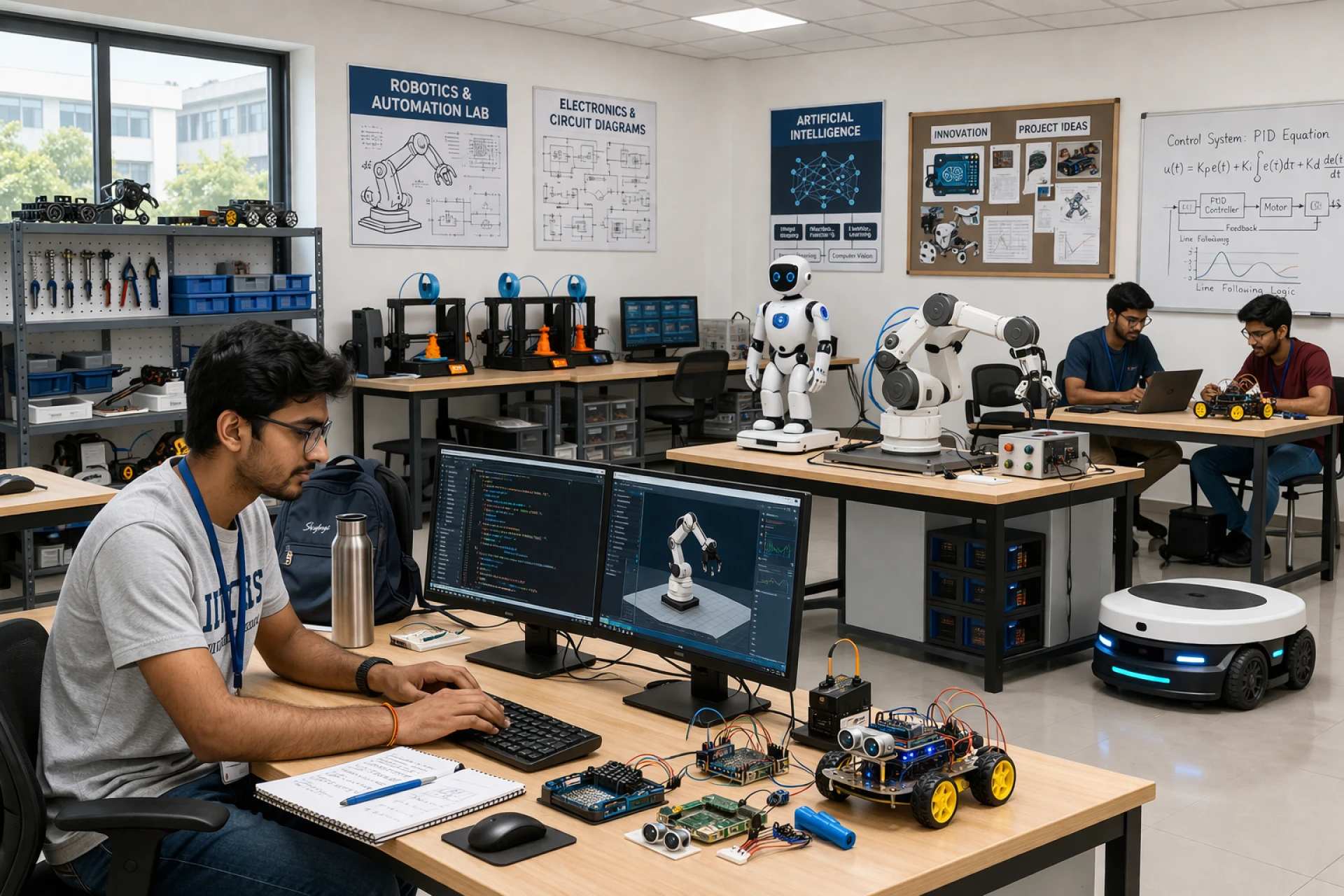

In today’s fast-evolving digital world, traditional classroom learning is no longer enough to prepare students for the future. Schools are now shifting towards experiential learning methods that empower students with practical skills, critical thinking, and innovation. One of the most impactful advancements in this space is the introduction of Robotics and AI Labs in schools.
A robotics lab is not just a room filled with gadgets—it is a dynamic learning environment where creativity meets technology. It enables students to explore, experiment, and build solutions, preparing them for a technology-driven future.
What is a Robotics Lab for Schools?
A Robotics and AI Lab is a structured learning ecosystem designed for students, typically from Grades 3 to 9, where they can learn robotics, coding, artificial intelligence, and STEM concepts through hands-on projects.
Unlike traditional theoretical teaching, these labs focus on “learning by doing.” Students work with real tools such as sensors, microcontrollers, drones, and robotics kits to build functional models and solve real-world problems.
From creating simple mechanical structures in early grades to developing AI-based systems and drones in higher grades, robotics labs provide a progressive learning journey.
Why Robotics Education is Essential Today
The world is rapidly moving towards automation, artificial intelligence, and smart technologies. Introducing robotics education at an early stage helps students adapt to this shift seamlessly.
Robotics labs play a crucial role in:
- Developing critical thinking and problem-solving skills
- Enhancing creativity and innovation
- Building a strong foundation in STEM subjects
- Preparing students for future careers in technology
By engaging students in practical applications, robotics transforms abstract concepts into tangible experiences.
Key Features of a Modern Robotics Lab
A well-designed robotics lab offers a complete ecosystem that supports both learning and innovation. These labs are not limited to hardware but include a blend of infrastructure, curriculum, and training.
1. Hands-On Learning Environment
Students engage in real-time projects such as building robots, designing automation systems, and experimenting with sensors and electronics. This experiential approach ensures deeper understanding and retention of concepts.
2. Structured Curriculum
A robotics lab comes with a well-defined curriculum aligned with modern education standards like NEP 2020. It includes class-wise modules, workbooks, and progressive learning stages that guide students from basics to advanced levels.
3. Advanced Tools and Equipment
Modern labs are equipped with:
- Robotics kits and microcontrollers
- Sensors, motors, and actuators
- Drone kits and simulators
- Programming platforms like Arduino and Scratch
These tools provide students with exposure to real-world technologies and engineering concepts.
4. Dedicated Learning Zones
A robotics lab is often divided into specialized zones such as:
- Assembly and building areas
- Programming and coding stations
- Innovation and prototyping spaces
- Collaboration and presentation zones
This structured setup enhances both individual and team-based learning experiences.
5. Teacher Training and Support
An essential component of robotics education is teacher empowerment. Regular training programs ensure that educators are well-equipped to guide students, manage lab activities, and integrate robotics into everyday teaching.
Integrating AI and Drone Technology
Modern robotics labs go beyond basic robotics and include advanced domains such as artificial intelligence and drone technology. Students learn concepts like:
- Machine learning basics
- Autonomous navigation
- Sensor-based automation
- Aerodynamics and flight control
Drone labs, in particular, introduce students to real-world applications such as mapping, surveillance, and logistics, making learning highly engaging and future-focused.
Benefits of Robotics Labs for Students
1. Enhanced Creativity
Robotics encourages students to think beyond textbooks and come up with innovative solutions to real-world problems.
2. Practical Skill Development
Students gain hands-on experience in coding, electronics, and engineering, which are essential skills for future careers.
3. Improved Collaboration
Working on group projects helps students develop teamwork, communication, and leadership skills.
4. Increased Confidence
When students build and test their own creations, it boosts their confidence and motivates them to explore further.
5. Career Readiness
Exposure to robotics and AI opens doors to careers in engineering, data science, automation, and emerging technologies.
Real-World Learning Through Projects
One of the biggest advantages of robotics labs is project-based learning. Students work on real-life challenges such as:
- Smart dustbins for waste management
- Obstacle-avoiding robots
- Smart lighting systems for energy conservation
- Soil moisture sensors for agriculture
These projects help students understand how technology can solve real-world problems and create meaningful impact.
Building Future-Ready Schools
Schools that invest in robotics labs are not just upgrading their infrastructure—they are transforming their entire learning approach. These labs create an environment where students:
- Learn by experimenting
- Embrace failure as part of learning
- Develop curiosity and innovation
- Prepare for a rapidly changing world
Robotics education aligns perfectly with modern education policies and global standards, ensuring that students are ready for both higher education and future careers.
Conclusion
Robotics labs are redefining education by bridging the gap between theory and practical application. They empower students with the skills, mindset, and confidence needed to thrive in a technology-driven world.
By integrating robotics, AI, and hands-on learning into the classroom, schools can nurture the next generation of innovators, problem-solvers, and leaders. The future belongs to those who can create, adapt, and innovate—and robotics labs are the perfect place to begin that journey.


























Sign in to leave a comment.