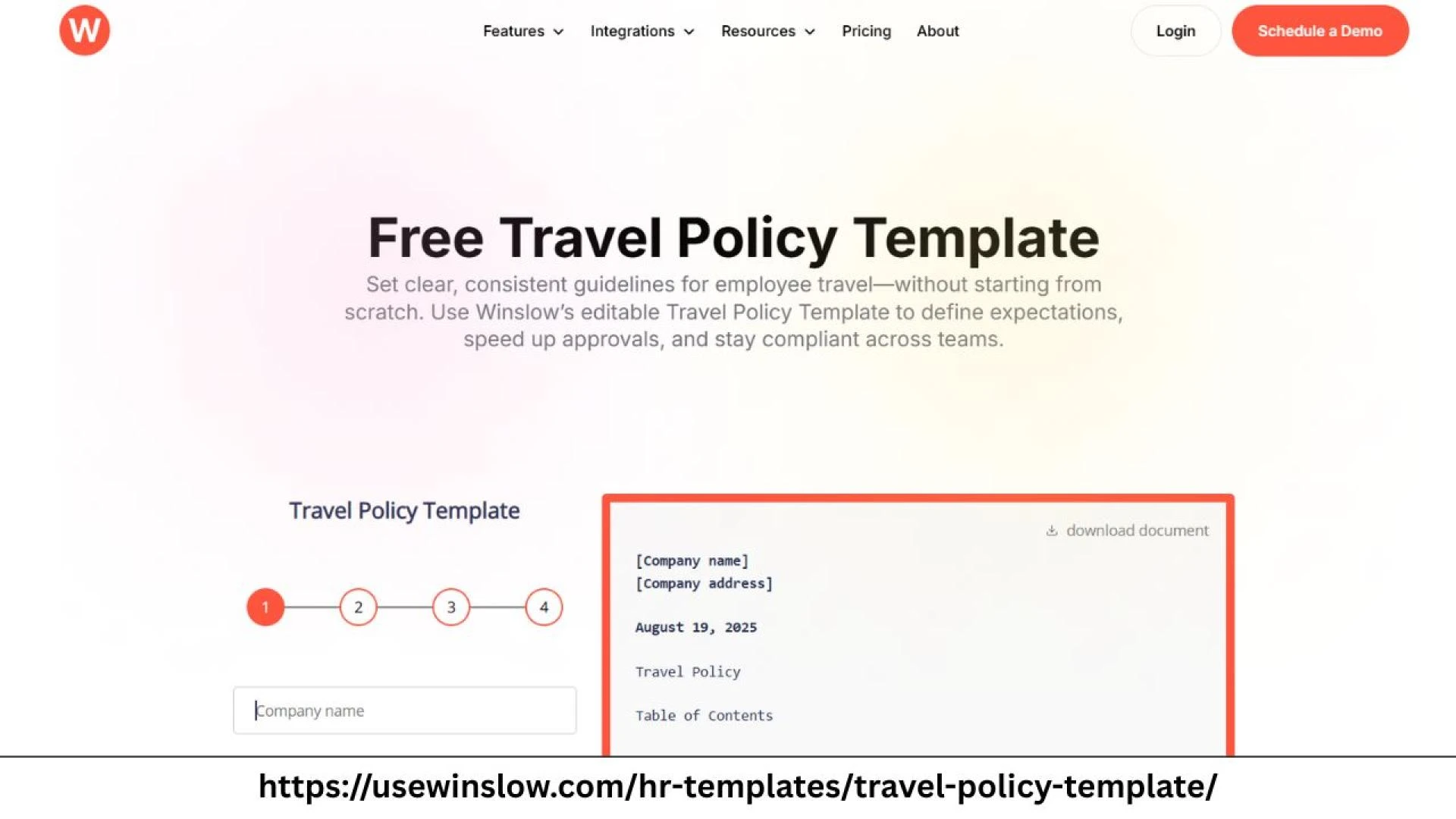

Business travel is an essential part of many organizations, but managing it efficiently requires clear guidelines. A travel policy provides employees with instructions on booking trips, reimbursable expenses, safety protocols, and expected behavior during travel. Creating a travel policy from scratch can be time-consuming, which is why using a travel policy template is highly beneficial. Templates offer HR teams a structured foundation to develop a comprehensive, organized, and practical policy. This article discusses the importance of travel policies, how templates make the process easier, and key components every company should include to manage business travel effectively.
Travel policies act as a framework for employees, outlining acceptable behavior, reimbursement procedures, and approval requirements. Without clear guidance, employees may make inconsistent decisions that lead to unnecessary costs or compliance issues. A travel policy template allows HR teams to create a professional, structured, and comprehensive document that can be tailored to the company’s specific needs. Winslow provides solutions that help HR teams efficiently create and manage travel policies across platforms like Slack, Teams, Gmail, and Outlook.
The first step in creating a travel policy is defining its purpose. The policy should clearly explain its objectives, such as controlling travel expenses, ensuring employee safety, and maintaining compliance with company standards. When employees understand why the policy exists, they are more likely to follow it consistently. Clear objectives also provide managers and finance teams with a consistent framework for approving travel requests and reviewing reimbursement claims.
Categorizing types of travel is another important step. Organizations often separate domestic and international travel, client visits, conferences, and training trips. Each type of travel may have specific requirements, including approval processes, documentation, and insurance coverage. Travel policy templates typically include sections for different travel categories, making it easier for HR teams to adapt the policy to their organization’s needs.
Expense management is a critical part of any travel policy. Employees should know which expenses are reimbursable, including airfare, accommodation, meals, ground transportation, and incidentals. Policies should clearly define spending limits, preferred vendors, and procedures for obtaining approval for unusual costs. Using a template travel policy ensures these sections are well-organized, consistent, and easy for employees to follow. Providing examples of reimbursable and non-reimbursable expenses helps prevent misunderstandings and ensures smooth reimbursement processes.
Travel booking and approval procedures should be clearly outlined. Employees need guidance on submitting requests, booking travel, and providing supporting documentation. Clear procedures reduce delays, prevent errors, and ensure compliance with company standards. Templates often include sample workflows, approval forms, and checklists that HR teams can customize to fit their organization, making the policy practical and actionable.
Safety and security measures are another essential component. Employees should be informed about personal safety guidelines, access to medical assistance, and procedures for emergencies. International travel may require additional guidance, such as visa requirements, local laws, and health precautions. Including these sections in a travel policy template ensures employees are prepared for all situations during business trips.
Communication expectations during travel should also be addressed. Employees need clear instructions on whom to contact if travel plans change, delays occur, or emergencies arise. Providing contact information for managers, HR representatives, or support services ensures employees can resolve issues quickly and remain safe. Clear communication channels also help managers respond effectively and maintain oversight during trips.
Training and awareness are crucial for the successful implementation of a travel policy. HR teams should ensure employees are familiar with the policy and understand how to apply it. Regular reminders, updates, and training sessions help employees stay informed about the latest guidelines. Templates allow HR teams to create policies that are visually clear, easy to navigate, and accessible across platforms such as Slack, Teams, Gmail, and Outlook.
Compliance and monitoring are vital for enforcing a travel policy. The document should explain consequences for not following guidelines and outline auditing and review procedures. This ensures employees follow company standards and allows finance teams to track expenses effectively. Templates often include compliance statements and review protocols that HR teams can adapt to their organization.
One of the main advantages of using a travel policy template is efficiency. Templates provide a structured framework covering all essential elements, allowing HR teams to focus on tailoring content rather than creating a policy from scratch. This ensures consistency, reduces the risk of missing important details, and speeds up the development process.
Templates also support scalability. As organizations grow, travel policies may need to include more employees, additional locations, or new types of travel. Using a template allows HR teams to make updates quickly, adjusting spending limits, approval workflows, or safety instructions without rewriting the entire policy. This keeps the policy practical and relevant over time.
For companies using multiple communication platforms like Slack, Teams, Gmail, or Outlook, a standardized travel policy ensures employees can easily access the guidelines. Employees can reference the policy when planning trips, submitting requests, or addressing travel issues. Winslow provides tools that simplify policy creation and management, helping HR teams maintain clear and consistent travel guidelines throughout the organization.
Periodic review of the travel policy is essential. Business requirements, regulatory guidelines, and travel conditions may change, so HR teams should revisit the policy regularly. Feedback from employees helps identify areas for improvement and ensures the policy continues to meet its purpose. A travel policy template makes updates simple while maintaining structure, clarity, and usability.
In conclusion, a travel policy template is a valuable resource for organizations seeking to provide clear, consistent, and practical business travel guidelines. It helps employees understand responsibilities, ensures compliance, and streamlines expense management. Using a template saves time, provides consistency, and allows HR teams to focus on customizing details to suit their organization. Winslow offers solutions to assist HR teams in creating, implementing, and managing travel policies effectively. Leveraging a travel policy template allows companies to control travel expenses, ensure employee safety, and improve productivity, making business trips smoother and more organized. A travel policy template is more than a document—it is a strategic tool that enhances operational efficiency and employee experience during every business trip.
























Sign in to leave a comment.