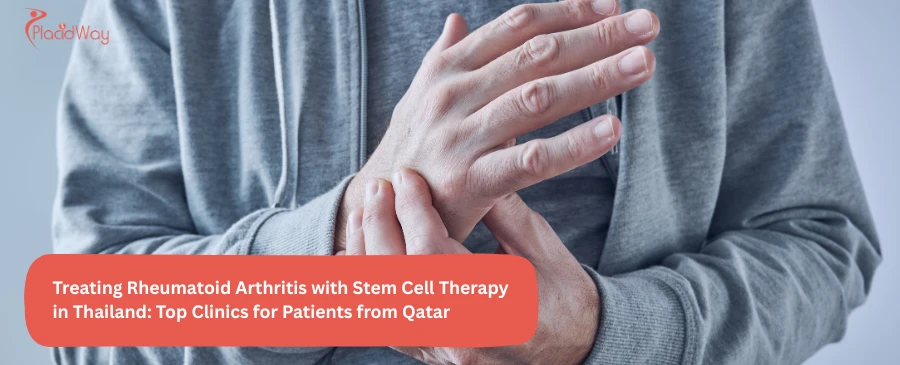
Stem cell therapy in Thailand offers a promising, advanced option for managing Rheumatoid Arthritis (RA) by using stem cells to reduce inflammation, repair tissue, and modulate the immune system.
Living with rheumatoid arthritis (RA) is more than just "aching joints." It's a daily battle with chronic pain, stiffness that greets you every morning, and a deep-seated inflammation that can make even simple tasks feel monumental. You've probably been on the carousel of traditional treatments—NSAIDs, DMARDs, maybe even biologics. And while they might offer some relief, they often just manage the symptoms, not the underlying cause. Plus, the potential for long-term side effects is always a lingering worry.
It’s no wonder so many people are searching for a better, more lasting solution. What if there was an option that aimed to do more than just mask the pain? Something that could actually communicate with your body's overactive immune system, calm the inflammation at its source, and even help promote healing in those damaged joints? This is the promise of stem cell therapy for rheumatoid arthritis, a cutting-edge field of regenerative medicine that's gaining serious traction.
And this is where Thailand enters the picture. It's rapidly become a global hub for high-quality, advanced medical care. More and more people are looking into medical tourism in Thailand for this exact treatment. Why? Because Thailand offers a unique combination of internationally accredited hospitals, highly experienced specialists, and a world-class culture of patient care—all at a price point that is often far more accessible than in North America or Europe. If you're curious about stem cell therapy in Thailand for your RA, you're not alone. You likely have a ton of questions, and you deserve clear, expert answers. We're here to answer all those questions and more. Let's get into what you need to know about this advanced rheumatoid arthritis treatment in Thailand.
What is stem cell therapy for rheumatoid arthritis?
Stem cell therapy for rheumatoid arthritis is a regenerative treatment that uses stem cells to help reduce inflammation, modulate the body's overactive immune response, and potentially repair tissue damaged by the disease.
Unlike traditional medications that often just suppress symptoms, stem cell therapy aims to address the problem at its source. Rheumatoid arthritis is an autoimmune disease, meaning your own immune system mistakenly attacks your joints. Stem cells, particularly Mesenchymal Stem Cells (MSCs), have a unique ability to "calm" this overactive immune response.
This treatment introduces a high concentration of these intelligent cells into your body. They can then "home in" on the sites of inflammation and release powerful anti-inflammatory and immunomodulatory proteins. It's about helping your body find balance and giving it the tools to heal itself, rather than just putting a bandage on the pain.
How does stem cell therapy work for rheumatoid arthritis (RA)?
Stem cell therapy works for RA by releasing anti-inflammatory agents to calm joint inflammation, modulating the autoimmune response to stop it from attacking the joints, and promoting the regeneration of damaged cartilage and tissue.
This process is fascinating and works on three primary levels:
- Anti-Inflammatory Action: Stem cells are powerful natural anti-inflammatories. When they detect inflammation in your joints, they release proteins (cytokines) that directly reduce swelling and pain. This can provide relief much like a powerful, targeted medication, but from within your own body's signaling system.
- Immunomodulation: This is the most critical part for RA. Stem cells can "re-educate" your immune system. They help suppress the aggressive T-cells that are attacking your joints and can promote the growth of "regulatory" T-cells, which essentially tell your immune system to stand down. This helps to stop the disease's progression.
- Regeneration (Paracrine Effect): Stem cells also release a cocktail of growth factors. While they may not regrow an entire joint, these signals encourage your *own* body's repair cells to get to work, helping to heal damaged cartilage and surrounding tissues.
Why choose Thailand for stem cell therapy for RA?
Thailand is a top destination for stem cell therapy due to its combination of internationally accredited hospitals, highly skilled doctors, advanced stem cell processing labs, and significantly lower costs compared to North America or Europe.
Choosing a country for medical care is a big decision, but medical tourism in Thailand is a well-established and trusted industry. Here’s why so many patients choose it for rheumatoid arthritis treatment in Thailand:
- Advanced Technology: Top Thai hospitals have dedicated regenerative medicine centers and state-of-the-art labs for processing and culturing stem cells, ensuring you receive a high-quality, viable product.
- World-Class Expertise: Many doctors in Thailand are internationally trained and have extensive experience in regenerative medicine and treating autoimmune conditions.
- Cost-Effectiveness: You can often receive treatment that is equal to or even better than what's available in the West for a fraction of the cost.
- Exceptional Patient Care: Thailand is world-famous for its hospitality, and this is deeply embedded in its medical culture. You can expect attentive, compassionate, and personalized care from start to finish.
What is the cost of stem cell therapy for rheumatoid arthritis in Thailand?
The cost of stem cell therapy for rheumatoid arthritis in Thailand typically ranges from $8,000 to $20,000 USD. The final price depends on the clinic, the number of stem cell injections, and the type of stem cells used.
This price is significantly lower than in many Western countries, where similar treatments (if available) can cost upwards of $25,000 to $50,000. The cost in Thailand often represents a complete package, but it's vital to get a detailed quote from the clinic.
To give you a clearer picture, here is a general comparison of estimated costs for a full RA protocol:
What factors influence the final cost?
The final cost is influenced by the number of stem cell 'doses' (measured in millions of cells), the source of the cells (e.g., adipose, umbilical cord), the clinic's reputation, and any included package services.
When you get a quote, be sure to ask what it includes. Key factors are:
- Stem Cell Source: Cells from a donor umbilical cord (allogeneic) have different lab processing costs than cells from your own fat (autologous).
- Number of Cells: A treatment with 100 million cells will cost more than one with 50 million. The doctor will recommend a dose based on your condition's severity.
- Number of Sessions: Some protocols require multiple infusions over several days.
- Clinic & Hospital Fees: Top-tier international hospitals in Bangkok may have higher facility fees than smaller, specialized clinics.
- Package Inclusions: Many clinics in Thailand bundle airport transfers, hotel stays, and follow-up consultations into the price.
What are the success rates of stem cell therapy for RA in Thailand?
Success rates for stem cell RA treatment are often reported as high, with many patients experiencing significant reductions in pain and inflammation. However, 'success' varies and should be discussed with a doctor, as results depend on individual patient factors.
"Success" is not a black-and-white term. While this is not a guaranteed cure, the goal is a significant improvement in quality of life. Reputable clinics in Thailand will be transparent about their patient outcomes.
Most patients who respond well to the treatment report:
- A significant reduction in joint pain and swelling.
- Lowered inflammatory markers in blood tests (like C-reactive protein and ESR).
- Improved joint mobility and ability to perform daily activities.
- A reduced need for their traditional RA medications (under their doctor's supervision).
The clinic should be able to share anonymized data or patient case studies with you so you can set realistic expectations.
Is stem cell therapy for rheumatoid arthritis safe?
Yes, stem cell therapy for rheumatoid arthritis in Thailand is considered very safe when performed at accredited, high-quality clinics. The primary risks are minimal, such as low-grade fever or soreness at the injection site.
Safety is, of course, a primary concern. The stem cells used (MSCs) are "immunoprivileged," which means they do not trigger an immune rejection response, even if they come from a screened donor (allogeneic).
If you use your own cells (autologous), there is zero risk of rejection. If you use donor cells (allogeneic, typically from an umbilical cord), reputable Thai labs follow strict international protocols, screening all tissue for diseases to ensure the cell supply is completely safe and sterile. The main risk is a very small chance of infection at the injection site, just as with any needle procedure, which is minimized in a sterile clinical environment.
What types of stem cells are used to treat RA in Thailand?
The most common type used for RA in Thailand are Mesenchymal Stem Cells (MSCs). These can be sourced from the patient's own adipose (fat) tissue or bone marrow, or from donated umbilical cord tissue.
MSCs are the gold standard for treating autoimmune and inflammatory conditions because they are the "signal-callers" of the body. They are incredibly potent in modulating the immune system.
- Adipose-Derived (Autologous): Harvested from your own fat tissue via a simple mini-liposuction. This is a very rich and easily accessible source of your own MSCs.
- Umbilical Cord-Derived (Allogeneic): Sourced from the tissue of a screened, donated umbilical cord after a healthy birth. These cells are very young, robust, and potent, and many clinics in Thailand prefer them for their strong immunomodulatory properties.
- Bone Marrow-Derived (Autologous): The "classic" source, but the harvesting procedure can be more invasive, and the cell count may be lower, especially in older patients.
Your doctor in Thailand will recommend the best source for your specific condition.
Am I a good candidate for this treatment?
A good candidate is typically someone with a confirmed RA diagnosis who is not responding well to traditional treatments or who suffers from significant side effects. Patients should not have active infections or certain cancers.
This treatment is not for everyone. A reputable clinic will conduct a thorough review of your medical history. In general, you may be a good candidate if you:
- Have a clear diagnosis of Rheumatoid Arthritis.
- Find that your current medications (DMARDs, biologics) are no longer effective.
- Suffer from side effects of your current medications that impact your quality of life.
- Are in otherwise good general health.
You may not be a candidate if you have an active infection, a history of certain cancers, or severe, uncontrolled medical conditions. A medical team will evaluate your case individually.
What does the stem cell treatment process in Thailand involve?
The process involves an initial consultation with bloodwork, followed by either harvesting your own cells (if autologous) or preparing donor cells. The stem cells are then administered back into your body, usually through a simple IV infusion.
The journey is quite straightforward:
- Consultation: You'll meet with the specialist, review your medical history, and have blood tests and possibly imaging to assess your current inflammation levels.
- Harvesting (if autologous): If using your own fat cells, a doctor will perform a quick mini-liposuction to extract a small amount of adipose tissue. This is a minor procedure done under local anesthetic.
- Lab Processing: The harvested tissue or the donor tissue is taken to the lab. There, the MSCs are isolated, concentrated, and (in some cases) 'expanded' to reach a therapeutic dose of many millions of cells.
- Administration: The final stem cell product is administered to you. For a systemic disease like RA, this is almost always done through a simple, painless IV infusion. The cells then travel through your bloodstream and are naturally drawn to the sites of inflammation in your body.
How long do I need to stay in Thailand for the treatment?
Most treatment protocols require a stay of 5 to 10 days in Thailand. This allows for pre-treatment consultation, the procedure itself, and a brief period of monitoring or follow-up before you fly home.
The treatment itself is not a long, drawn-out process. A typical timeline might look like this:
- Day 1-2: Arrive, settle in. Initial consultation, medical review, and blood tests.
- Day 3: Harvesting procedure (if autologous).
- Day 4-6: Stem cell administration (this may be a single infusion or split into multiple doses over 2-3 days).
- Day 7-9: Rest, follow-up consultation with the doctor, and final check-up.
- Day 10: Cleared to fly home.
This schedule makes medical tourism in Thailand very efficient, as you can get world-class care without needing to be away from home for months.
What is the recovery like after stem cell therapy for RA?
There is virtually no recovery time needed for the treatment itself. Most patients can resume normal, light activities the same day or the next. If you have an adipose (fat) harvest, you may have minor soreness for a few days.
The IV infusion of stem cells is non-invasive. You might be asked to rest for a short period afterward, but there is no "downtime." You won't need to be in a hospital bed. In fact, most patients feel fine and can enjoy their hotel or go for a walk.
The only potential for discomfort comes from an autologous harvest. If you have a mini-liposuction, the harvest site (usually the abdomen) might be tender and bruised for a few days, similar to a hard workout.
How long does it take to see results?
While some patients report feeling better within weeks, the full immunomodulatory and regenerative effects typically build over time. Most clinics advise that significant improvements are often seen between 3 and 6 months post-treatment.
This is not an overnight fix. The stem cells need time to work. They are signaling your body to make long-term changes to its immune and repair systems. Some patients report an initial "boost" in energy and a reduction in pain within the first few weeks.
However, the real, lasting benefits—the deep reduction in inflammation and modulation of the immune system—unfold over the following months. Be patient and track your symptoms; the improvement is often gradual but steady.
Are the results of stem cell therapy for RA permanent?
The results are not considered permanent, as RA is a chronic disease. However, many patients experience long-lasting relief for several years. The treatment can 'reset' the immune response, but a follow-up treatment may be needed in the future.
Because rheumatoid arthritis is a chronic, lifelong condition, no treatment can be called a "permanent cure" at this time. Stem cell therapy for rheumatoid arthritis can put the disease into a state of long-term remission or significantly reduce its activity for a long period.
Many patients find their symptoms are dramatically improved for two, three, or even five years. The longevity of the results depends on your body, the severity of your disease, and your lifestyle. Many patients choose to return for a smaller "booster" treatment every few years to maintain their results.
What are the risks or side effects?
Side effects are rare and typically mild. They can include a temporary low-grade fever, headache, or fatigue in the 24 hours after infusion as the body's immune system reacts. These are seen as a sign the cells are working.
As mentioned, this is a very low-risk procedure. The most common "side effects" are actually signs that the treatment is activating your immune system. For 24-48 hours after the IV infusion, some patients experience:
- Mild fatigue
- A slight headache
- A low-grade fever or flu-like feeling
This is known as a "cytokine reaction" and is a positive sign that the new stem cells are actively communicating with your body and starting their anti-inflammatory work. These symptoms typically pass within a day.
How do I find the best stem cell clinics in Thailand?
Look for clinics that are internationally accredited (like JCI), have specialized regenerative medicine departments, are transparent about their lab processes, and can provide real, verifiable patient testimonials.
Not all clinics are created equal. To find a high-quality, trustworthy provider for stem cell therapy in Thailand, you must do your research. Look for:
- International Accreditation: Is the hospital JCI (Joint Commission International) accredited? This is the gold standard for global healthcare.
- Lab Standards: Do they have their own on-site, government-approved lab? Are they open about their cell processing and quality control standards?
- Doctor Specialization: Is the doctor a specialist in regenerative medicine, immunology, or rheumatology?
- Transparency: Will they give you a clear protocol detailing the type of cells, the number of cells, and a full cost breakdown?
- * Experience: How many RA patients have they treated? Can they share (anonymized) case studies or testimonials?
Working with a medical tourism partner can help you vet these clinics more easily.
What questions should I ask a Thai clinic before booking?
Ask about the source and type of stem cells, the total number of cells you'll receive, the doctor's experience with RA, what's included in the price, and what kind of follow-up care they provide.
Before you commit, have a list of questions ready for your consultation. Don't be afraid to ask for details.
- "What is the source of the stem cells you recommend for me (adipose, umbilical, etc.) and why?"
- "What is the total number of stem cells (in millions) I will receive, and over how many sessions?"
- "How are the cells processed and tested for viability and safety?"
- "What specific experience do you and your team have in treating rheumatoid arthritis with stem cells?"
- "What are the full costs, and what is *not* included in the price you've quoted?"
- "What kind of follow-up support do you offer once I return to my home country?"
Does insurance cover stem cell therapy for RA in Thailand?
Unfortunately, no. Because stem cell therapy for rheumatoid arthritis is still widely considered 'experimental,' it is almost never covered by standard health insurance policies. This is an out-of-pocket expense.
This is a critical point to understand for financial planning. You should expect to pay for the entire treatment yourself. The good news is that even as an out-of-pocket expense, the cost of stem cell therapy in Thailand is often a fraction of what it would be in other nations, making it a financially viable option for many international patients seeking advanced care.
Feeling hopeful about stem cell therapy in Thailand as a new path for managing your rheumatoid arthritis? You don't have to navigate this journey alone. PlacidWay is a leader in medical tourism, connecting patients with a global network of pre-screened, high-quality clinics. We can help you get personalized quotes, understand your options, and find a trusted provider for your rheumatoid arthritis treatment in Thailand. Explore your options with PlacidWay today and find a new path to better health.

























Sign in to leave a comment.