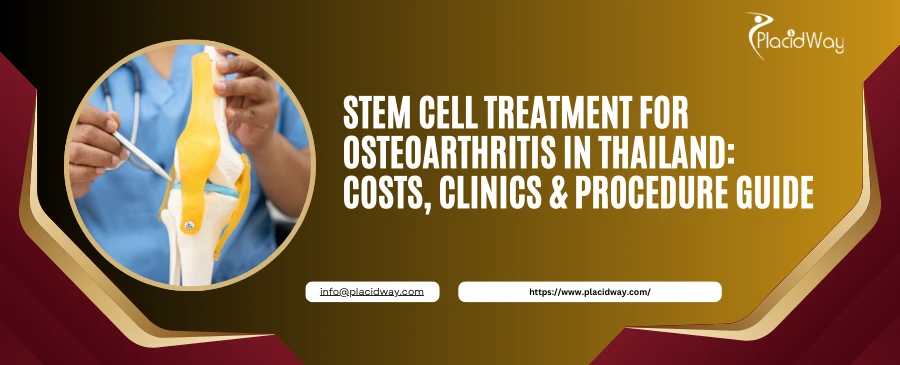
For patients suffering from chronic joint pain, stem cell treatment for osteoarthritis in Thailand offers a revolutionary non-surgical alternative to joint replacement. As a global hub for regenerative medicine, Thailand combines JCI-accredited hospitals with cutting-edge biotechnology to deliver high-quality Mesenchymal Stem Cell (MSC) therapies at a fraction of Western costs.
Whether you are considering treatment in the bustling medical hub of Bangkok or the recovery-focused resorts of Phuket, Thailand's medical infrastructure supports advanced protocols using both autologous (your own) and allogeneic (umbilical cord) cells. This guide details everything you need to know about pricing, procedure steps, and safety standards for international patients.
Key Takeaways: Regenerative Medicine in Thailand
- Significant Savings: Patients typically save 60% to 75% compared to the US, UK, or Australia.
- Average Cost: Knee or hip stem cell injections in Thailand generally range from $3,500 to $8,500.
- Package Inclusions: Most international packages include airport transfers, pre-op testing, doctor consultations, and post-op follow-up.
- Advanced Technology: Leading Thai clinics specialize in Umbilical Cord MSCs, offering higher potency than older bone marrow methods.
- Medical Hubs: Top destinations include Bangkok (for specialists) and Phuket (for rehabilitation).
Why Choose Thailand for Osteoarthritis Stem Cell Therapy?
Thailand stands out not just for low costs, but for its mature regulatory framework and "hospitality meets healthcare" culture, ensuring a safe and comfortable experience.
While many countries offer medical tourism, Thailand is distinct in its approach to regenerative medicine. The country’s medical council actively regulates stem cell applications, ensuring that treatments are performed in sterile, licensed environments—often within massive, multi-specialty hospitals rather than small, unregulated clinics. Furthermore, Thai medical providers are renowned for their service culture, providing a level of attentiveness that is often missing in overburdened Western healthcare systems.
Did You Know?
Thailand is home to the first hospital in Asia to receive JCI accreditation. Today, over 60 hospitals in Thailand hold this gold-standard approval, ensuring that your stem cell knee injection is performed under safety protocols identical to top US hospitals.
Cost Analysis: Thailand vs. The World
Understanding the price difference is crucial. While a single knee injection in the US can cost over $15,000, Thailand offers comprehensive packages for a third of that price.
The cost of stem cell therapy for knees in Thailand is transparent, often presented as an "all-inclusive" package. This contrasts sharply with Western pricing models where facility fees, anesthesia, and doctor fees are billed separately. Below is a comparative look at the costs for a standard intra-articular stem cell injection protocol.
CountryAvg. Price Range (USD)What's IncludedEst. SavingsThailand$3,500 – $8,500Consult, MRI/X-ray, Injection, Airport TransferBaselineUSA$15,000 – $30,000+Procedure Only (Consults billed separately)-75%UK$20,000 – $45,000Procedure Only-80%Australia$12,000 – $25,000Procedure Only-65%Mexico$3,500 – $9,000Consult, Procedure, Ground TransportComparable
Step-by-Step Treatment Journey in Thailand
From the initial virtual consultation to the final post-op checkup, the process is streamlined for international travelers, ensuring efficiency and comfort.
1. Virtual Assessment
Before flying to Bangkok or Phuket, you will submit your medical history, recent X-rays, or MRI scans via a secure portal. A specialist will review your grade of osteoarthritis (Grade 1-4) to determine if you are a suitable candidate.
2. Arrival & Pre-Op Testing
Upon arrival, a VIP coordinator typically greets you. Day 1 involves blood work and a physical examination to ensure you are healthy enough for the procedure. This is also when the doctor explains the specific cell type being used (Autologous vs. Allogeneic).
3. The Procedure
The treatment is minimally invasive and performed under local anesthesia.
- For Autologous: Cells are harvested from your adipose (fat) tissue or bone marrow, processed in a lab (taking 2-4 hours), and then reinjected.
- For Allogeneic (Umbilical Cord): Pre-screened, high-potency cells are thawed and prepared.
The injection is guided by fluoroscopy or ultrasound to ensure precise delivery into the joint space.4. Recovery & Tourism
Patients are usually discharged the same day. While strenuous activity is avoided for a few weeks, light walking is encouraged. Many patients spend 5-7 days enjoying Thailand's beaches or cultural sites while attending follow-up appointments.
Expert Insight
"In Thailand, we are seeing a shift toward Umbilical Cord Mesenchymal Stem Cells (UC-MSCs). Unlike autologous cells, which age with the patient, UC-MSCs are 'day zero' cells. They are more potent, multiply faster, and release stronger anti-inflammatory factors, making them superior for treating osteoarthritis in older patients."
Top Destinations: Bangkok vs. Phuket
Choosing the right city depends on your preference for urban medical excellence versus a relaxed, resort-style recovery environment.
Bangkok: The Medical Capital
Home to world-renowned facilities like Bumrungrad and Samitivej, Bangkok offers the highest concentration of specialists. It is the ideal choice for complex cases or patients who want access to a broader range of medical technologies.
Best for: Patients prioritizing top-tier hospital networks and urban amenities.
Phuket: Healing in Paradise
Phuket combines medical care with a holiday atmosphere. Clinics here are geared towards "wellness tourism," often located near beaches. The environment is stress-free, which is conducive to healing.
Best for: Patients seeking a relaxing vacation combined with their procedure.
Eligibility & Success Rates
Stem cell therapy is most effective for early to mid-stage degeneration. Understanding realistic outcomes is key to patient satisfaction.
The ideal candidate for stem cell therapy for knees has Grade 2 or 3 osteoarthritis. These patients still have some cartilage remaining, providing a scaffold for the stem cells to repair. Patients with Grade 4 (bone-on-bone) may see pain relief due to the anti-inflammatory properties of the cells, but total joint replacement is often the recommended long-term solution.
Success Metrics: Clinical data from Thai regenerative centers indicates that 75-85% of eligible patients report significant pain reduction and improved range of motion within 3 months post-treatment.
Did You Know?
Thai researchers are pioneers in Cell-Assisted Lipotransfer (CAL). This technique enriches fat grafts with stem cells, which is not only used for cosmetic purposes but also for joint padding, providing a natural "cushion" inside the knee joint along with regenerative benefits.
Frequently Asked Questions
Common queries regarding safety, longevity, and logistics for international patients.
How much does stem cell therapy for knees cost in Thailand?
The average cost ranges from $3,500 to $8,500 USD per joint. This price varies based on whether the clinic uses autologous cells (cheaper) or expanded umbilical cord cells (premium), and the number of injections required.
Is stem cell therapy legal and safe in Thailand?
Yes, it is legal and strictly regulated by the Thai FDA. Reputable clinics operate under the oversight of the Medical Council of Thailand, and many are part of JCI-accredited hospitals, ensuring high safety standards.
How long do the results last?
Results are not permanent but are long-lasting. Most patients experience relief for 3 to 5 years. Lifestyle factors, weight, and the severity of the original condition influence longevity.
Will I need to stay in the hospital?
No, stem cell injection is an outpatient procedure. You will likely spend a few hours at the clinic for preparation, the procedure, and observation, but you can return to your hotel the same day.
Does insurance cover this treatment?
Generally, no. Most Western insurance companies consider stem cell therapy for osteoarthritis to be "investigational" and do not cover it. However, the low cost in Thailand makes it accessible for self-pay patients.
What is the difference between PRP and Stem Cell Therapy?
PRP (Platelet-Rich Plasma) uses growth factors from your blood to encourage healing, acting like a fertilizer. Stem cells are the "seeds" that can actually differentiate into tissue and actively repair damage. Stem cell therapy is more potent for advanced degeneration.
Can I treat both knees at the same time?
Yes, treating both knees (bilateral treatment) is very common and cost-effective. Clinics often offer a discounted rate for the second joint since the lab processing fees are shared.
How soon can I fly home?
Doctors typically recommend staying for 3-5 days after the procedure for observation and initial physical therapy. However, there are no specific flight restrictions following a joint injection.
Are the stem cells from embryos?
No. Thailand strictly prohibits the use of embryonic stem cells. Treatments use either your own adult stem cells or ethically sourced umbilical cord tissue from healthy, full-term C-section births.
Ready to Reclaim Your Mobility?
Don't let joint pain dictate your lifestyle. PlacidWay partners with Thailand's top JCI-accredited regenerative centers to bring you safe, affordable, and effective stem cell packages.
Get a personalized treatment plan from board-certified specialists in Bangkok or Phuket. Our team assists with everything from medical records review to airport transfers.
Get a Free Quote for Treatment in Thailand




























Sign in to leave a comment.