
Learn how the Salesforce Warehouse Management System enhances warehouse efficiency, streamlines operations, and integrates seamlessly with Salesforce.
In today's fast-paced world of logistics and inventory management, the Salesforce Warehouse Management System (WMS) is an essential tool for optimizing warehouse operations. With businesses aiming for higher productivity and reduced operational costs, a warehouse management solution like Salesforce WMS can help manage inventory, automate processes, and offer real-time data insights. This guide will walk you through the capabilities, benefits, and features of Salesforce WMS, showing why it's an ideal solution for businesses aiming to scale and streamline their warehouse operations.
What Is Salesforce Warehouse Management System?
The Salesforce Warehouse Management System is a cloud-based solution designed to optimize the storage, movement, and management of inventory within a warehouse. It integrates seamlessly with the broader Salesforce platform, allowing businesses to connect their warehouse operations with sales, customer service, and supply chain functions. Salesforce WMS is built to improve operational efficiency, reduce errors, and provide real-time data, helping warehouse managers make informed decisions that drive better business outcomes.
Key Features of Salesforce Warehouse Management System
- Inventory Tracking
Salesforce Warehouse Management System provides real-time tracking of inventory across various locations. With advanced tools and features, businesses can monitor stock levels, track movements, and ensure items are always in the right place at the right time. - Automated Processes
The system automates routine warehouse tasks, such as order picking, packing, and shipping. This reduces manual labor and enhances overall speed, allowing for quicker turnaround times and fewer errors. - Data Insights
Salesforce WMS provides detailed reporting and analytics. Managers can generate insights about inventory levels, stock movements, and performance metrics. This helps improve decision-making and fine-tune processes to increase efficiency. - Integration with Salesforce CRM
One of the standout features of the Salesforce Warehouse Management System is its ability to integrate directly with Salesforce CRM. This enables seamless communication between warehouse operations and sales teams, improving overall order fulfillment and customer satisfaction. - Scalable and Flexible
Whether you're a small business or a large enterprise, Salesforce WMS is designed to scale with your needs. It can handle complex workflows and manage warehouses of varying sizes, making it ideal for businesses of all sizes.
Benefits of Salesforce Warehouse Management System
- Enhanced Efficiency: With automation, real-time tracking, and integrated features, businesses experience faster order fulfillment and streamlined warehouse operations.
- Improved Accuracy: The system minimizes human errors in inventory tracking and order processing, ensuring customers get the correct products, on time, every time.
- Cost Savings: By optimizing workflows and reducing manual labor, Salesforce WMS helps lower operational costs, boosting profit margins.
- Better Customer Satisfaction: Faster order processing and accurate delivery lead to enhanced customer experiences, helping build long-term customer loyalty.
- Centralized Data: With all warehouse and inventory data in one place, businesses can make better decisions, track trends, and forecast demand accurately.
How Salesforce Warehouse Management System Integrates with Your Business
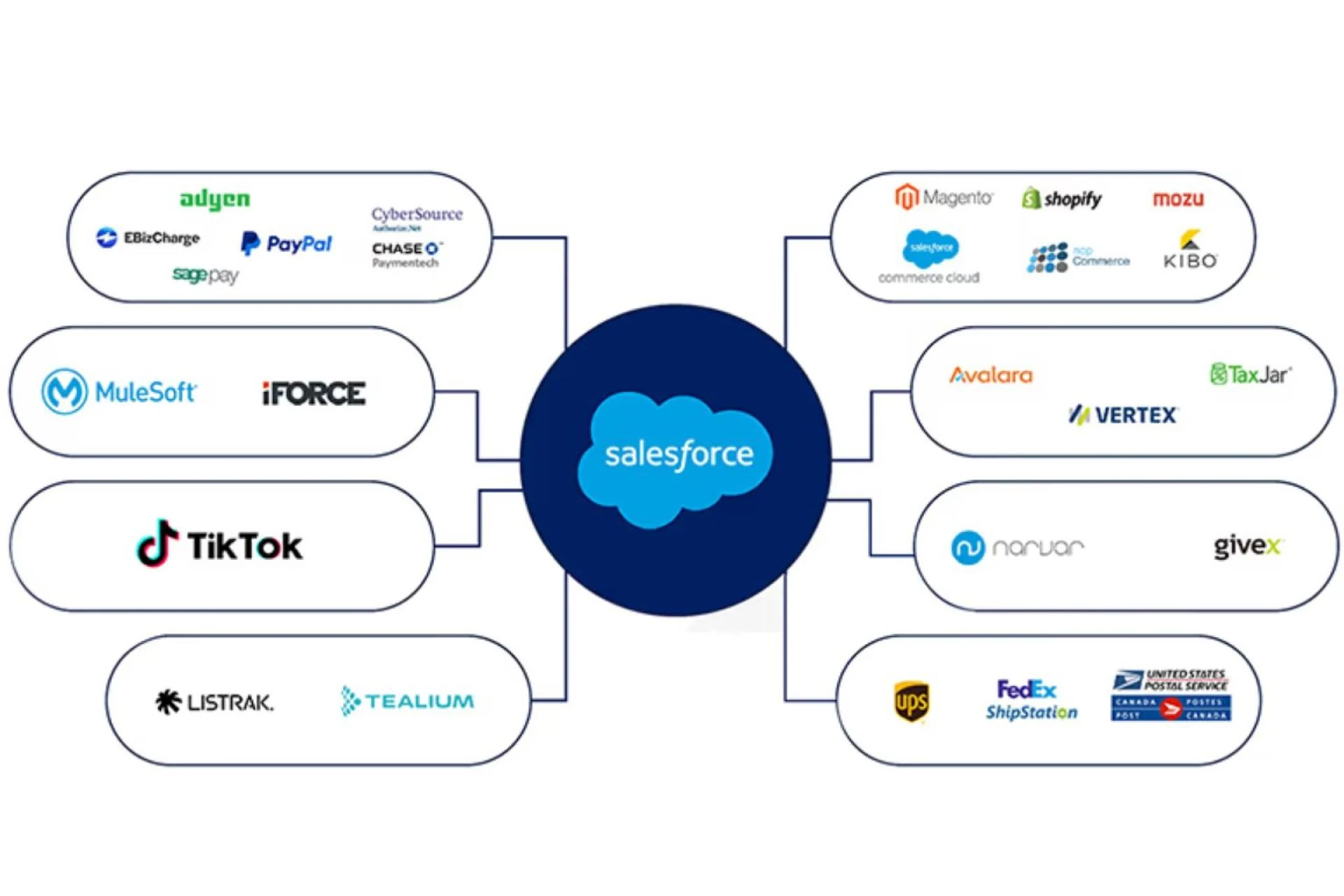
Salesforce Warehouse Management System works seamlessly with other Salesforce products. For instance, the integration with Salesforce CRM allows sales and customer service teams to get real-time updates on inventory and order statuses, leading to faster response times and better customer engagement. Additionally, Salesforce WMS can be integrated with other systems, such as ERP (Enterprise Resource Planning) or supply chain management software, to ensure smooth, end-to-end operations.
The Benefits of Salesforce WMS Integration:
- Sales and Service Teams: With integrated data, sales representatives can check real-time stock availability, enabling them to provide up-to-date information to customers and close deals faster.
- Supply Chain Optimization: The system syncs data between the warehouse and suppliers, improving inventory replenishment strategies and reducing stockouts.
Implementation of Salesforce Warehouse Management System
Implementing Salesforce WMS is a straightforward process, thanks to its cloud-based nature. However, businesses must carefully plan the integration to ensure that it aligns with existing workflows. Here are some key steps in the implementation process:
- Assessment of Needs: Before implementing the system, evaluate the specific needs of your warehouse operations. Consider factors like inventory types, warehouse size, and order volume.
- Customization: Salesforce WMS allows for customization to meet the unique needs of your business. Customize the system to match your warehouse processes, including order picking, shipping methods, and reporting preferences.
- Training and Onboarding: Once the system is in place, training employees on its features and functionalities is crucial to ensure smooth adoption.
- Continuous Monitoring and Support: After implementation, it’s important to continuously monitor the system’s performance and make adjustments as necessary. Salesforce WMS offers robust support to help businesses troubleshoot and resolve any issues.
Salesforce WMS and Future Trends
As warehouse management continues to evolve, Salesforce WMS is expected to embrace future trends, such as AI-powered automation, machine learning, and predictive analytics. These advancements will further enhance the capabilities of the system, allowing businesses to stay ahead in a competitive market.
Frequently Asked Questions (FAQ)
What is the Salesforce Warehouse Management System?
Answer: The Salesforce Warehouse Management System is a cloud-based software that integrates with Salesforce to optimize inventory management, automate warehouse processes, and provide real-time data insights.
How does Salesforce WMS improve inventory management?
Answer: Salesforce WMS provides real-time tracking of inventory, allowing businesses to monitor stock levels, movements, and ensure accurate order fulfillment.
Can Salesforce WMS be integrated with other systems?
Answer: Yes, Salesforce WMS integrates seamlessly with Salesforce CRM and other third-party software such as ERP systems, making it an ideal solution for streamlined warehouse operations.
How does automation in Salesforce WMS help businesses?
Answer: Automation reduces the need for manual labor by automating tasks like order picking, packing, and shipping, leading to increased speed, efficiency, and fewer errors.
What are the benefits of using Salesforce Warehouse Management System?
Answer: Salesforce WMS enhances efficiency, accuracy, and cost savings while improving customer satisfaction through faster, more accurate order fulfillment.
How scalable is the Salesforce Warehouse Management System?
Answer: Salesforce WMS is highly scalable and flexible, making it suitable for businesses of all sizes—from small enterprises to large corporations.
































Sign in to leave a comment.