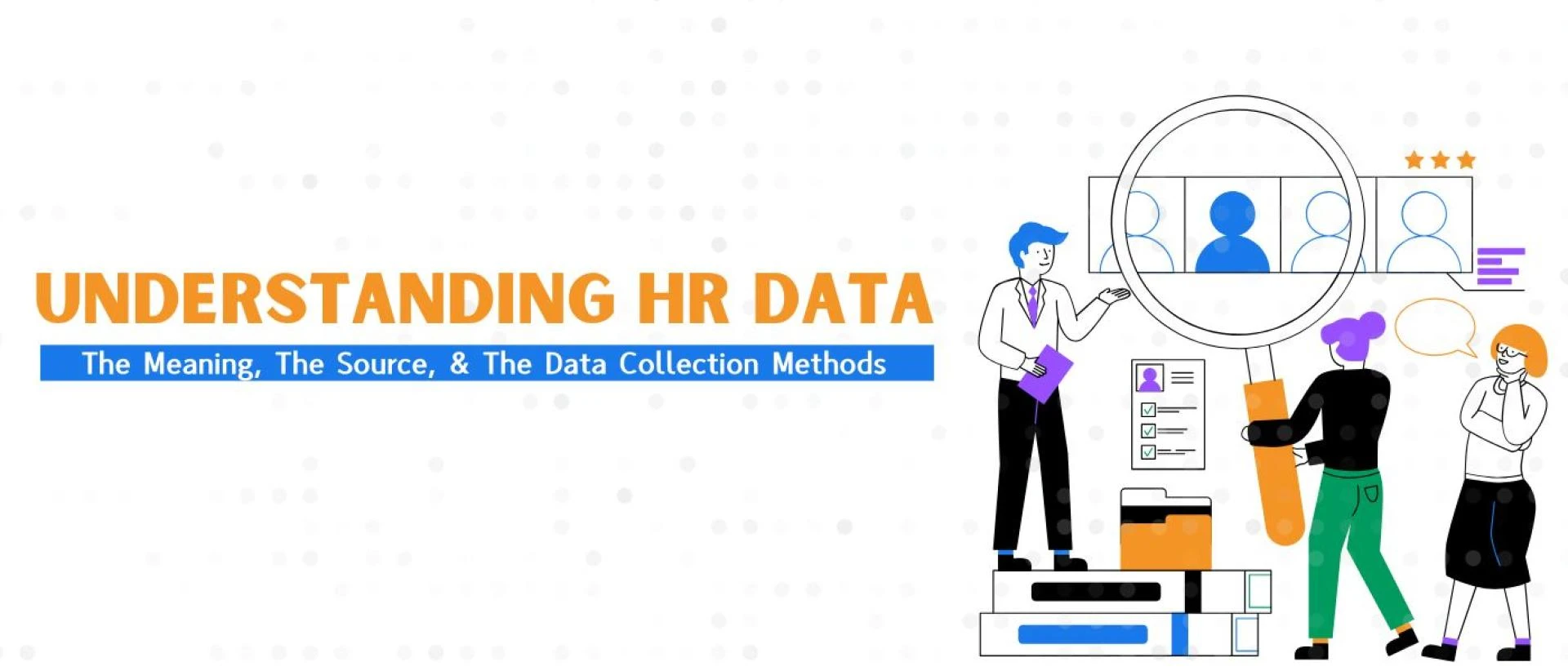

Business success is more than sales and marketing results. It is the sum of multiple factors, including employee turnover and staff engagement. That’s right! These aren’t just HR KPIs but success metrics for business health. Management uses these indicators to analyze business health and define goals.
Whether there are ten or 10,000 employees, HR metrics and insights drive decisions, shape employee strategies, and improve business outcomes. It is a strategic combination of facts, statistics, and information, making it one of the most powerful tools in the diversified toolbox. Thus, it is right to say that HR data collection has become an important business function for enterprises, whether a startup, a small or mid-sized company, or a global corporation.
What is HR Data?
HR data, or human resources data, is the collection of employee details such as demographic data, job roles, performance metrics, attendance records, and even employee engagement scores. It provides otherwise inaccessible knowledge about an organization’s most valuable asset, i.e., the workforce.
For instance, analyzing turnover data helps identify patterns and develop strategies to improve employee retention. Similarly, performance data is used to design effective training programs, ensuring employees achieve their full potential.
In essence, HR data transforms subjective assumptions into measurable, evidence-based insights that enhance organizational performance. After thorough analysis, HR data opens the door to a limitless range of possibilities for innovation and growth. What’s more, it enhances processes within an organization, leading to business success.
HR data is present in multiple forms and formats. So, how do you decide which data to collect? It solely depends on the company’s goals. Moreover, the type of data doesn’t have to be the same every time. Depending on objectives and strategic priorities, stakeholders can choose some kind of data for one quarter and others for the next. Some examples include recruitment data, turnover data, compensation and benefits data, and more.
Three Common Sources of HR Data
The sources of HR data are as diverse as the data itself. However, these are broadly classified into two main categories: internal and external sources. As the name suggests, internal data comes from within the organization. Also known as first-party data, its sources include systems and processes within the organization that generate workforce-related information.
Can you guess where external data is sourced from? Secondary sources. Information collected from a trusted partner with a direct link to your employees and acquired by your organization is referred to as a second party. Third-party data is information gathered by a data collection company that isn't directly linked to your clientele or employees.
Moving on from categories, sources are just as wide as HR data. They are broadly categorized as business data, HRIS (Human Resource Information System), and other data. Take a closer look at these sources:
1- Business Data
Beyond employee data, business data includes information related to sales, clients, budgets, and more. That’s why it has the widest variety of sources available. Take a look at some of these:
- CRM Data: Needless to say, CRMs store a lot of valuable information related to customer contact moments, NPS (Net Promoter) scores, customer satisfaction, etc. How does this help? The collected data helps assess employee performance.
- Sales Data: Sales is undoubtedly a critical metric for determining business success. Based on the specific business requirements, stakeholders collect data such as sales per store, per department, or even per person.
- Financial Data: Any guesses here? As evident, financial data includes cost per person, covers earnings, ROI for learning and development, and other related expenses.
2- HRIS Data
Human resources information systems include the most common types of HR data, some of which are listed below:
- Recruitment Data: It includes information about job applicants, time-to-hire, and hiring decisions. This data is important for companies looking to improve their talent acquisition process.
- Demographic Information: Demographic data includes age, gender, date of birth, and address. The information is stored in HRIS employee records and helps achieve DE&I goals.
- Learning Management: How do you know what courses or training employees participated in? Through Learning Management Systems (LMS). By tracking this progress, the top management approves internal mobility.
- Compensation and Benefits: HRIS data sources also have information regarding compensation and benefits, from salary to bonuses and insurance to compensatory offs, essentially everything in between.
- Succession Planning: Succession planning helps with employee retention and job satisfaction. It is another essential part of HRIS data and consists of information on managerial bench strength, leadership development, and other employees in line for succession.
- Turnover Data: Employees voluntarily leaving the company is certainly not a good thing! That said, turnover data includes information on how many employees left voluntarily during a certain period, their reason for leaving, how many were let go, and so on. A thorough analysis of this data enables management to improve engagement and productivity and develop effective retention strategies to keep top performers.
3- Other HR Data
This type of data is often difficult to find as it is not stored in HRIS systems. Wondering what data is this? Take a look:
- Mentoring: Mentorship programs play a key role in employee satisfaction and engagement. Above all, it helps with succession planning, reduces skill gaps, and strengthens bonds between employees. Thus, businesses collect information on the mentors and mentees, along with their challenges and outcomes.
- Engagement Data: This data is unique from every other type of data. How? Due to its degree of subjectivity. That’s why this information isn’t found in HRIS and is usually gathered through surveys and the NPS score. And, as low engagement leads to turnover, tracking engagement metrics helps proactively anticipate problems in this area.
- Wellness Data: Organizations around the world are prioritizing their employees’ health and may have data on wellness initiatives. Upon connecting the dots, this data is used to improve the work-life balance of an employee and prevent burnout.
Methods of HR Data Collection
Collecting all the above-mentioned data helps businesses understand their workforce dynamics. But how to collect HR data? Different methods are employed depending on the type of data and the intended use. Below are some of the most common methods:
I) Forms and Surveys
Surveys, forms, and web portals help in collecting both subjective and objective information from employees. This method is particularly advantageous for large organizations with distributed teams. Why? Because it ensures data is gathered consistently across locations. Moreover, online tools with features such as automated data analysis eliminate the manual effort required to process the gathered information.
II) Observations
Observations prove effective for collecting qualitative HR data. Managers and HR professionals assess employee behaviors, team dynamics, and workplace interactions through observations to identify patterns and areas for improvement.
For instance, observing team collaboration during meetings offers insights into engagement levels. Furthermore, analyzing work habits in a hybrid environment provides valuable insights into productivity. But one important thing to note is this method requires careful consideration to avoid bias and ensure employees feel their privacy is respected.
III) Automated Systems
Automated data collection solutions are creatively disrupting business verticals and HR is no exception. HRMS, ATS, and workforce analytics tools automatically capture, collect, and store data related to recruitment, payroll, and employee performance. The result? These systems eliminate the risk of human error, ensuring data accuracy and reliability.
Not to forget the real-time data access that these advanced solutions provide. This instantaneous access to information empowers HR teams to make informed decisions just in time. For example, automated systems can track employee training progress, flagging overdue modules for timely follow-up.
IV) Focus Groups and Interviews
Though traditional, focus groups and interviews help in collecting qualitative HR data. Engaging employees in open discussions allows HRs to gain deeper insights into their concerns, expectations, and suggestions. This way, HRs and management can explore complex issues, such as understanding the root causes of low morale or identifying barriers to diversity and inclusion.
At the same time, focus groups and interviews require skilled professionals to ensure discussions remain productive and unbiased. That's where professional data collection services prove invaluable. They create highly specific interview questions and focus group questionnaires, so businesses get to-the-point answers and keep bias at bay.
V) Social Media and Sentiment Analysis
Social media platforms and internal forums are valuable sources of HR data. By collecting and analyzing employee posts and comments, HR teams gauge sentiment around organizational policies, workplace culture, and leadership. Can you name a few platforms where employees can post reviews and ratings?
Advanced tools perform sentiment analysis to identify trends in employee satisfaction or dissatisfaction. While this method offers real-time insights, organizations must navigate ethical considerations and privacy concerns carefully.
Way Forward
To sum up, HR data is an invaluable asset for organizations seeking to enhance their workforce management and drive growth and innovation. Observational methods, forms and surveys, focus groups and interviews all help in gathering HR data effectively. Out of all, investing in professional data collection services is a smarter way out.
Why? The experts provide accurate and regulatory-compliant HR data at competitive-prices, empowering businesses to understand their workforce dynamics and harness the full potential of their employees to expand paradigms. And as the workplace continues to evolve, organizations that prioritize effective HR data collection are better positioned to adapt, compete, and succeed in the future.


















Sign in to leave a comment.