
In today's digital world, data is one of the most valuable assets for businesses and individuals alike. Whether it's customer information, financial records, business applications, photos, or personal documents, losing critical data can result in significant financial and operational consequences. Hardware failures, ransomware attacks, accidental deletions, natural disasters, and cyber threats continue to put data at risk.
To minimize these risks, IT professionals widely recommend the 3-2-1 backup rule, a proven and effective data protection strategy that helps ensure business continuity and disaster recovery.
What Is the 3-2-1 Backup Rule?
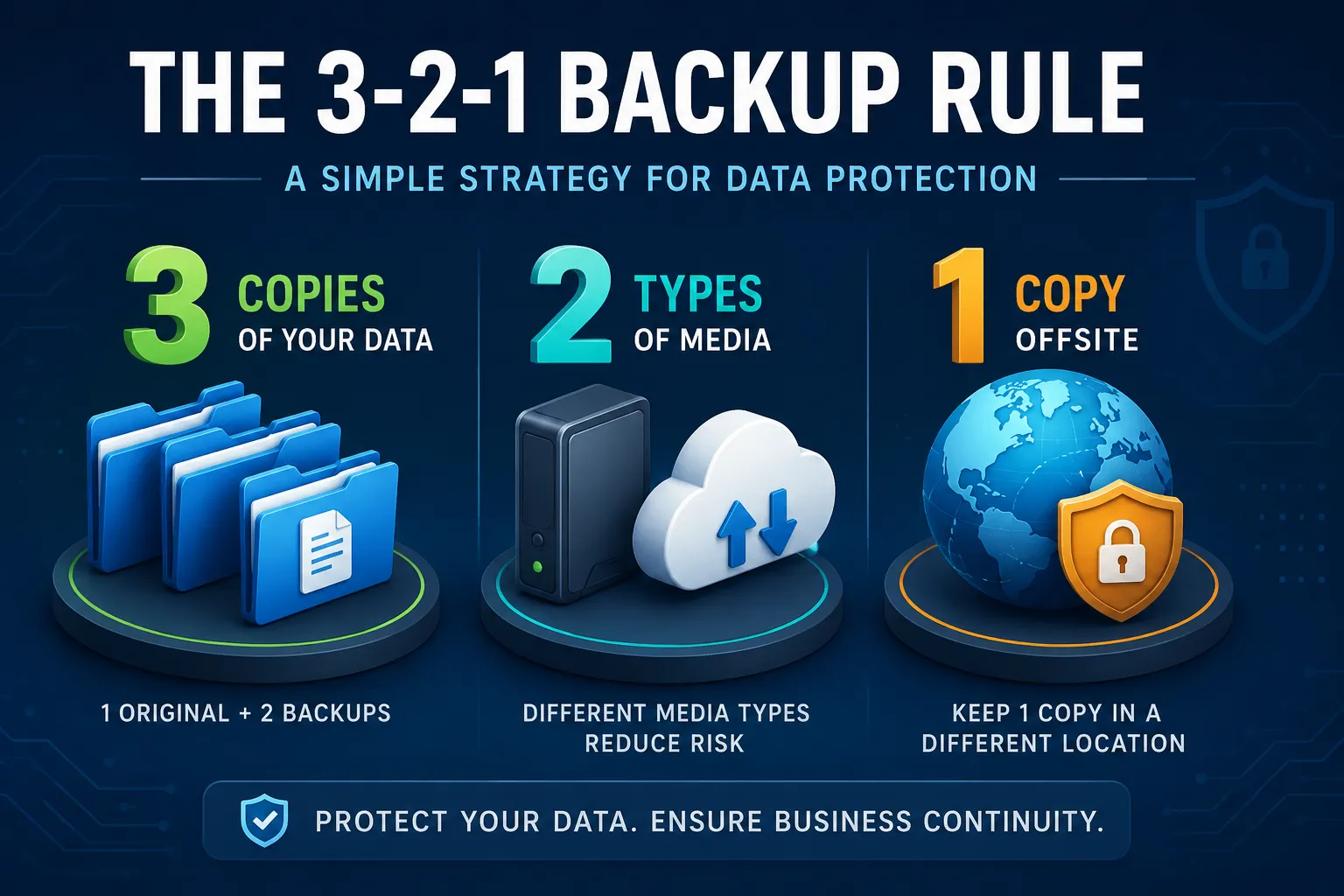
The 3-2-1 backup rule is a best-practice framework for safeguarding data. The rule is simple:
- Keep 3 copies of your data
- Store the copies on 2 different types of media
- Keep 1 copy offsite
This approach creates multiple layers of protection against data loss and system failures.
Breaking Down the 3-2-1 Backup Strategy
1. Maintain Three Copies of Your Data
The first principle is to maintain at least three copies of your data:
- The original production data
- A local backup copy
- A secondary backup copy
Having multiple copies significantly reduces the chances of complete data loss. If one backup becomes corrupted or inaccessible, another copy remains available for recovery.
2. Use Two Different Storage Media Types
Storing backups on different media types helps protect against hardware-specific failures.
Examples include:
- Internal storage drives
- External hard drives
- Network Attached Storage (NAS)
- Cloud storage platforms
- Tape backup systems
Using diverse storage technologies reduces the likelihood that a single point of failure will impact all backup copies simultaneously.
3. Keep One Backup Copy Offsite
An offsite backup protects data from local disasters such as:
- Fires
- Floods
- Theft
- Power failures
- Cyberattacks
Today, cloud backup services have become one of the most popular offsite storage options due to their accessibility, scalability, and security. Organizations can quickly restore critical data even if their primary location becomes unavailable.
Why the 3-2-1 Backup Rule Matters
Protection Against Ransomware
Ransomware attacks continue to increase worldwide. If primary systems and local backups become encrypted, an isolated offsite backup can provide a clean recovery point without paying a ransom.
Improved Disaster Recovery
Natural disasters and unexpected outages can happen at any time. The 3-2-1 strategy ensures organizations have recoverable data available from multiple locations.
Reduced Downtime
Data loss often leads to operational disruptions. Multiple backup copies allow businesses to restore systems quickly and minimize downtime.
Compliance and Regulatory Requirements
Many industries require organizations to maintain secure and recoverable data copies. Implementing a structured backup strategy helps support compliance efforts and data governance policies.
Common Mistakes to Avoid
While implementing the 3-2-1 backup rule, organizations should avoid several common mistakes:
Not Testing Backups
A backup is only useful if it can be restored successfully. Regular testing verifies backup integrity and recovery readiness.
Storing All Backups in One Location
Keeping every backup copy in the same physical location defeats the purpose of redundancy. Geographic separation is essential.
Ignoring Backup Security
Backup systems should be protected with:
- Encryption
- Access controls
- Multi-factor authentication
- Regular security monitoring
Failing to Automate Backups
Manual backup processes are prone to human error. Automated backup schedules improve consistency and reliability.
Modern Evolution of the 3-2-1 Rule
As cyber threats evolve, many organizations are adopting enhanced versions of the traditional model, such as:
3-2-1-1-0 Strategy
This modern variation includes:
- 3 copies of data
- 2 different storage media
- 1 offsite copy
- 1 immutable or air-gapped copy
- 0 backup errors verified through testing
The additional layers improve resilience against sophisticated ransomware and insider threats.
Best Practices for Implementing the 3-2-1 Backup Rule
To maximize data protection:
- Automate backup schedules
- Monitor backup health continuously
- Encrypt data both in transit and at rest
- Perform routine recovery testing
- Maintain backup documentation
- Use secure cloud storage for offsite protection
- Implement immutable backup options where possible
Conclusion
The 3-2-1 backup rule remains one of the most effective and widely recommended data protection strategies and managed backup available today. By maintaining three copies of data, storing backups on two different media types, and keeping one copy offsite, organizations can significantly reduce the risk of data loss and improve disaster recovery readiness.
As cyber threats and business data volumes continue to grow, adopting a robust backup strategy is no longer optional—it's a critical component of modern IT resilience. Whether you're a small business, enterprise organization, or individual user, implementing the 3-2-1 backup rule can provide peace of mind and ensure your valuable data remains protected when it matters most.


































Sign in to leave a comment.